
6 min read
Jeans Size Guide: How to Read W and L and Find Your Size
A clear walkthrough of jeans sizing, from what W and L mean to measuring yourself and converting between size systems.
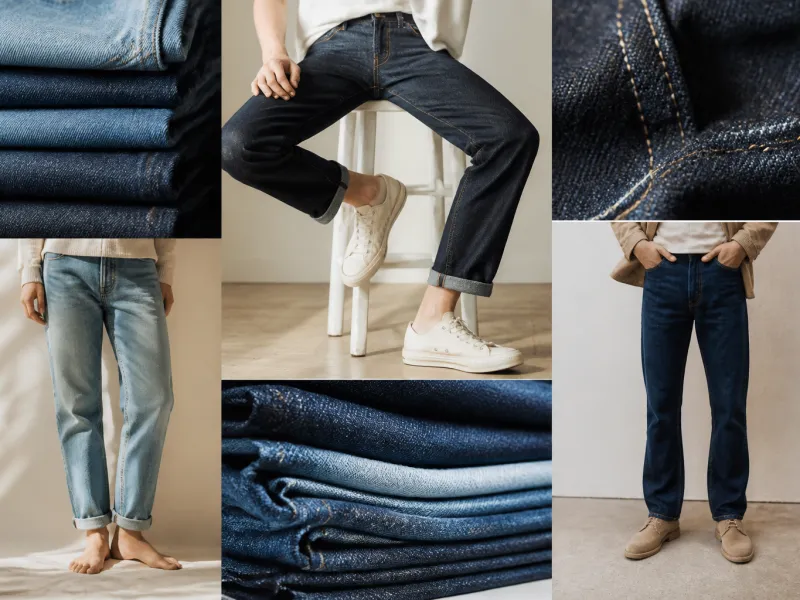
Jeans sizes are almost always written as a pair of numbers, such as W32 L34, and both numbers are inches. W stands for waist and L for length, and once you know your own measurements in inches you can compare almost any pair of jeans on the market, whatever the brand.
This guide explains what the numbers mean, how to measure yourself accurately, and why the same size can still feel different from one label to the next.
01
What W and L actually mean
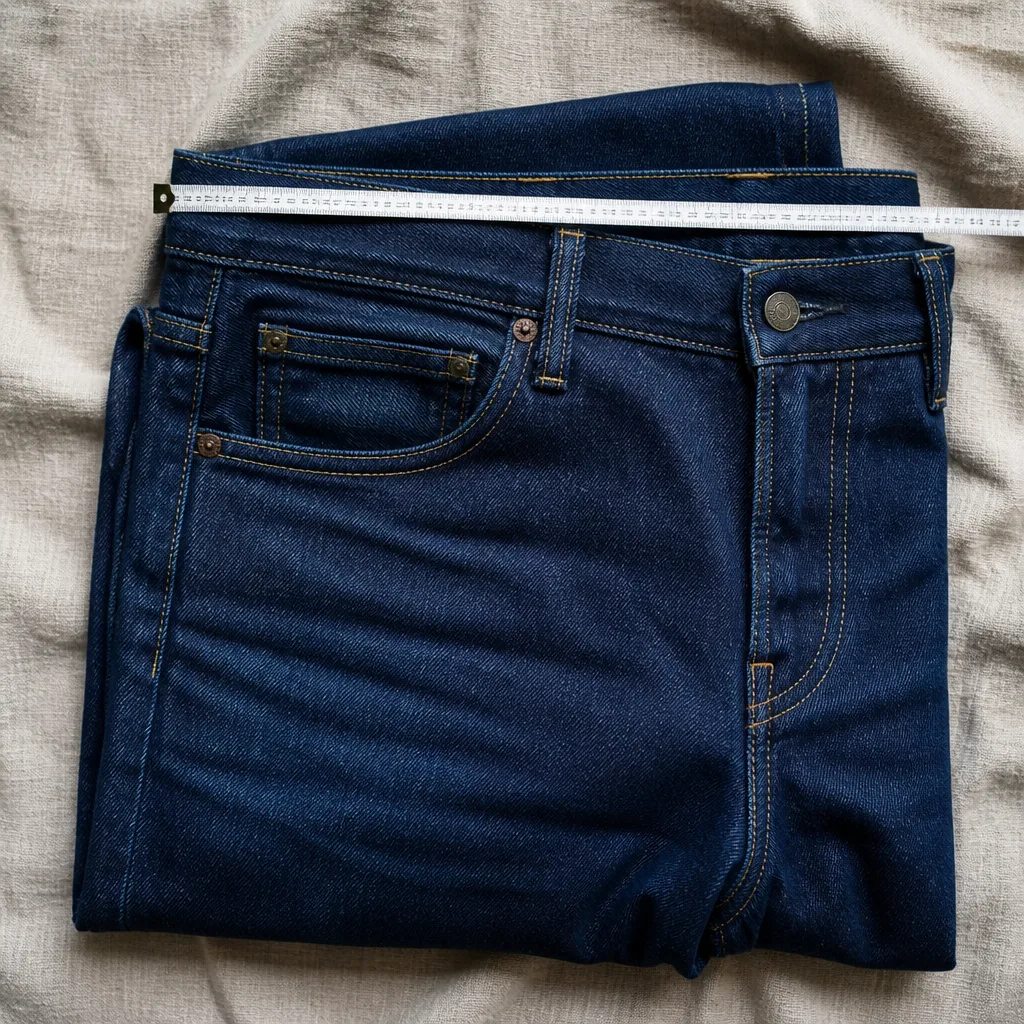
W is the waist measurement of the jeans in inches, taken flat across the waistband and then doubled, and L is the inseam, the length of the inner leg seam from the crotch to the hem. A W32 L34 pair is cut for roughly a 32 inch waist (about 81 cm) and a 34 inch inseam (about 86 cm). Some brands add letters instead, such as S, M, L, or use a single number close to a European size, but the W/L system in inches remains the most common for jeans worldwide.
Not every brand prints both numbers. Some only give a waist size and offer a single standard length, others sell jeans by a national size system instead. When only one system is given, use the conversion approach below rather than guessing.
02
Measuring your waist
Measure around your natural waistline, which is usually the narrowest part of your torso, not necessarily where you currently wear your trousers. Stand relaxed, do not pull the tape tight, and breathe normally rather than holding your stomach in. Keep the tape level all the way around, since it is easy to let it dip at the back.
If you plan to wear the jeans lower on the hips, measure there instead and expect the fit to sit differently depending on the rise of the cut, which is explained in more detail in our guide to rise.
03
Measuring your hips and thighs
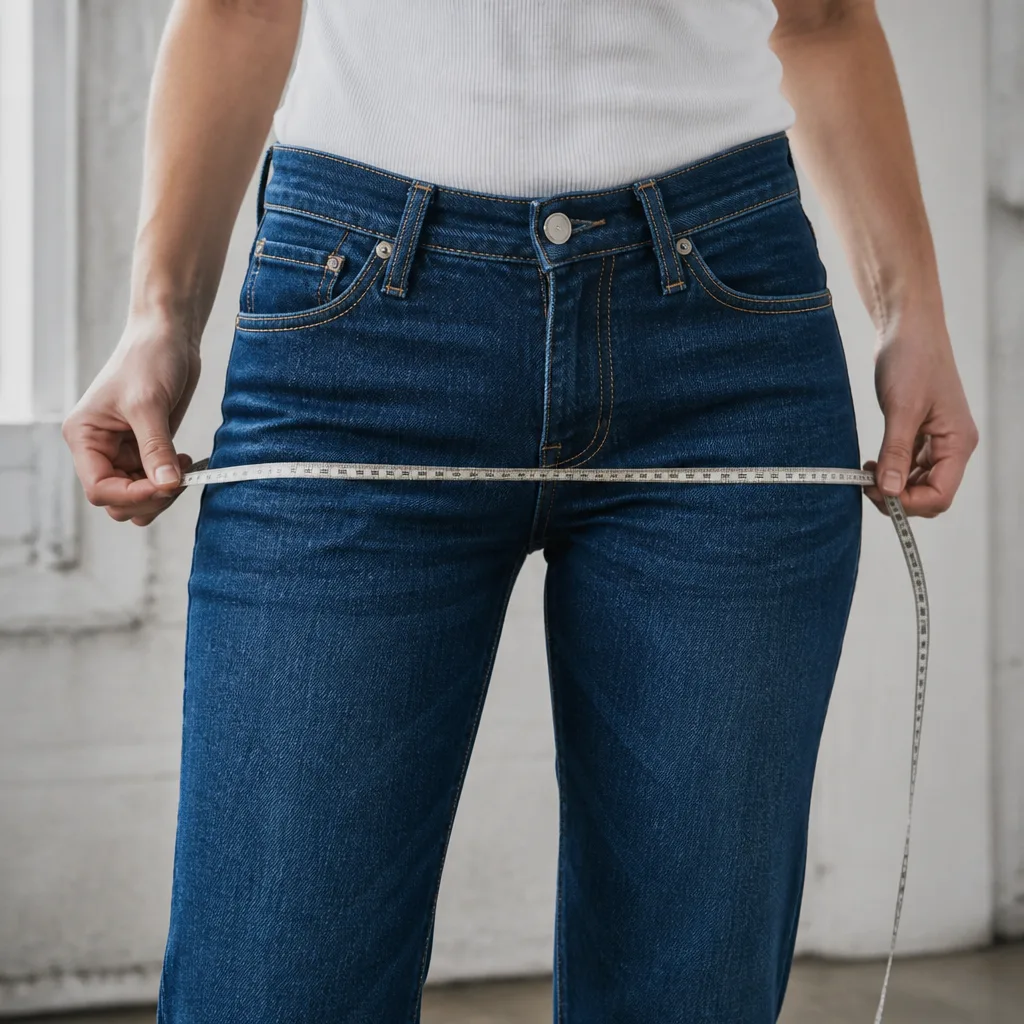
Hip measurement matters because it affects how the seat and thigh of the jeans fit, even when the waist number is correct. Measure around the fullest part of your seat and hips, keeping the tape parallel to the floor. If your hip measurement is noticeably larger than your waist in proportion to a standard size chart, you may need to size up and have the waist taken in, or look for a cut described as curvy or relaxed through the hip.
Thigh circumference, measured around the fullest part of the upper leg, is useful when comparing cuts such as skinny, slim, straight or relaxed. See how jeans should fit for guidance on reading these differences once the waist size is settled.
 Matching productMen's relaxed jeansAmazon →
04
Measuring your inseam
The easiest way to find your inseam is to measure a pair of jeans that already fits you well, laid flat, from the crotch seam to the bottom of the hem. If you would rather measure your body directly, stand straight and measure from the floor up to your crotch on the inside of the leg, ideally with a friend holding the tape, since this is hard to do accurately alone.
Keep in mind that inseam also depends on rise. Two pairs with the same inseam number can sit at different points on the leg if one has a high rise and the other a low rise, because the rise changes where the waistband, and therefore the top of the inseam measurement, begins.
05
Converting to other size systems
Outside the W/L inch system, many countries use their own numbering. Women's jeans in continental Europe are commonly labelled somewhere between 34 and 46, while UK and US women's sizing often use separate small number ranges again. Men's trousers in Europe are frequently labelled with a number close to the waist in centimetres. The table below gives an approximate comparison for a typical waist measurement.
| Waist (inches) | Waist (cm, approx.) | EU womens (approx.) | US/UK womens (approx.) |
|---|---|---|---|
| 26 | 66 | 34 | 2 |
| 28 | 71 | 36 | 4 to 6 |
| 30 | 76 | 38 to 40 | 8 |
| 32 | 81 | 40 to 42 | 10 to 12 |
| 34 | 86 | 42 to 44 | 14 |
| 36 | 91 | 44 to 46 | 16 |
These figures are only a starting point. Conversion tables vary considerably by manufacturer, and a size chart published by one label can differ by a full size or more from another, even within the same country. Whenever a brand publishes its own size chart, use that one instead of a general conversion table, and check both waist and hip figures if they are given separately.
06
Vanity sizing and why the same size can feel different
Vanity sizing is the practice of labelling garments with a smaller number than their actual measurements would suggest under an older or stricter chart. It happens gradually and differently across brands, which is one reason a W32 from one label can measure closer to a W33 or W34 from another. There is no reliable way to predict the direction or size of this difference without trying the jeans on or checking the brand's own measurements, so treat the printed number as a starting point rather than a guarantee.
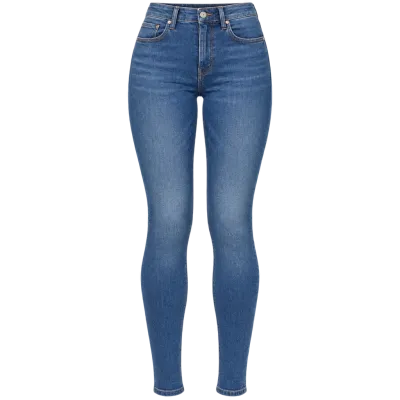
Cut and fit also play a role. A skinny fit and a relaxed fit in the same labelled waist size are shaped very differently through the hip, thigh and leg opening, so the number alone does not describe how the jeans will actually sit. Our guide to jeans fits covers the main cuts in more detail.
 Matching productWomen's skinny jeansAmazon →
07
Stretch allowance
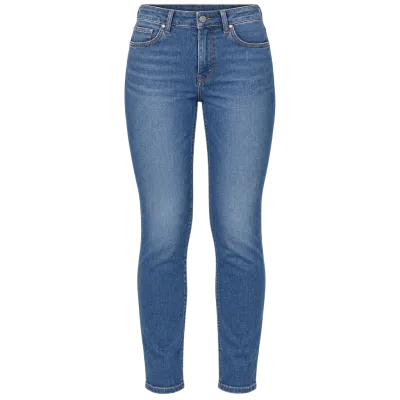
Jeans that contain elastane or another stretch fibre will generally give a little at the waist and thigh once worn, so many people size stretch denim closer to, or even slightly below, their true measurement, while rigid, non-stretch denim is usually best bought at or slightly above the measured size to allow for comfort and for the fact that rigid cotton denim does not give. See our stretch versus rigid guide for more on how the two behave differently over a day of wear.
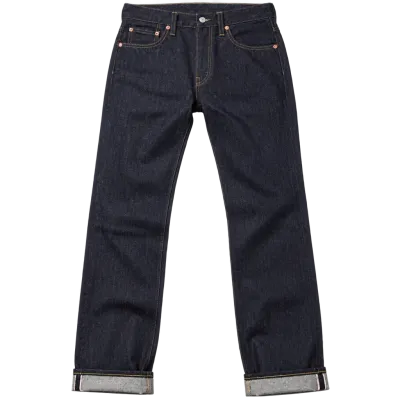
If you are choosing between raw, unsanforized denim and a pre-shrunk pair, remember that unsanforized denim will shrink noticeably after its first wash, typically in the range of five to ten percent, while sanforized denim, which is treated during manufacturing to pre-shrink the fabric, will only shrink by about one to three percent afterwards. The raw denim guide explains how to size for this difference.
 Matching productComfort stretch jeansAmazon →
08
What to check before you buy
Whenever a size chart is available for the specific pair you are considering, use it rather than relying on general knowledge of your size in another brand. Look for both a waist and a hip figure where they are given separately, since a chart based on waist alone can be misleading for cuts that shape closely through the hip. If no chart is available and you cannot try the jeans on, comparing the garment's stated measurements against a pair you already own and like is usually more reliable than the labelled size alone.
Finally, remember that length can be altered fairly easily through hemming, while waist and hip fit are much harder to change after the fact. When a size falls between two options, it is usually safer to prioritise a comfortable waist and hip fit and plan to hem the length, rather than the reverse. Our guide to hemming jeans explains how that alteration works.
09
Frequently asked questions
What do the two numbers on jeans mean?
The first number, W, is the waist measurement in inches, and the second, L, is the inseam or leg length in inches. A W30 L32 pair is cut for a 30 inch waist and a 32 inch inseam.
Do I measure my waist over clothes or against bare skin?
Measure against bare skin or thin underwear for the most accurate result. Measuring over thick clothing will add extra inches and can lead you to buy a size that is too large.
Why do my jeans from one brand not fit the same as another in the same size?
Different brands use different size charts and cuts, and vanity sizing means the same printed number can correspond to different actual measurements. Checking a brand's own size chart before buying is the most reliable approach.
Should I size up or down for stretch denim?
Many people find stretch denim comfortable at their true measured size or even slightly smaller, since the fabric will give a little with wear, while rigid denim is usually more comfortable bought at or slightly above the measured size.
How much will unsanforized jeans shrink?
Unsanforized, raw denim typically shrinks by roughly five to ten percent after its first wash, while sanforized denim, which has already been pre-shrunk during production, shrinks by only about one to three percent.
 Matching productRaw selvedge jeansAmazon →
Explore
Read next
 Jeans Fits and Cuts Explained: Skinny to Wide LegA complete overview of jeans fits and cuts, from skinny to wide leg, plus rise and length, with a comparison table and answers to common qu…
 How to Buy Jeans: A Complete Buying GuideA practical, step by step guide to choosing jeans that actually fit, from measuring yourself to checking construction and buying online.
 The Denim Guide: How Jeans Fabric Is MadeA clear explanation of denim fabric itself: weave, weight, yarn, dyeing and the regional traditions behind it.