
6 min read
Jeans and shoes
A practical guide to pairing jeans with different shoe types, from leg opening width to cuffing and stacking.
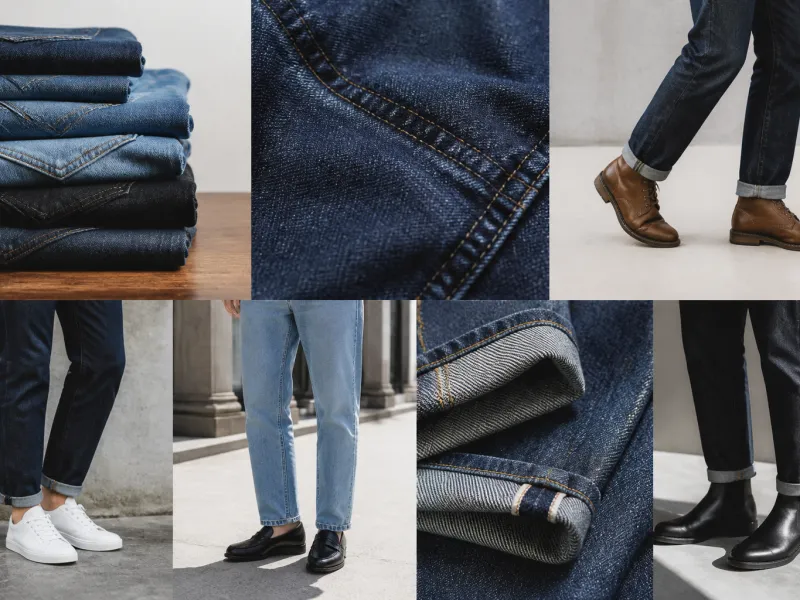
The way a pair of jeans meets a shoe, the leg opening width, the hem length and whether the jeans are cuffed, has a large effect on how an outfit reads, often more than the shoe or the jeans considered separately. This guide looks at how different leg shapes pair with different types of shoes, and how small adjustments like cuffing and stacking change the result.
01
Leg opening and why it matters
The leg opening, the circumference of the jeans at the hem, largely determines what a shoe pairing looks like. A narrow leg opening, typical of skinny and slim fits, sits close to the ankle and reveals the whole shoe. A wider leg opening, typical of straight, relaxed, bootcut and wide leg fits, can partially or fully cover the shoe depending on hem length, changing the proportion between leg and foot.
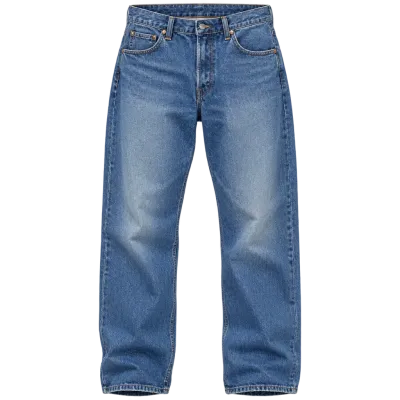 Matching productMen's relaxed jeansAmazon →
02
Skinny and slim fits with shoes
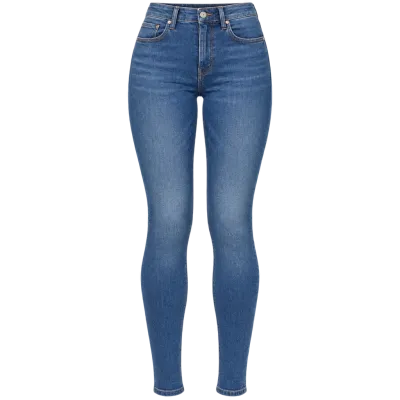
A narrow leg opening at or above the ankle works with almost any shoe type, since the ankle and shoe are both visible and there is little fabric to interact with the shoe itself. Ankle boots are a natural match, since the jeans hem and boot shaft meet cleanly. Sneakers and loafers also work well, showing the full shape of the shoe. Taller boots can be worn either over a skinny leg tucked inside the boot shaft, or under the hem, both common approaches depending on the boot style.
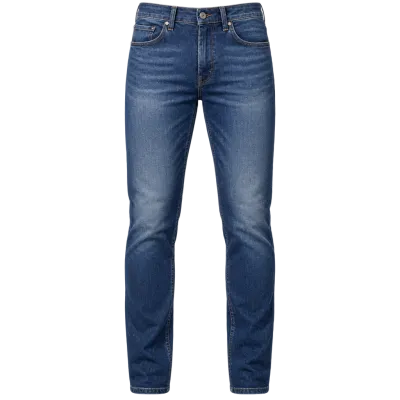 Matching productMen's slim jeansAmazon →
03
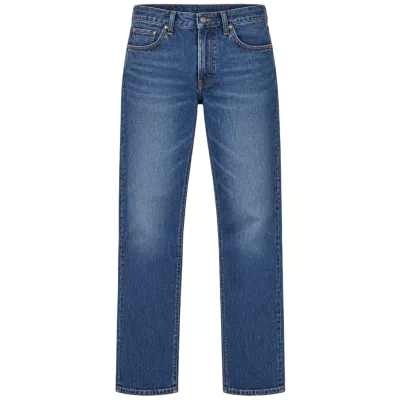
Straight and relaxed fits with shoes
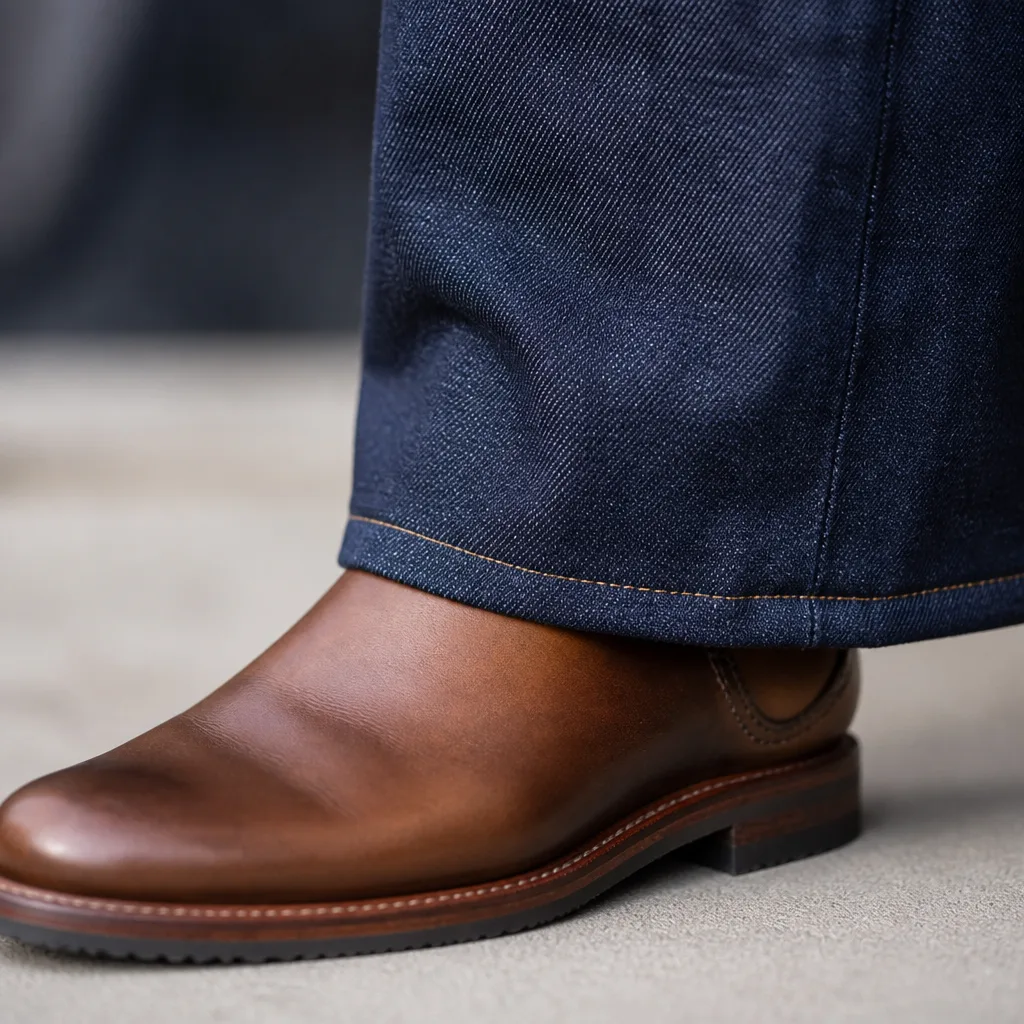
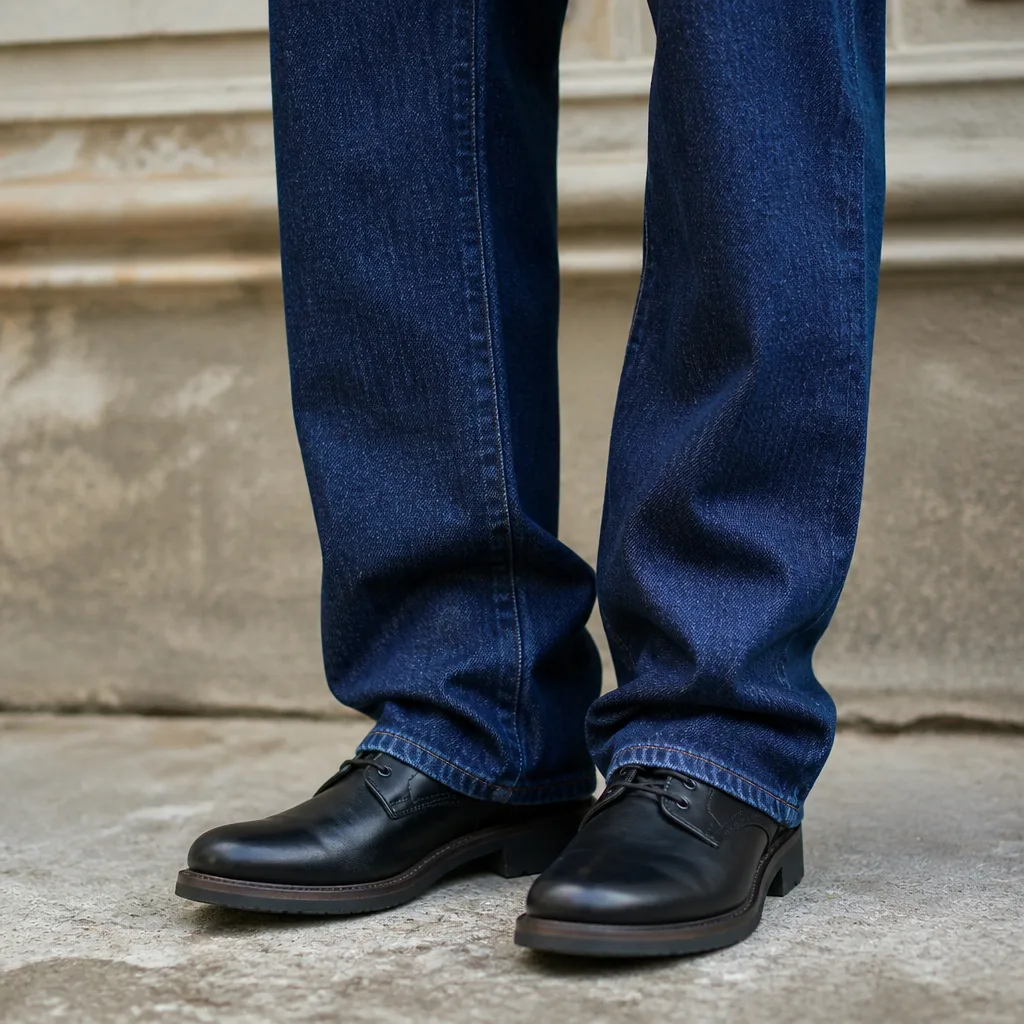
A straight or relaxed leg with a full break, where the fabric rests on the shoe with a soft fold at the front, pairs naturally with boots, since the extra fabric length and slight bagginess at the ankle sit comfortably over a boot shaft without looking unbalanced. This combination is common with workwear inspired outfits and with boots that have a low to moderate heel. With flatter shoes such as sneakers or loafers, a straight leg with a shorter break or a slight cuff tends to keep the proportions cleaner, since a full break can look like excess fabric pooling on a low profile shoe.
 Matching productMen's straight jeansAmazon →
04
Bootcut, flare and wide leg with shoes
Bootcut and flare fits are, as the name suggests, designed with a boot in mind, cut to fit over a boot shaft without the leg fabric bunching up at the ankle. A heeled boot in particular tends to balance well with the added width at the hem, since the heel lifts the hem slightly off the ground and lets the flare fall cleanly.
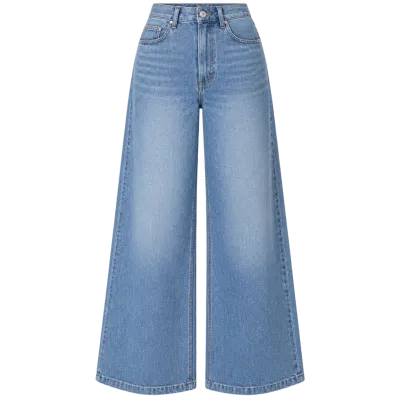
Wide leg jeans, which stay wide along the whole length of the leg rather than only flaring at the hem, are commonly worn with a longer hem length that grazes or lightly pools at the floor, often paired with heeled shoes, boots or loafers with a slight heel to keep the hem from dragging on flat ground. A completely flat shoe with a very long wide leg hem can lead to fraying at the back of the hem from repeated contact with the ground.
 Matching productWomen's wide-leg jeansAmazon →
05
Cuffing and stacking
| Technique | Description | Common shoe pairing |
|---|---|---|
| Single cuff | Hem folded up once, roughly 2 to 4 cm | Sneakers, loafers, ankle boots |
| Double cuff | Hem folded up twice, a wider band of about 5 cm or more | Boots, sturdy work style shoes |
| No cuff, ankle length | Hem finished at or just above the ankle, no folding | Sneakers, loafers, sandals |
| Full length, uncuffed | Hem left at full length with a break over the shoe | Boots, heeled shoes |
| Stacking | Hem left long enough to fold and crease repeatedly at the ankle | Boots, heavier sneakers |
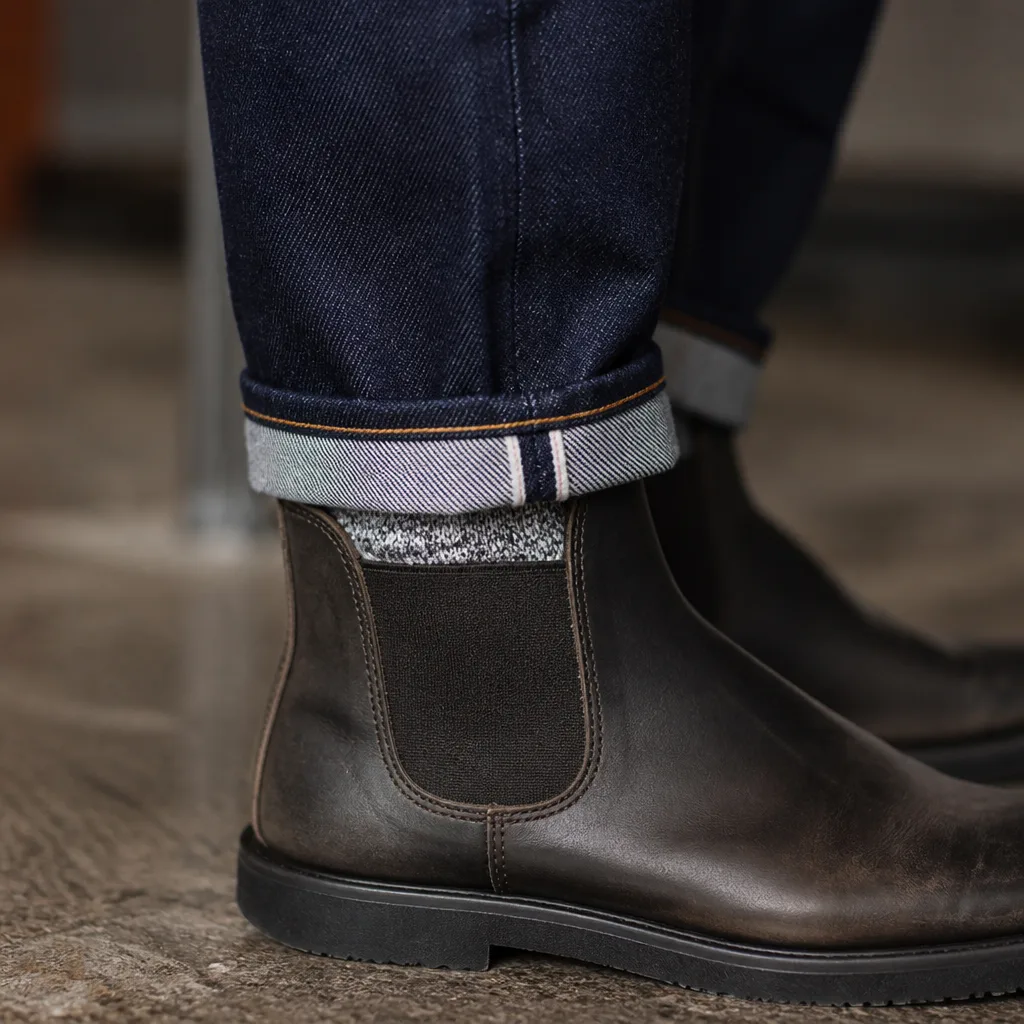
Cuffing a straight or slim leg is one of the simplest ways to adjust how jeans meet a shoe without permanently altering the hem. Stacking, leaving the jeans longer than a standard break so the extra fabric folds and creases repeatedly at the ankle, is more associated with skinny and slim fits worn over boots or chunky sneakers, and produces a more casual, deliberately rumpled look at the ankle rather than a clean, single fold.
06
Matching by shoe type
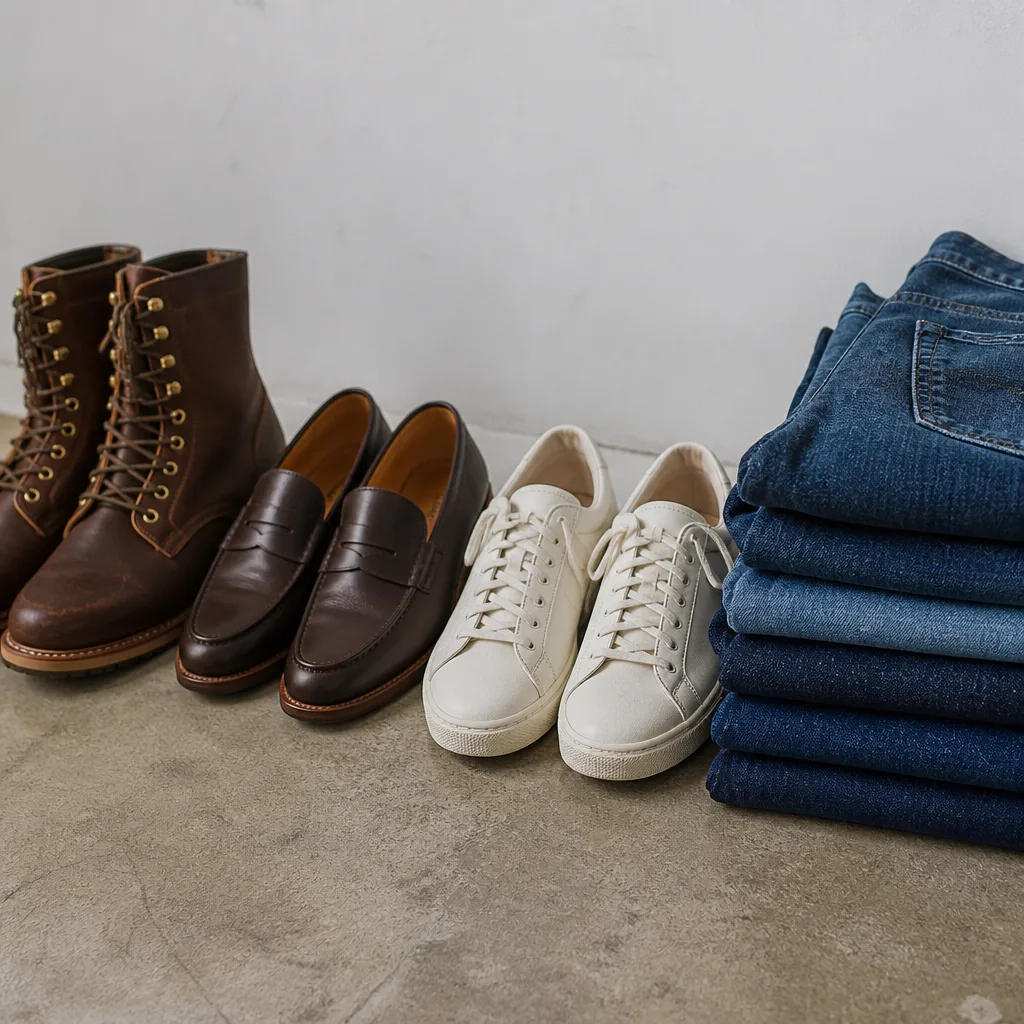
Sneakers generally pair well with a shorter, cleaner hem, whether that is an ankle length skinny or tapered leg, or a straight leg with a light cuff, since a bulky hem can visually overwhelm a low profile shoe. Boots are the most versatile shoe for jeans, working with almost any leg width from skinny tucked into tall boots to wide leg jeans over a low ankle boot. Loafers tend to suit a shorter or ankle length hem that shows the shape of the shoe, similar to sneakers. Heeled shoes generally work best with a hem length set specifically for that heel height, since a hem measured for flat shoes will drag once a heel is added, changing how the jeans sit at the floor. Sandals pair most naturally with a shorter, ankle length or cropped hem, since open shoes look best without fabric covering the foot.
 Matching productWomen's skinny jeansAmazon →
07
Getting the length right for a specific shoe
Because hem length interacts so directly with shoe choice, it is worth measuring and, if needed, altering jeans with your most worn shoe on hand rather than guessing. Our guide to hemming jeans covers how to measure for different break styles and how to shorten jeans permanently, while cuffing, covered above, offers a reversible option if you switch between shoes with different heel heights often.
If you regularly wear one pair of jeans with several different shoes, it is worth accepting that no single hem length will look ideal with all of them. In that situation, cuffing tends to be the more flexible compromise, since it can be adjusted or removed in seconds depending on which shoes you are wearing that day, while a permanent hem locks in one specific length. For jeans worn mainly with one type of shoe, a permanent hem matched exactly to that shoe generally gives the cleanest, most deliberate looking result.
08
Socks and the space between hem and shoe
The small gap or overlap between the hem and the top of the shoe is easy to overlook but changes the overall look considerably. With an ankle length or cuffed hem, a visible strip of ankle or a plain, low profile sock tends to look more deliberate than a bright or patterned sock peeking out unintentionally. With boots, a longer hem or a stacked leg generally avoids any gap at all, since the fabric meets the boot shaft directly. Paying attention to this detail, alongside the broader hem and shoe combination, is a small adjustment that noticeably affects how finished an outfit looks.
09
Frequently asked questions
What hem length works with both sneakers and boots
An ankle length or slight break hem tends to transition reasonably well between flatter sneakers and low ankle boots, though a dedicated hem for each shoe type will always sit more precisely.
Should jeans be hemmed differently for heeled shoes
Yes. A hem measured while wearing flat shoes will usually drag on the ground once a heel is added, so it is best to measure with the actual heel height you plan to wear most.
Is cuffing suitable for wide leg or flare jeans
Cuffing is far more common on slim, straight and skinny fits. Wide leg and flare jeans are generally designed to hang uncuffed, since folding up a wide hem can distort the intended silhouette.
Do sandals work with any jeans fit
Sandals generally suit shorter, ankle length or cropped hems best, across most leg widths, since a longer hem covering the foot tends to look unbalanced with an open shoe.
Explore
Read next
 Jeans Fits and Cuts Explained: Skinny to Wide LegA complete overview of jeans fits and cuts, from skinny to wide leg, plus rise and length, with a comparison table and answers to common qu…
 How to Buy Jeans: A Complete Buying GuideA practical, step by step guide to choosing jeans that actually fit, from measuring yourself to checking construction and buying online.
 The Denim Guide: How Jeans Fabric Is MadeA clear explanation of denim fabric itself: weave, weight, yarn, dyeing and the regional traditions behind it.