
6 min read
How Should Jeans Fit? A Guide to Waist, Seat, Thigh and Length
Learn how jeans should fit from waist to hem, spot common fit problems, and understand the break and how men's and women's cuts differ.
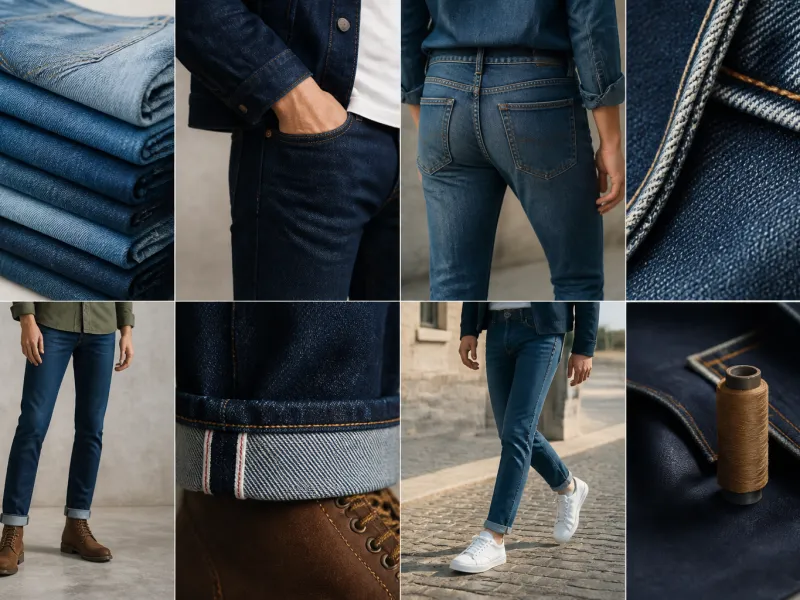
A good fit is not only about the size on the label. Jeans that fit well feel comfortable when you sit, stand and walk, and they hold their shape through the day without needing constant adjustment. This guide walks through each part of the fit, from waist to hem, and what to check at each stage.
Because men's and women's cuts are shaped differently through the hip and seat, some of the points below apply a little differently depending on which cut you are trying on, and we note this where it matters.
01
Waist
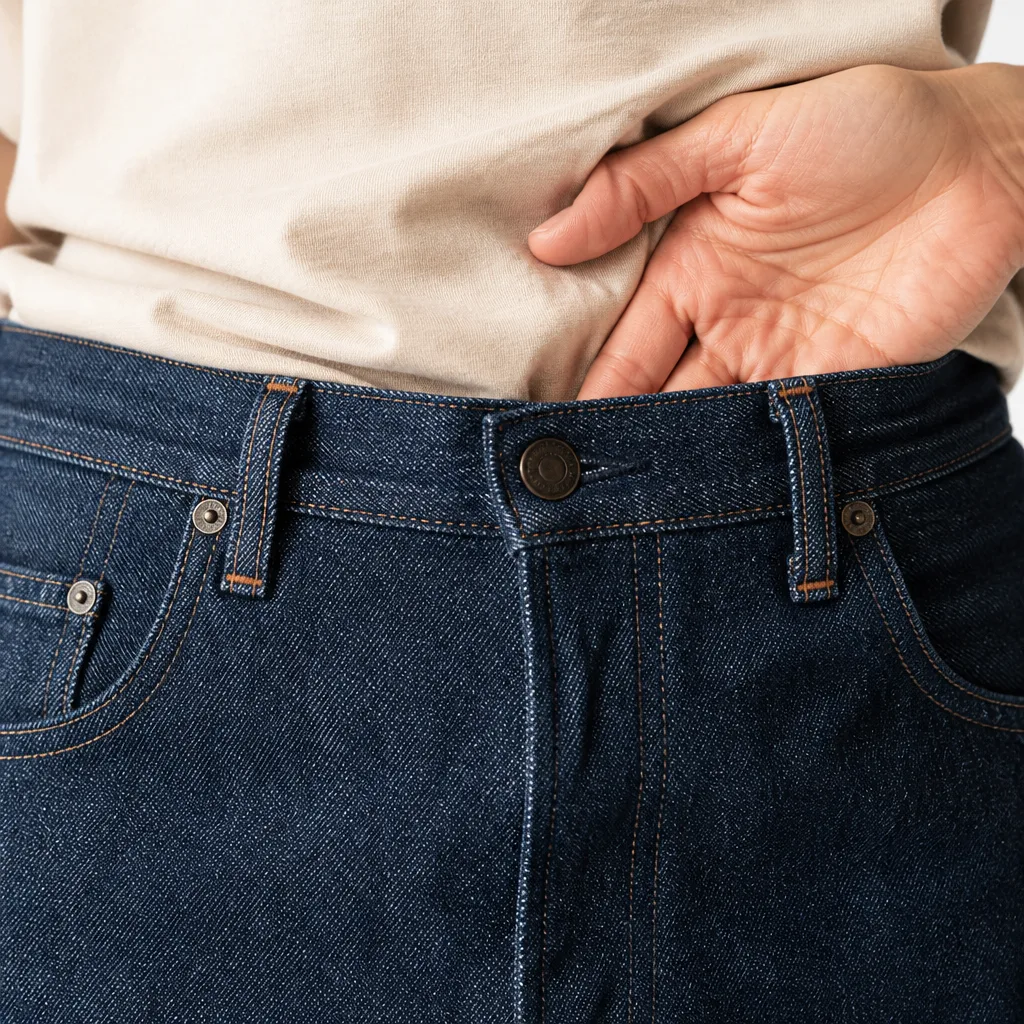
The waistband should sit comfortably without digging in or gaping. You should be able to fit roughly one to two fingers between the waistband and your body when standing straight. If the waistband gaps at the back when the front feels snug, or the reverse, the rise or cut may not match your body shape, which is covered in our guide to rise.
Sit down while trying jeans on if you can. A waistband that feels fine standing but digs in sharply when seated is usually too tight, even if the standing fit seemed acceptable.
02
Seat
The seat is the fabric across the buttocks, and it is one of the most common places for jeans to fit poorly. Loose, baggy fabric here usually means the cut is too relaxed for your shape, while deep horizontal creases radiating from below the seat, sometimes called whiskering when it becomes permanent through wear, often mean the jeans are too tight or too short in the rise. A well fitted seat should follow the body's shape without pulling tight or sagging.
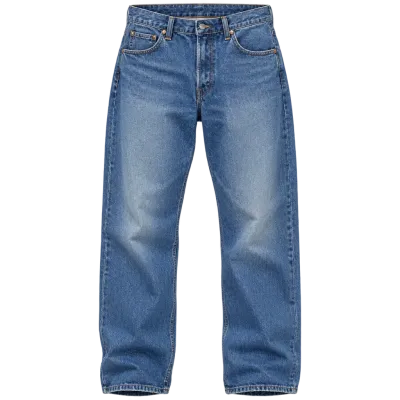 Matching productMen's relaxed jeansAmazon →
03
Thigh and knee
The thigh should allow you to move freely, sit, and climb stairs without the fabric pulling tight across the front or back of the leg. A slim or skinny cut will naturally sit closer to the leg than a straight or relaxed cut, and that is expected, but you should still be able to bend your knee without the fabric straining.
At the knee, watch for fabric that bunches or twists when you walk. A small amount of movement is normal, especially in stretch denim, but persistent twisting around the knee usually points to a cut that does not match your leg shape well.
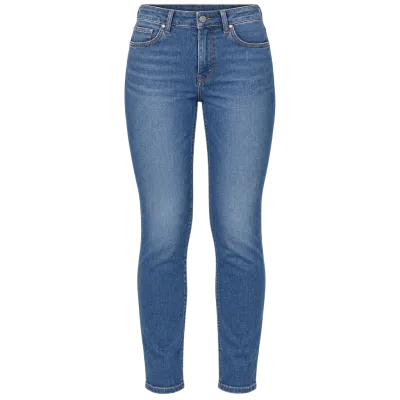 Matching productComfort stretch jeansAmazon →
04
Length and the break
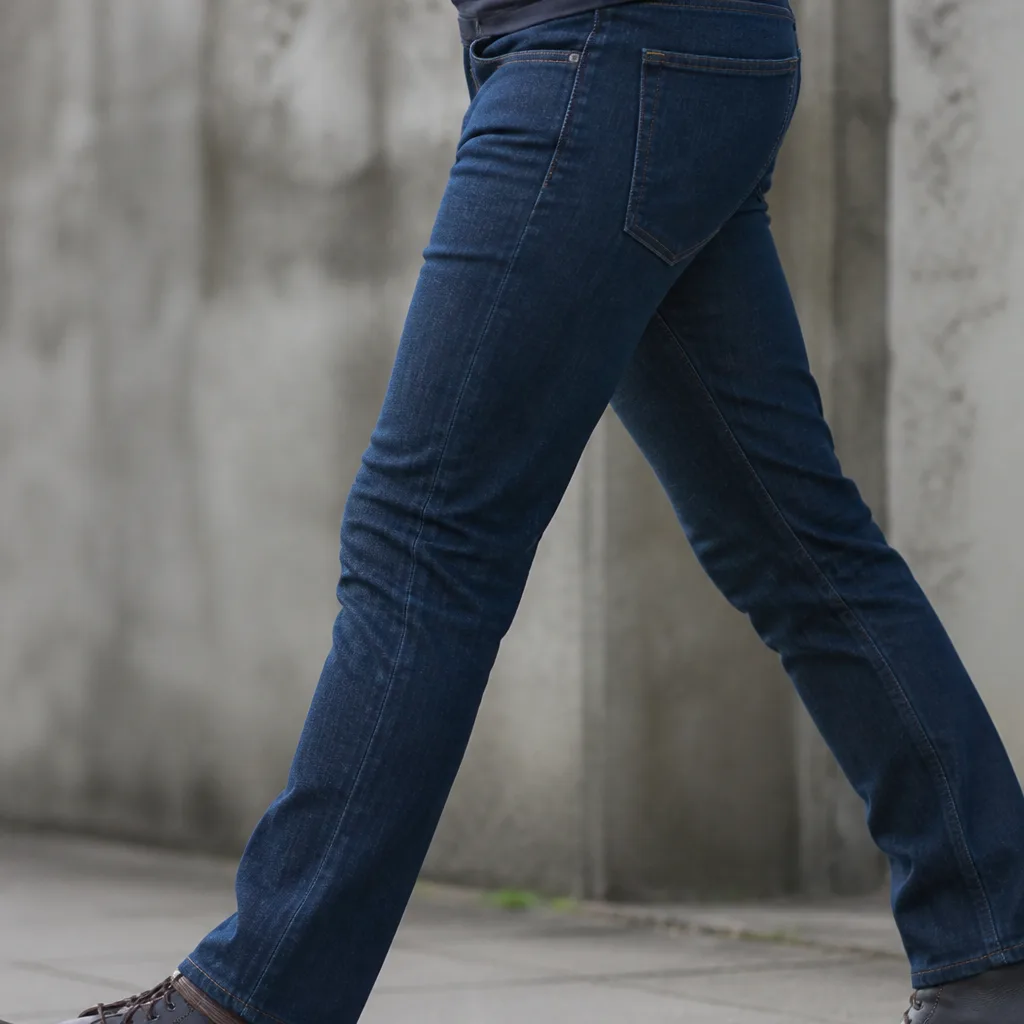
The break is the point where the hem of the jeans meets your shoe, and the fold or crease that forms there. A full break has one or more folds resting on top of the shoe, a slight break has the hem just touching the shoe with a small crease, and no break means the hem sits above the shoe entirely, which is common with cropped or ankle length styles. None of these is more correct than another, and the right choice depends on the style you want and the type of shoe you plan to wear with the jeans, which our jeans and shoes guide covers in more detail.
If jeans are too long, the hem drags on the ground and wears through quickly. If they are too short, the ankle shows more than intended and the proportions can look unbalanced. Hemming is a straightforward alteration, and our hemming guide explains how it is done.
05
Common fit problems and how to fix them
| Problem | Likely cause | What to try |
|---|---|---|
| Waistband gaps at the back | Rise or cut does not match your waist to hip ratio | Try a different rise or a cut described as curvy or fitted through the waist |
| Horizontal creases below the seat | Rise too short, or seat too tight | Try a higher rise or a size up in the same cut |
| Fabric pulls tight across the thigh | Cut too slim for your leg shape | Try a straight or relaxed cut, or a size up |
| Excess fabric bunching at the ankle | Leg opening too wide, or length too long | Consider tapering or hemming |
| Waistband slips down during the day | Waist too loose, or rise sits lower than expected | Try a smaller waist size or a higher rise |
06
How men's and women's fit differ
Men's cuts are generally straighter through the hip and seat, with less difference between waist and hip measurement built into the pattern. Women's cuts more often shape in at the waist and out through the hip, to follow a curvier waist to hip ratio, and rise options tend to be more varied. Because of this, the same size label can behave quite differently between a men's and a women's cut of the same brand, so always check the specific size chart for the cut you are trying, not just the general brand size chart. Our jeans for body types guide goes into more depth on matching a cut to your shape.
07
Trying jeans on properly
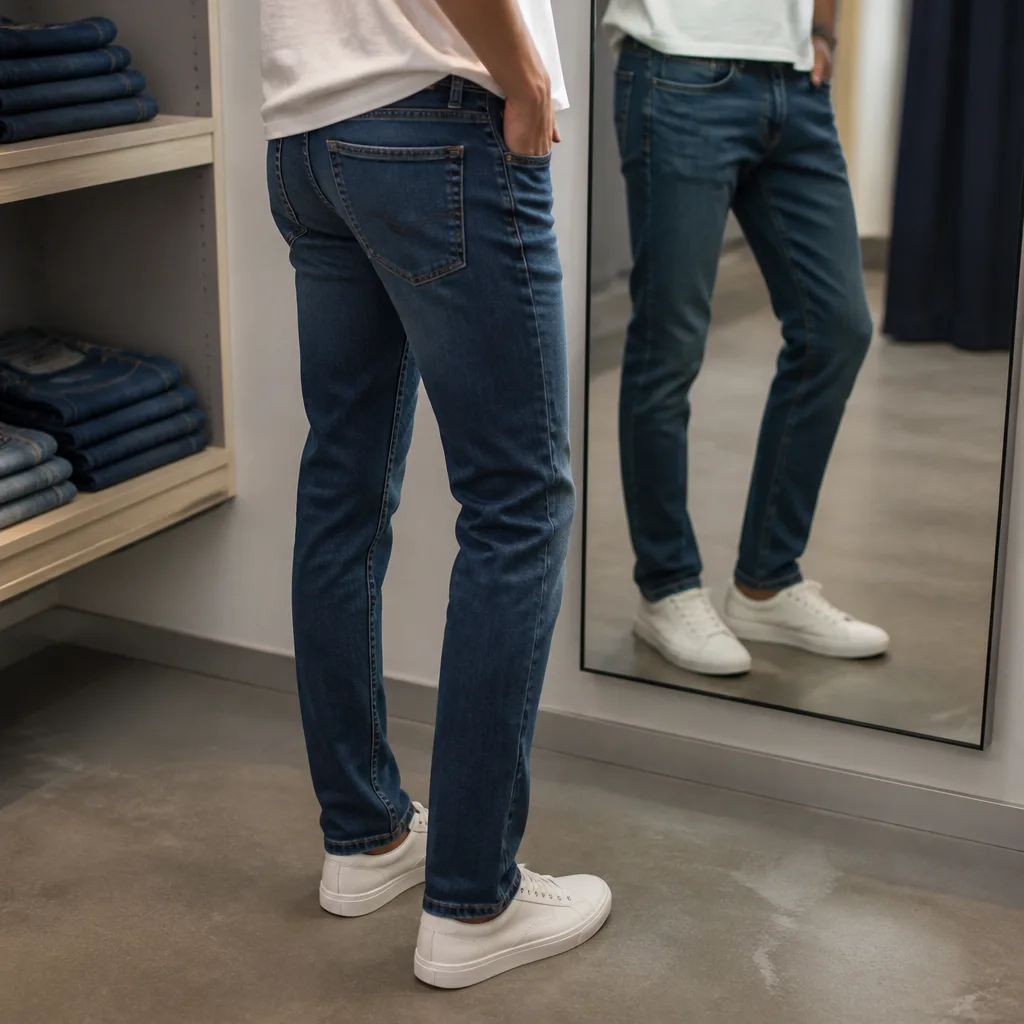
Wear the kind of underwear and shoes you would normally pair with the jeans, since both affect how the fit looks and feels. Move around: sit, crouch, take a few steps and raise your leg onto a low step if one is available. A fit that only looks good standing still is not a reliable test.
If you are choosing between a stretch and a rigid pair in the same size, remember that stretch denim will loosen slightly with wear over the course of a day, an effect sometimes called bagging out, while rigid denim holds its shape more but takes longer to soften. Our stretch versus rigid guide explains this trade off in full.
 Matching productRaw selvedge jeansAmazon →
08
What to check before you leave the fitting room
Walk a few steps, sit down fully, and crouch as if picking something up from a low shelf, all while still wearing the jeans. Reach up above your head as well, since a rise that is too short can pull uncomfortably at the waist when you stretch upward. If the jeans pass these simple movement checks without pinching, gaping or restricting you, that is a strong sign the fit works for everyday wear rather than only for standing still in front of a mirror.
It also helps to check the fit again after a short while of wearing the jeans, rather than judging only in the first minute. Denim, especially rigid denim, can feel different once your body warms the fabric slightly and it begins to settle against you, so a brief walk around the shop or the house before deciding is worthwhile if you are able to do so.
09
Frequently asked questions
How many fingers should fit under the waistband?
As a general guide, one to two fingers should fit comfortably between the waistband and your body while standing. Any tighter and the waistband is likely to dig in when seated.
Why do my jeans fit at the waist but gape at the back?
This usually means your hip to waist ratio does not match the cut's proportions, or the rise is not suited to your shape. Trying a different rise or a cut built for a curvier fit often solves this.
What does the break mean when trying on jeans?
The break is where the hem meets your shoe and the fold this creates. It ranges from a full break, with visible folds resting on the shoe, to no break, where the hem sits above the shoe entirely.
Should jeans feel tight when new?
Rigid, non-stretch jeans often feel slightly firm when new and soften with wear, but they should never be painfully tight or restrict movement. Stretch jeans should feel comfortable from the first wear.
Why do my jeans stretch out and sag after a few hours?
This is often bagging out, a normal effect in stretch denim where the fibres relax under repeated movement. Choosing a slightly smaller size or a fabric with a higher recovery can reduce this.
Explore
Read next
 Jeans Fits and Cuts Explained: Skinny to Wide LegA complete overview of jeans fits and cuts, from skinny to wide leg, plus rise and length, with a comparison table and answers to common qu…
 How to Buy Jeans: A Complete Buying GuideA practical, step by step guide to choosing jeans that actually fit, from measuring yourself to checking construction and buying online.
 The Denim Guide: How Jeans Fabric Is MadeA clear explanation of denim fabric itself: weave, weight, yarn, dyeing and the regional traditions behind it.