
6 min read
Jeans Rise Explained: Low, Mid and High Rise
Understand what rise means on jeans, how low, mid and high rise sit differently, and how to measure and choose the right one for you.
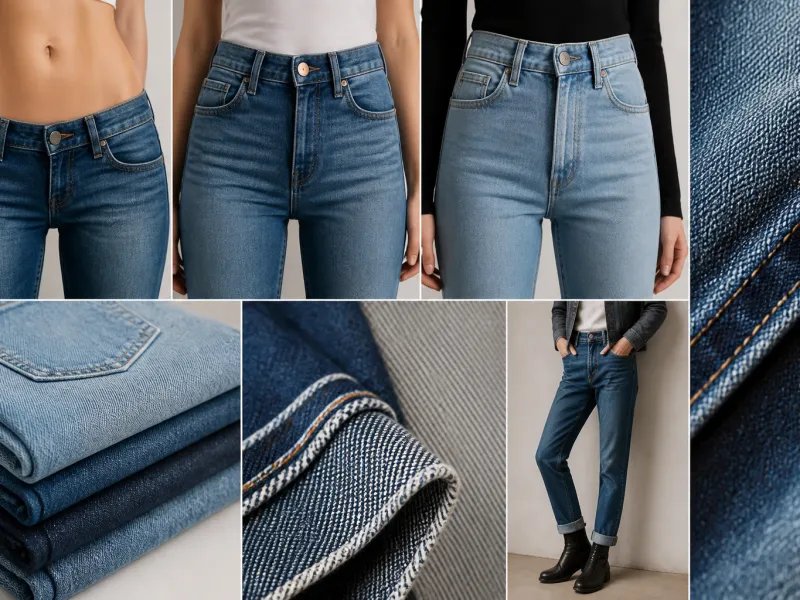
Rise is the distance from the crotch seam to the top of the waistband, and it is one of the most important measurements for how jeans feel and look, often more important than the waist number itself. Understanding rise helps explain why two pairs in the same size can sit completely differently on your body.
This guide covers the main rise categories, how to measure rise, and how body proportions affect which rise is likely to feel most comfortable.
01
What rise means
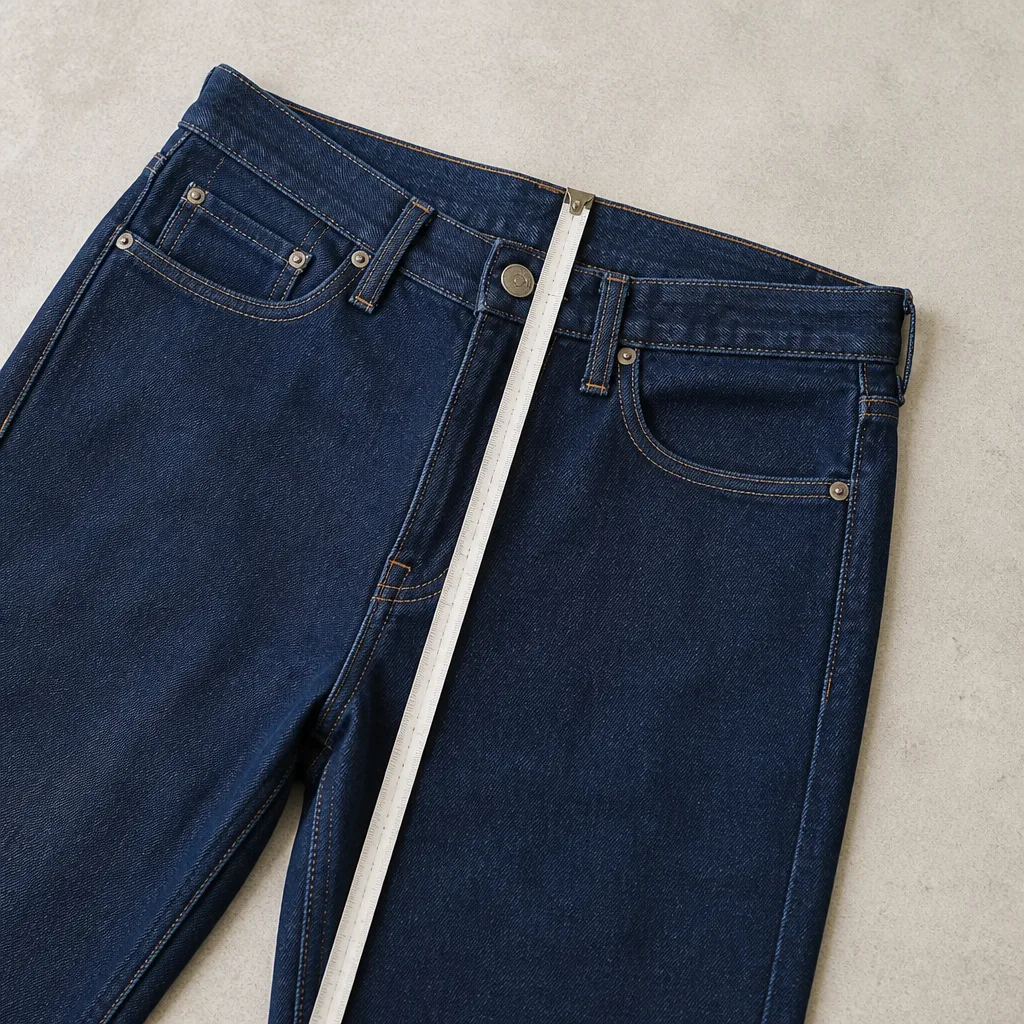
Rise is measured along the front of the jeans, from the middle of the crotch seam straight up to the top edge of the waistband. A longer rise means more fabric between the crotch and the waistband, so the waistband sits higher on the body, closer to the natural waistline. A shorter rise means the waistband sits lower, closer to or below the hips.
Rise is closely linked to where the jeans sit relative to your natural waist, which is why it changes how a given waist measurement feels even when the number on the label is identical between two pairs.
02
Low, mid and high rise
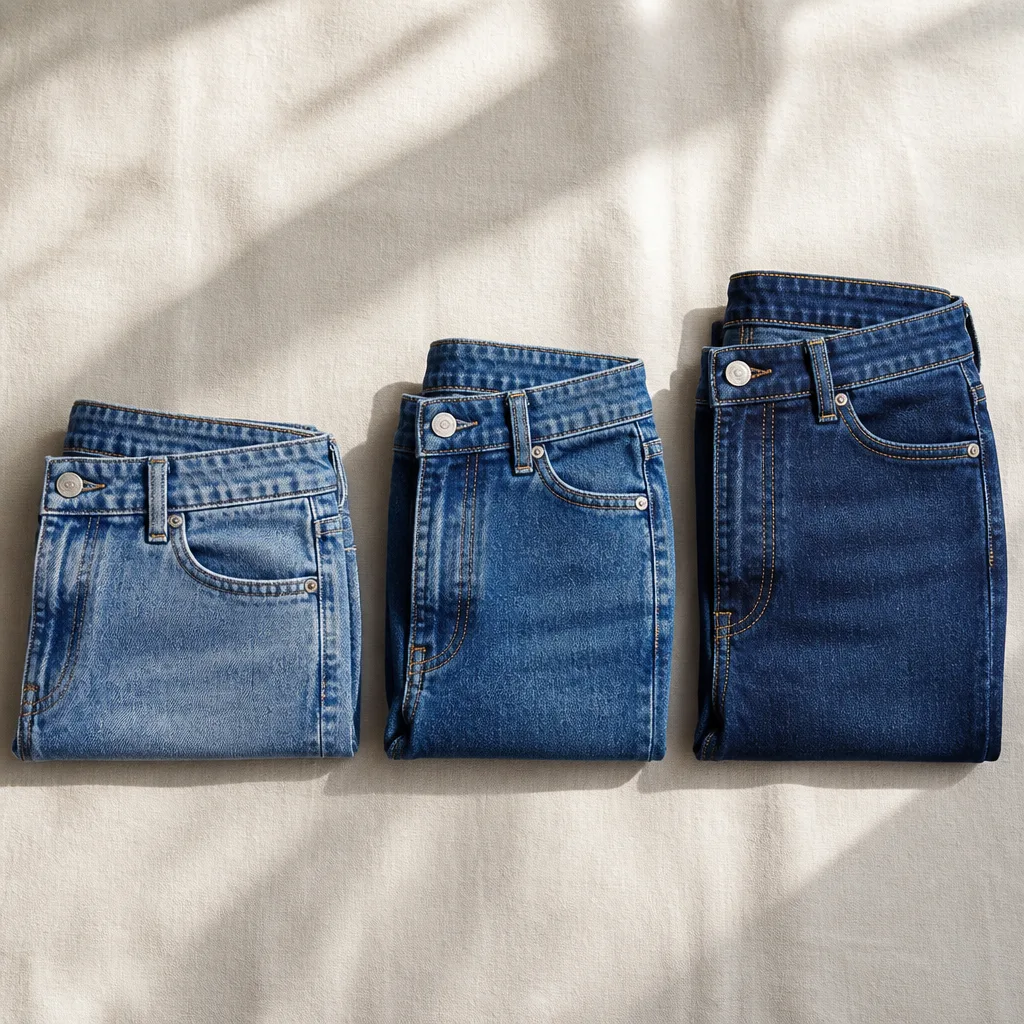
Low rise sits below the natural waist, often close to the top of the hip bones. Mid rise sits at or just below the natural waistline, and is often described as a versatile, all round option. High rise sits at or above the natural waistline, sometimes extending close to the navel. There is no fixed measurement boundary between these categories, since they depend on individual body proportions, but the table below gives a general sense of typical rise measurements.
| Rise category | Typical front rise | Where it sits |
|---|---|---|
| Low rise | Roughly 18 to 22 cm (7 to 8.5 in) | Below the natural waist, near the hip bones |
| Mid rise | Roughly 22 to 26 cm (8.5 to 10 in) | At or just below the natural waist |
| High rise | Roughly 26 cm and above (10 in and above) | At or above the natural waist |
These ranges vary by brand and by body size, since a larger waist size naturally requires more fabric for the same rise category. Always check a brand's own measurements where they are available rather than relying on the category name alone.
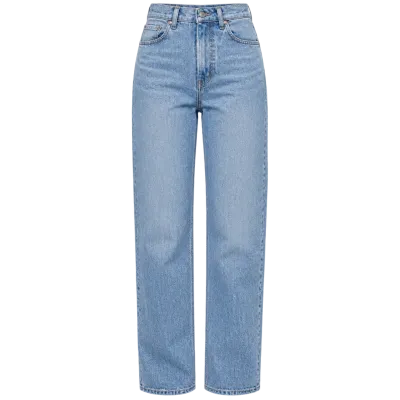 Matching productWomen's high-rise straight jeansAmazon →
03
Measuring rise on jeans you already own
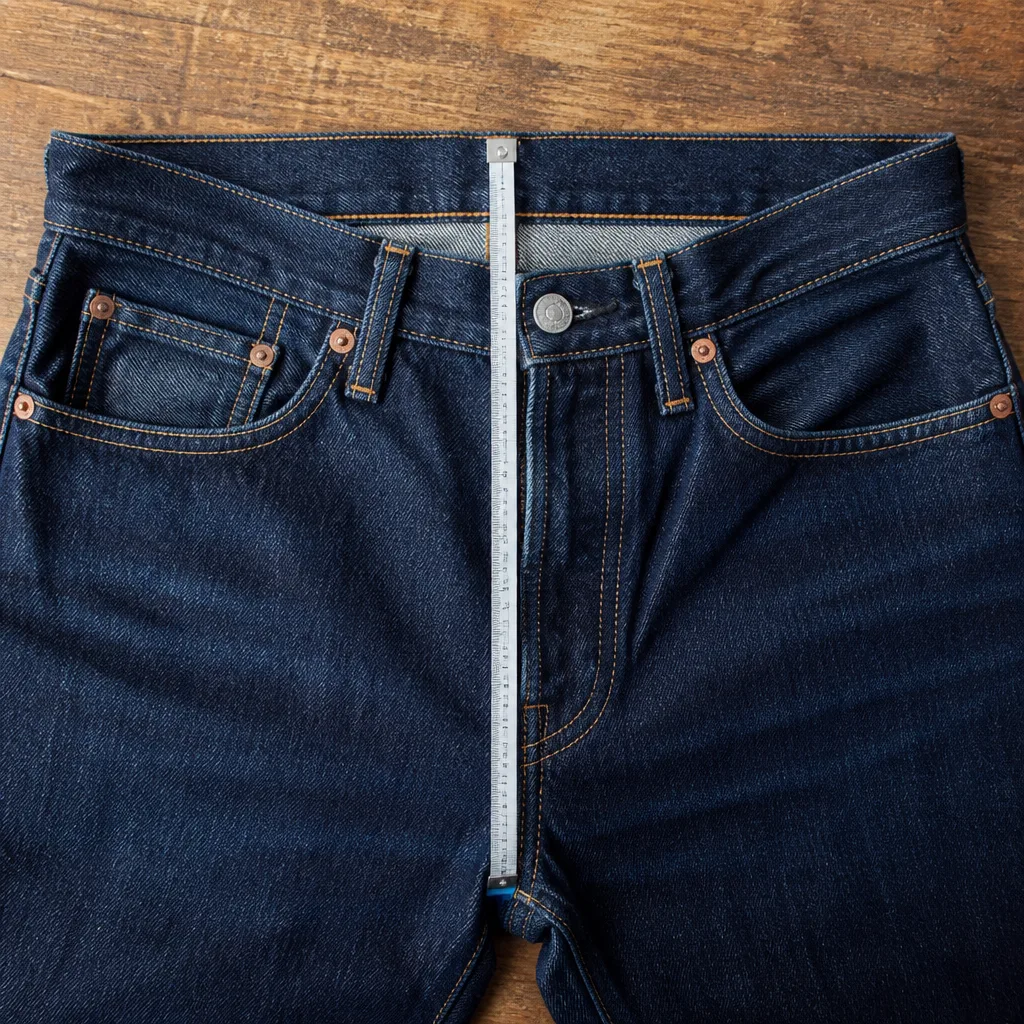
Lay the jeans flat on a table, front facing up, and smooth out the fabric. Measure from the middle of the crotch seam, where the two inner leg seams meet, straight up along the fly to the top of the waistband. This gives the front rise. A back rise, from the same crotch point up the centre back seam, is usually a few centimetres longer, since the back of the jeans needs extra room to cover the seat comfortably.
If you have a pair that fits you well at the waist, measuring its rise gives you a useful reference number to compare against new pairs before buying, especially when shopping without the option to try them on first.
04
Body proportions and choosing a rise
There is no single correct rise for a given height or body type, but a few general patterns are worth knowing. A high rise tends to elongate the appearance of the legs, since the waistband sits higher and less leg is covered by the waistband itself. A low rise can shorten the visual line of the torso and lengthen the hip area instead. If you have a shorter torso relative to your legs, a lower rise can help balance proportions, and the reverse is true for a longer torso.
Comfort also plays a role beyond appearance. A high rise stays in place well during activities that involve bending or reaching, since it does not rely on sitting at the hip to stay up. A low rise can feel more relaxed around the midsection but is more prone to slipping down during the day if the waist is not snug.
05
Rise and comfort when sitting
Rise affects comfort noticeably when seated. A high rise that fits well will not dig into the stomach when sitting, since there is enough fabric to accommodate the change in body shape. A low rise that is cut too small can gape at the back when seated, sometimes called low back gaping, even if it looks fine when standing. Testing the seated fit before buying is one of the most reliable ways to judge whether a rise genuinely suits you, and our guide to how jeans should fit covers this and other fit checks in more detail.
06
Rise across different cuts
Rise is often paired with particular cuts by convention, though not always. High rise is common with straight, wide leg and mom jeans, since these cuts are often designed to sit at the natural waist. Low rise historically appeared frequently with skinny cuts, though mid rise skinny jeans are now just as common. There is no rule that ties a rise to a cut, so it is worth checking both separately when comparing jeans, and our guide to jeans fits explains the main cuts on their own terms.
 Matching productWomen's skinny jeansAmazon →
07
Rise and layering
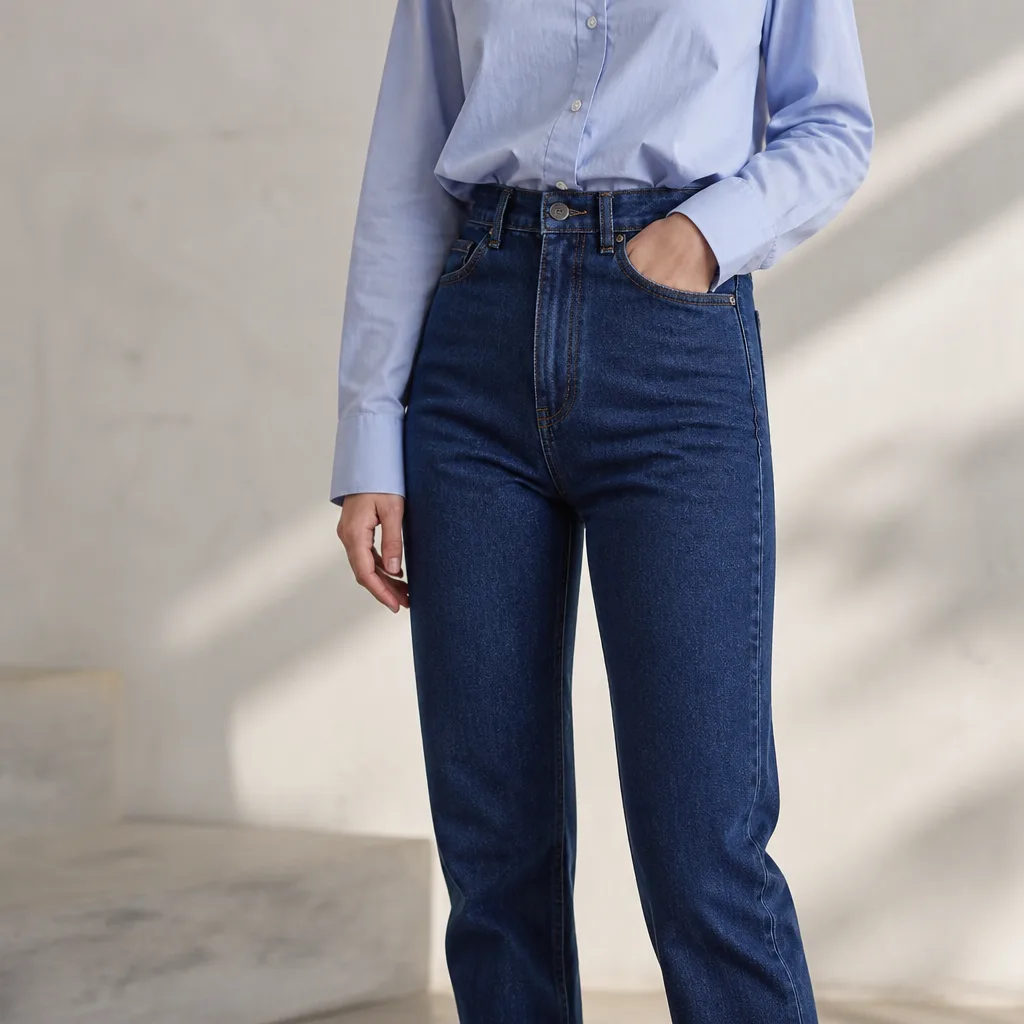
The rise you choose also affects how jeans work with the rest of an outfit. A high rise is generally easier to pair with a tucked in top, since the waistband sits at a natural point to tuck fabric into, and it avoids the gap of skin or undergarment that can otherwise show between a shorter top and a lower waistband. A low or mid rise tends to suit a top that is left untucked or only partly tucked, since there is less waistband to work with visually. Neither approach is right or wrong, and this is largely a matter of the look you are aiming for on a given day.
If you regularly bend, crouch or reach as part of work or daily activity, a higher rise is generally more practical, since it stays in place without needing to be pulled up repeatedly through the day. A lower rise can still work well for these activities as long as the waist fits snugly enough to stay put, but it depends more on getting that waist measurement right, which is covered in detail in our size guide.
08
Frequently asked questions
What is the difference between low, mid and high rise?
The difference is where the waistband sits relative to your natural waist. Low rise sits below it, mid rise sits at or just below it, and high rise sits at or above it.
How do I measure the rise of jeans I already own?
Lay the jeans flat, front side up, and measure from the middle of the crotch seam straight up along the fly to the top of the waistband. This gives the front rise measurement.
Does rise affect comfort when sitting?
Yes. A rise that fits well will not dig in or gape when you sit down. Testing the seated fit is one of the best ways to check whether a rise suits your body.
Is a certain rise always paired with a certain cut?
No. While some combinations are more common by convention, such as high rise with straight or wide leg cuts, rise and cut are separate features and can be combined in many ways.
Which rise elongates the legs visually?
A high rise generally makes the legs appear longer, since the waistband sits higher and covers less of the hip and thigh area.
 Matching productMen's straight jeansAmazon →
Explore
Read next
 Jeans Fits and Cuts Explained: Skinny to Wide LegA complete overview of jeans fits and cuts, from skinny to wide leg, plus rise and length, with a comparison table and answers to common qu…
 How to Buy Jeans: A Complete Buying GuideA practical, step by step guide to choosing jeans that actually fit, from measuring yourself to checking construction and buying online.
 The Denim Guide: How Jeans Fabric Is MadeA clear explanation of denim fabric itself: weave, weight, yarn, dyeing and the regional traditions behind it.