
5 min read
Choosing jeans for your body: a guide based on proportions
Instead of fitting yourself into a label, this guide looks at proportions such as rise and leg shape so you can choose jeans that genuinely suit you.
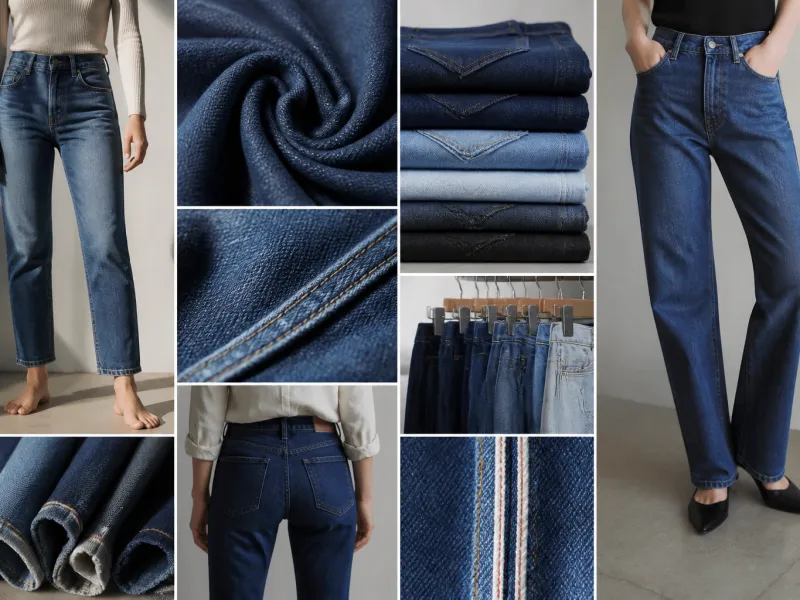
Advice about jeans and body shape often relies on fixed categories that do not describe everyone well, and bodies rarely match a single label exactly. This guide takes a different approach, focusing instead on proportions: where your waist sits relative to your hips, how your leg tapers or does not, and how different rises and leg shapes interact with those proportions. The goal is practical guidance you can apply to your own body, not a box to fit into.
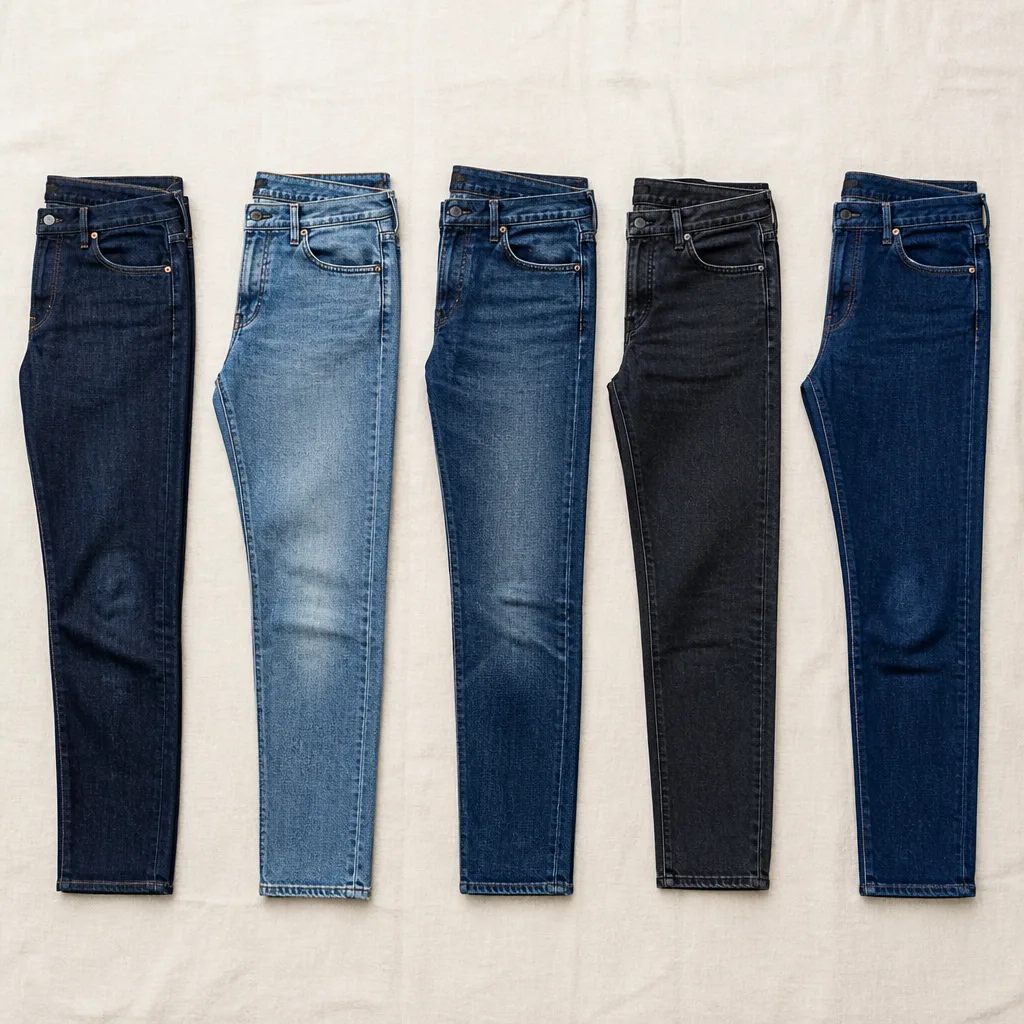
01
Start with proportions, not labels
Two useful proportions to think about are the difference between your waist and hip measurement, and the general shape of your leg from thigh to ankle. A larger difference between waist and hips generally means rise and waistband shaping matter more for comfort and fit, while a smaller difference often gives more flexibility across different rises. Similarly, a leg that narrows more from thigh to calf will interact differently with a straight or tapered cut than a leg with less change in width along its length.
Thinking in these terms, rather than trying to match yourself to a category such as pear or rectangle, tends to produce more useful decisions, since it focuses directly on how a specific pair of jeans will sit on your specific proportions.
Proportions can also change over time, with weight fluctuations, muscle changes or simply ageing all affecting how a given rise or leg shape sits compared with a few years earlier. Revisiting these basic measurements occasionally, rather than assuming a size or fit that worked before will always work in the future, tends to save time when shopping for a new pair.
02
Rise and the waist to hip relationship
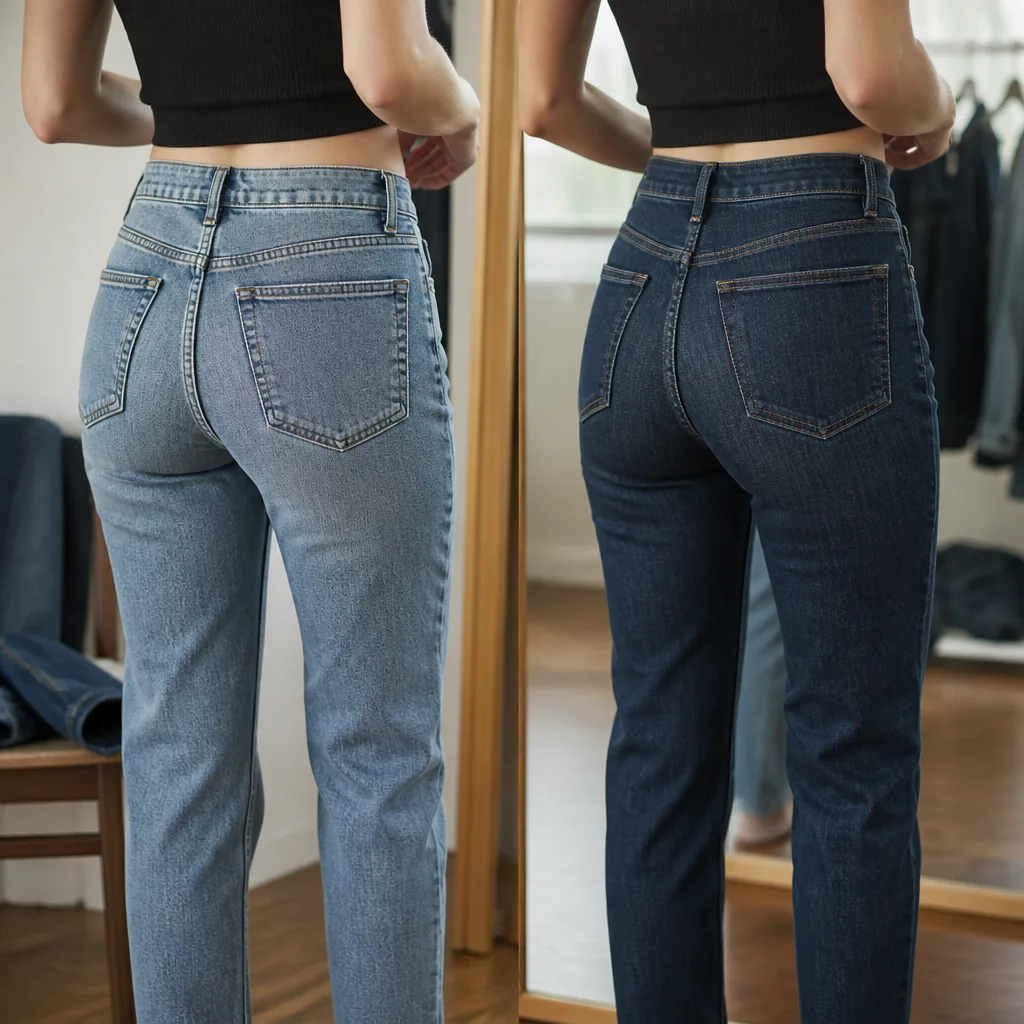
The rise of a pair of jeans, meaning how high the waistband sits, has a big effect on comfort and appearance when there is a noticeable difference between waist and hip measurements. A higher rise generally sits above the widest part of the hips, which can reduce gaping at the waistband and create a smoother line through the midsection. A lower rise sits closer to or below the hip bones and tends to suit a smaller difference between waist and hip measurements more comfortably, since there is less curve for the waistband to sit against.
If jeans consistently gape at the back waistband when they fit well through the hips and thighs, a higher rise or a style cut specifically for a larger waist to hip difference is generally worth trying before changing size.
03
Leg shape and how it reads on different proportions
Leg shape interacts with your own leg's proportions rather than existing in isolation. A straight or slightly tapered leg tends to create a clean, balanced line for most leg shapes, since it neither adds noticeable width nor pulls in sharply at any one point. A wider leg, such as wide leg or relaxed styles, can balance proportions where the shoulders or upper body are visually broader, since the added width through the leg creates a more even overall silhouette.
A closely fitted leg, such as skinny or slim styles, follows the leg's natural shape closely, which some people find comfortable and others prefer to avoid, particularly if they prefer more ease of movement or a less fitted look through the thigh and calf.
| Proportion consideration | What to look for | Likely effect |
|---|---|---|
| Larger waist to hip difference | Higher rise, curved waistband shaping | Reduces gaping, smoother fit through the midsection |
| Smaller waist to hip difference | Low to mid rise, straighter waistband | Comfortable without needing extra shaping |
| Leg narrows noticeably thigh to ankle | Straight, tapered or slim leg | Follows the leg's natural line |
| Leg width more consistent thigh to ankle | Straight, bootcut or wide leg | Balanced proportions without excess fabric bunching |
| Shorter torso relative to legs | Higher rise | Visually lengthens the leg line |
| Longer torso relative to legs | Low to mid rise | Keeps proportions balanced rather than shortening the leg |
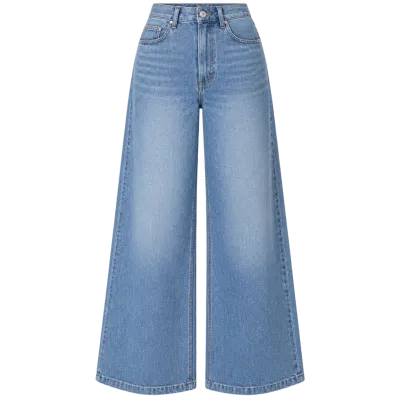 Matching productWomen's wide-leg jeansAmazon →
04
Length and where jeans break
Length affects overall proportion as much as rise or leg shape. Jeans that end too far above the ankle can visually shorten the leg, while jeans that pool heavily at the shoe can make the leg look shorter from a different direction by breaking the vertical line. A length that sits close to the top of the shoe, with a small, clean break, tends to read as balanced across a wide range of heights and leg lengths. For more detail on length and fit checks by garment, see our guide to men's jeans fits or women's jeans fits.
05
Common mistakes when choosing jeans for your body
One common mistake is choosing a size based on the waist measurement alone, without checking how the rise and hip shaping sit once the jeans are on. Two pairs in the same labelled size can fit very differently depending on where the waistband is cut and how much curve is built into the pattern. Trying jeans on and sitting down, not just standing, is one of the most reliable ways to catch this kind of mismatch before it becomes uncomfortable.
Another common mistake is assuming that a leg shape that suited a previous pair of jeans will always suit the next, without accounting for changes in fabric weight or stretch. A stretch fabric behaves differently on the body than a rigid one at the same nominal size, so a leg shape that felt loose in a stretch fabric can feel noticeably closer fitting in a rigid one, even at an identical measurement.
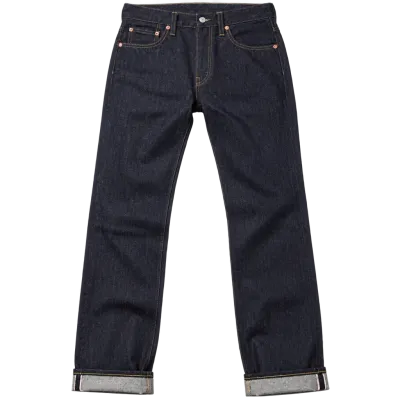 Matching productRaw selvedge jeansAmazon →
06
Trying jeans on with intention
When trying on jeans, check the waistband against your natural waist or hip line depending on the rise you are testing, then sit down and move naturally before deciding on fit. Pay attention to where the leg breaks at your shoe and whether the fabric pulls or bunches at the knee or thigh when seated. These checks tell you far more about real world comfort than how the jeans look in a single standing pose.
It also helps to try on more than one size close to your usual measurement, since cut and fabric can shift the practical fit by a size in either direction even within the same stated waist measurement. Comparing two adjacent sizes side by side on your own body is often more informative than comparing size charts between different jeans.
07
Frequently asked questions
Should I choose jeans based on a body shape label?
Labels can be a starting point, but focusing directly on your own proportions, such as your waist to hip difference and leg shape, generally leads to a better fitting result than trying to match a fixed category.
Does rise really make a noticeable difference to fit?
Yes. Rise changes where the waistband sits relative to your hips, which has a direct effect on gaping, comfort and how smoothly the fabric sits through the midsection.
Can the same leg shape suit every body?
A straight or slightly tapered leg tends to suit the widest range of proportions, but the most flattering leg shape still depends on your individual leg shape and how much width or closeness feels comfortable to you.
Why do jeans in the same size sometimes fit differently?
Rise, waistband curve, fabric stretch and leg shape all vary between styles, so the same labelled size can sit quite differently depending on these details rather than the size number alone.
Explore
Read next
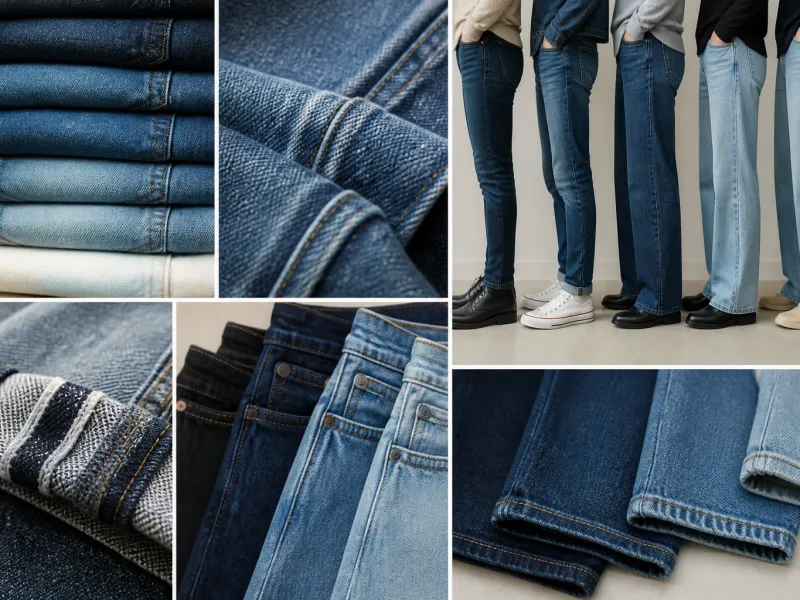 Jeans Fits and Cuts Explained: Skinny to Wide LegA complete overview of jeans fits and cuts, from skinny to wide leg, plus rise and length, with a comparison table and answers to common qu…
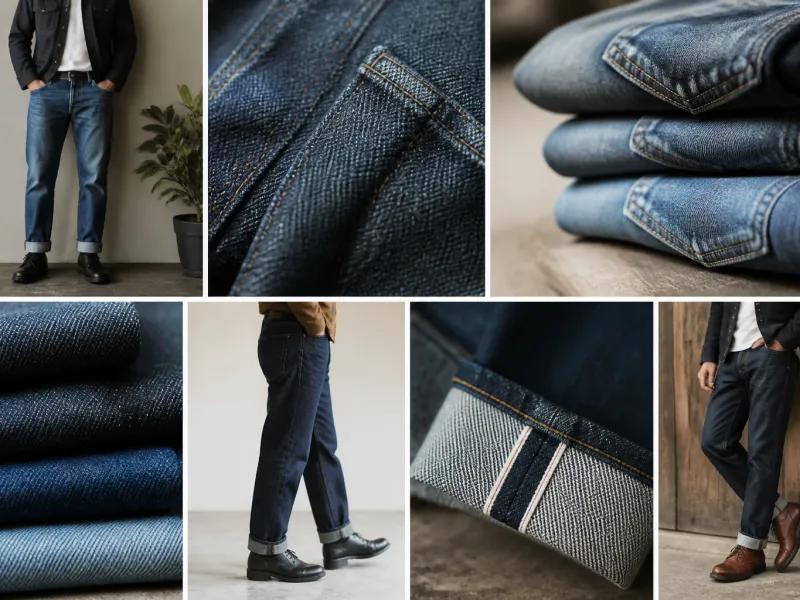 How to Buy Jeans: A Complete Buying GuideA practical, step by step guide to choosing jeans that actually fit, from measuring yourself to checking construction and buying online.
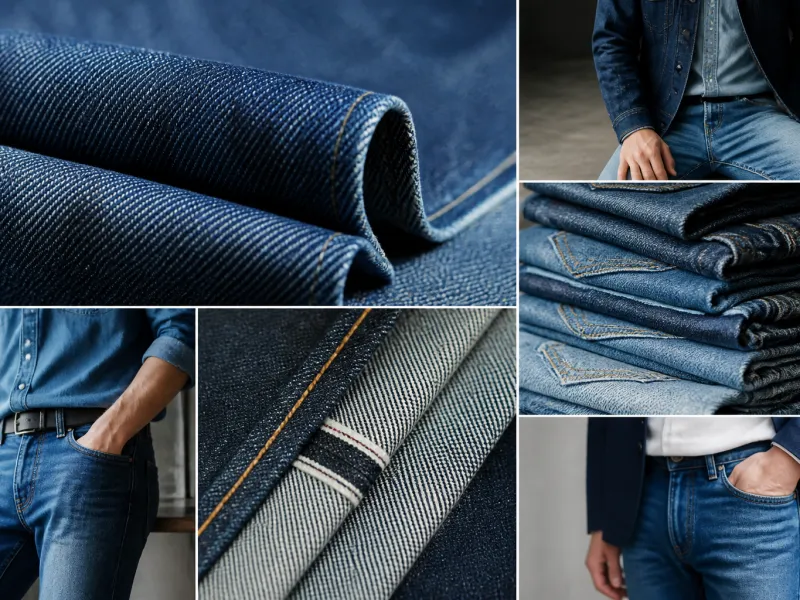 The Denim Guide: How Jeans Fabric Is MadeA clear explanation of denim fabric itself: weave, weight, yarn, dyeing and the regional traditions behind it.