
6 min read
Men's jeans fits explained: rise, leg opening and length
From slim to relaxed, here is a clear breakdown of men's jeans fits, including rise, leg opening and length, with what to check before you buy.
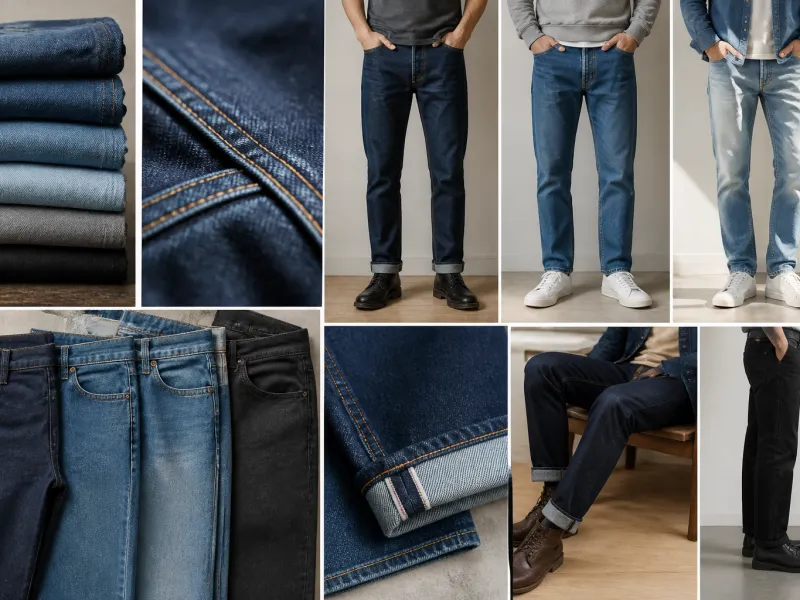
Men's jeans are usually described with a fit name such as slim, straight or relaxed, but these names alone do not tell you how a pair will actually sit on your body. Rise, leg opening and length all shape the fit as much as the name on the label, and understanding these details makes it far easier to choose jeans that feel comfortable and look balanced. This guide breaks down the main fits sold for men and explains what to check when trying them on.
01
The main fit categories
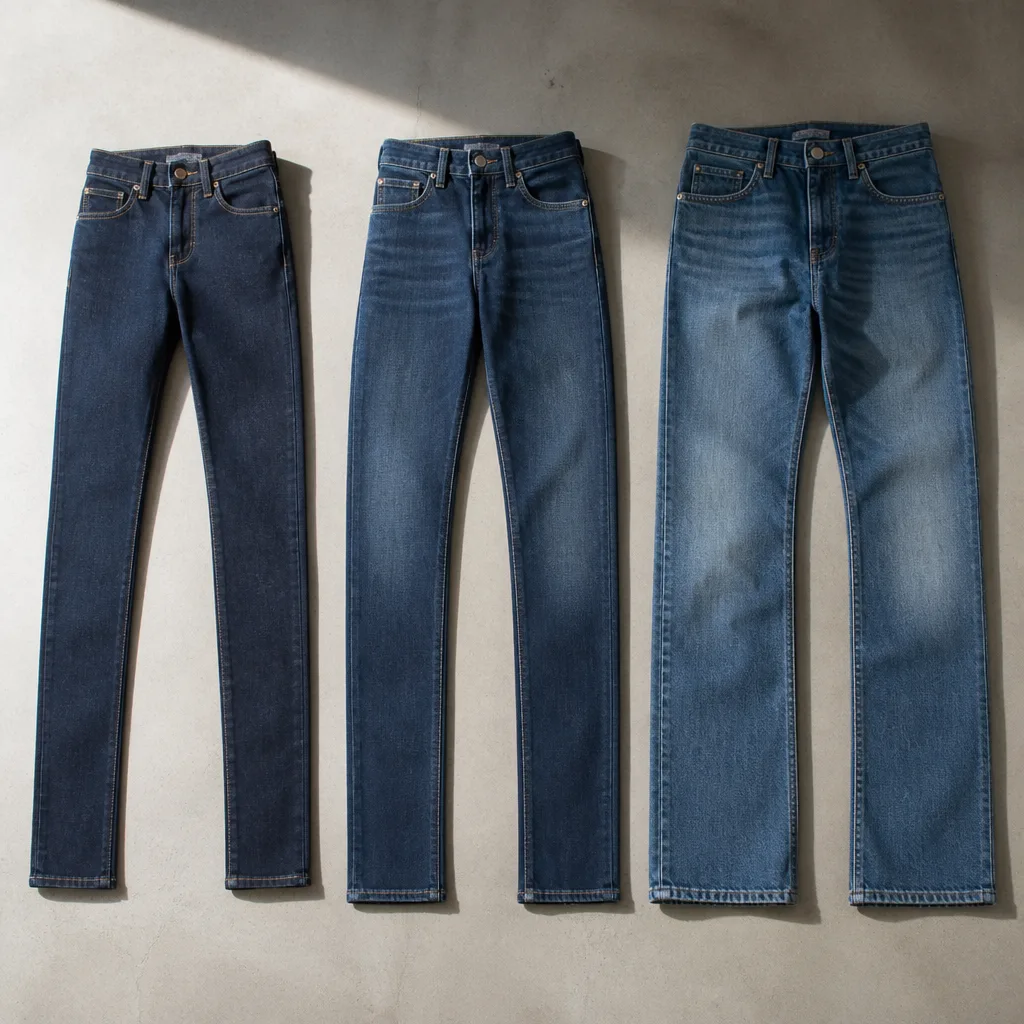
Skinny fits follow the leg closely from thigh to ankle with minimal extra room. Slim fits are close but with slightly more room, particularly through the thigh, than skinny. Straight fits keep a consistent leg width from knee to ankle without tapering in sharply. Relaxed fits add noticeable extra room throughout the seat, thigh and leg. Between these sit tapered fits, which are roomier through the thigh but narrow towards the ankle, and looser styles such as bootcut or wide leg, which widen slightly or noticeably below the knee.
These categories are not always applied consistently between different jeans, so treat the fit name as a starting point and always check the actual measurements or try the jeans on where possible.
It is also worth noting that fit names can shift meaning slightly over time as trends change, so a slim fit from one period or one line of jeans is not always as close fitting as a slim fit labelled elsewhere. Checking the actual leg opening and thigh measurement, rather than relying on the name alone, avoids most of this confusion.
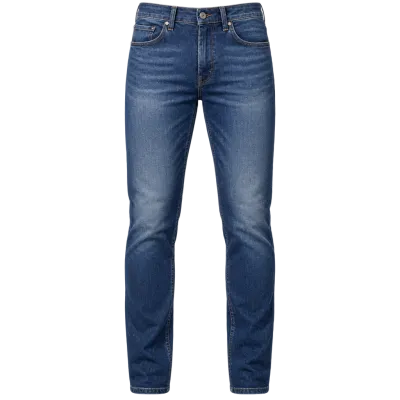 Matching productMen's slim jeansAmazon →
02
Rise: where the waistband sits
Rise measures the distance from the crotch seam to the top of the waistband, and it determines how high or low the jeans sit on your body. A low rise sits below the natural waist, closer to the hip bones. A mid rise sits at or close to the natural waist and is the most common choice for everyday wear. A high rise sits above the natural waist and is less common in men's jeans than in women's, though it does appear in some workwear inspired and wide leg styles.
Rise affects comfort when sitting and bending as much as appearance, since a rise that is too low can feel like it slips down during movement, while a rise that feels too high can feel restrictive around the midsection for some body shapes. Our dedicated guide to rise covers how to measure and choose the right one in more depth.
03
Leg opening: the width at the ankle
The leg opening is the circumference of the fabric at the bottom of the leg, and it is one of the clearest visual signals of how a fit will read once worn. A narrow leg opening, common in skinny and slim fits, creates a close, streamlined line from knee to ankle. A wider leg opening, seen in straight, bootcut and wide leg styles, allows more fabric to move around the ankle and can change how shoes appear underneath the jeans.
Leg opening also affects practicality. A narrower opening layers more easily under boots but can be harder to get over bulkier footwear, while a wider opening accommodates a broader range of shoes but may need hemming to avoid excess fabric pooling at the ankle.
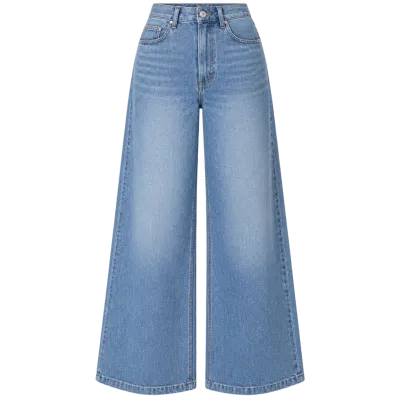 Matching productWomen's wide-leg jeansAmazon →
04
Length and how jeans sit with shoes
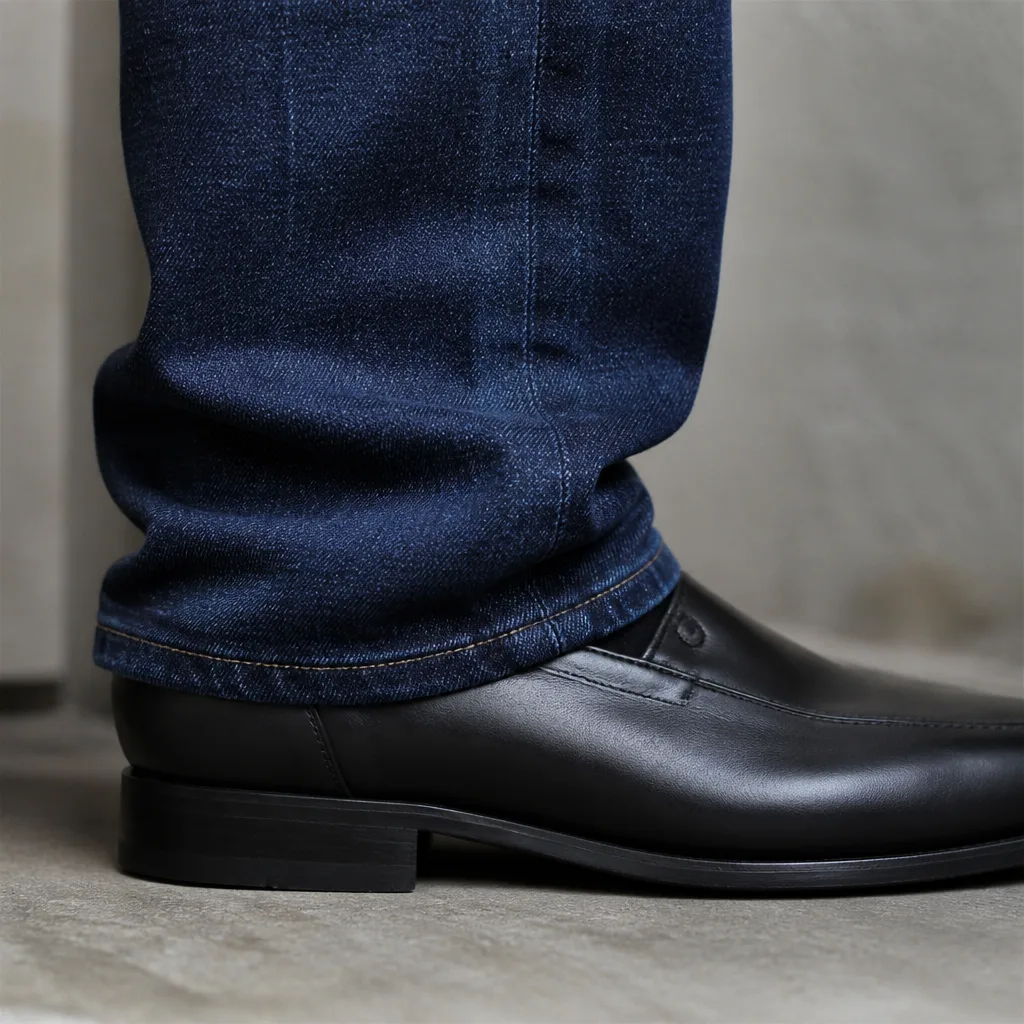
Length is often the detail that gets the least attention, yet it changes the overall look of a fit as much as rise or leg opening. Jeans that are too short can expose too much ankle and make legs appear shorter, while jeans that are too long bunch or pool at the shoe, disrupting the line of the leg from a different direction. The ideal length also depends on the shoe being worn, since a jean that breaks well over a trainer may sit differently over a boot with a different heel height.
| Length style | Typical break | Common with |
|---|---|---|
| Cropped or ankle length | Sits above the ankle, no break | Casual shoes, warmer weather |
| Standard, slight break | Fabric just touches the shoe | Trainers, casual boots |
| Full break | Fabric folds once over the shoe | Dress boots, wider leg openings |
| Stacked | Fabric folds multiple times | Relaxed or wide leg styles worn intentionally long |
If you regularly switch between different types of shoes, a moderate length with a slight break is usually the most versatile choice, since it works reasonably well across trainers, casual shoes and boots with a low to medium heel. For jeans you plan to shorten, our guide to hemming jeans explains the process in detail.
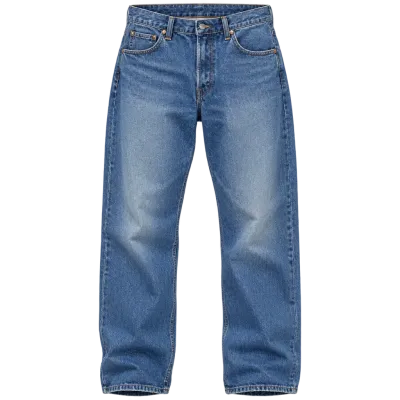 Matching productMen's relaxed jeansAmazon →
05
What to check when trying jeans on
Beyond the numbers on a label, a few practical checks help confirm whether a fit genuinely works. Sit down and check whether the waistband stays comfortable and whether the fabric pulls tightly across the thigh. Walk a few steps to check whether the leg opening restricts movement or, conversely, flaps loosely in a way you do not want. Check the rise against your natural waist line to see whether it sits where you expect, particularly if you are trying an unfamiliar fit for the first time.
It is also useful to check the fit with the belt or waistband fastened at the position you would actually wear it, rather than pulled unusually high or low for the fitting itself, since this is one of the more common reasons a fit feels different once worn day to day compared with how it felt in a fitting room.
06
Matching fit to how you use your jeans
Straight and slim fits tend to be the most versatile for everyday wear, working reasonably well with most shoe types and suiting a wide range of body proportions without extreme tapering or width. Slimmer fits generally suit situations where a closer, more tailored look is wanted, while relaxed and wider fits suit a more casual, workwear influenced look or simply a preference for freedom of movement. For a broader look at fit and body proportions, see our guide to jeans for body types.
It is also worth owning more than one fit if your week includes different kinds of activity. A straight or slim pair for regular days, alongside a more relaxed or tapered pair for physical work or long periods of sitting, covers a wider range of needs than trying to make one single fit suit every situation.
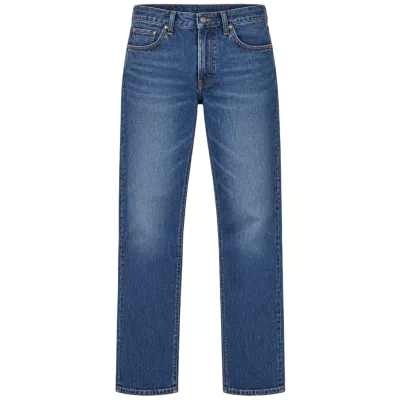 Matching productMen's straight jeansAmazon →
07
Frequently asked questions
What is the most versatile men's jeans fit?
Straight and slim fits are generally the most versatile, since they suit a wide range of body proportions and work with most types of shoes without extreme tapering or width.
How do I know if the rise is right for me?
Check where the waistband sits relative to your natural waist when standing and sitting. If it slips down during movement, the rise may be too low, and if it feels restrictive, a lower rise may suit you better.
Should leg opening match the shoes I wear most?
It helps. A narrower leg opening tends to suit trainers and low profile shoes, while a wider leg opening works more naturally with boots and shoes that have more volume.
What length should jeans be for boots?
A slight to full break, where the fabric just touches or folds once over the boot, generally looks most balanced, though this also depends on the boot's heel height.
Explore
Read next
 Jeans Fits and Cuts Explained: Skinny to Wide LegA complete overview of jeans fits and cuts, from skinny to wide leg, plus rise and length, with a comparison table and answers to common qu…
 How to Buy Jeans: A Complete Buying GuideA practical, step by step guide to choosing jeans that actually fit, from measuring yourself to checking construction and buying online.
 The Denim Guide: How Jeans Fabric Is MadeA clear explanation of denim fabric itself: weave, weight, yarn, dyeing and the regional traditions behind it.