
7 min read
Jeans Fits and Cuts Explained: Skinny to Wide Leg
A complete overview of jeans fits and cuts, from skinny to wide leg, plus rise and length, with a comparison table and answers to common questions.
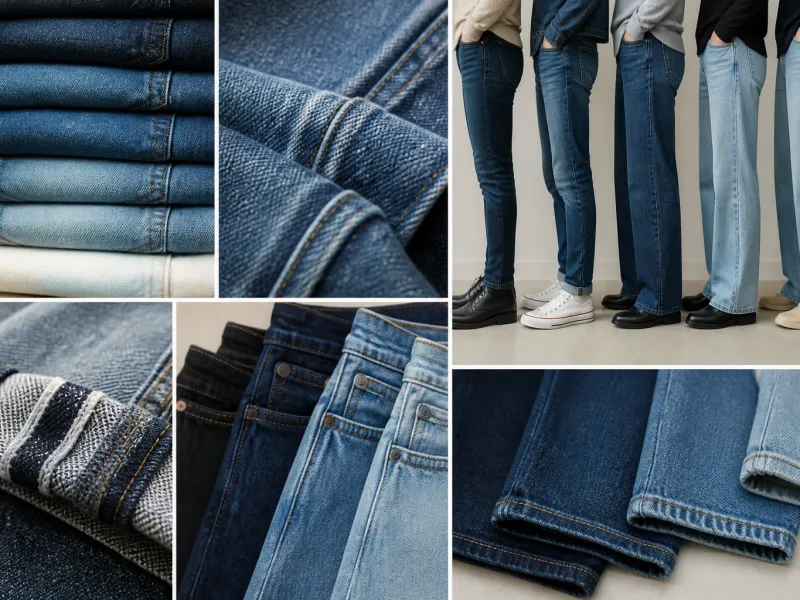
Jeans come in more shapes than most other garments in your wardrobe, and the names used for them, skinny, slim, straight, relaxed, tapered and more, are not always used consistently between brands. This overview explains each fit in plain terms, compares them side by side, and covers rise and length, the two measurements that shape how any fit actually sits on you. For the full detail on getting your size right, see our jeans size guide.
01
Fit by leg shape
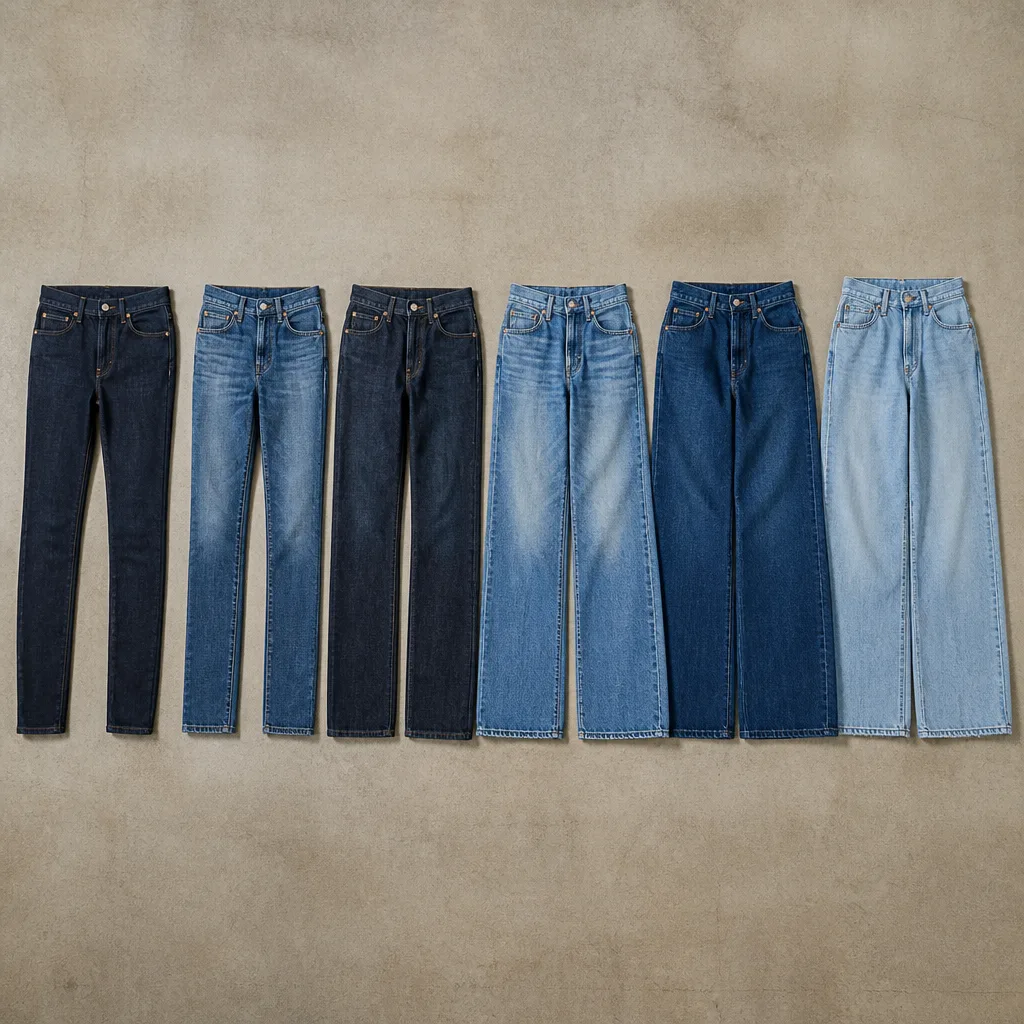
The clearest way to compare fits is by how the leg narrows or widens from thigh to hem. Most of the names below describe this shape rather than a specific brand or size.
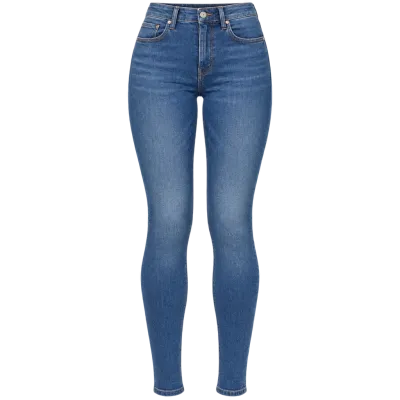
Skinny fits close to the leg all the way from the hip to the ankle, with very little extra room. It usually relies on stretch fabric to stay comfortable while sitting close to the body, and it is often paired with ankle length hems.
Slim is close through the hip and thigh like skinny, but with a touch more room through the leg, so it does not need as much stretch to remain comfortable. It sits between skinny and straight, and is one of the most common fits sold today.
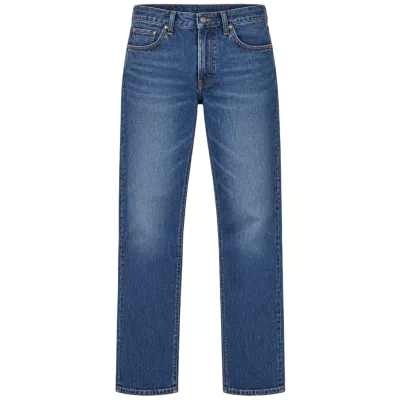
Straight keeps roughly the same width from knee to hem, without narrowing or flaring. It is the classic five pocket jeans silhouette and tends to suit the widest range of body shapes, which is why many people treat it as a safe default.
Regular fit is a related, often overlapping term. Different brands use it differently, sometimes as a synonym for straight, sometimes as a slightly roomier version of it, so it is worth trying a pair on rather than assuming what regular means for a specific label.
Relaxed adds noticeably more room through the seat, thigh and leg than straight, without the leg opening flaring out at the hem. It favours comfort and ease of movement over a fitted silhouette.
Tapered describes a leg that is roomier at the thigh and narrows toward the ankle. It is common in both classic and contemporary cuts and is often combined with another fit name, for example a slim tapered jeans.
Bootcut is fitted through the thigh and knee, then flares slightly from the knee down, historically to fit over a boot. The flare is usually modest compared to a true flare cut.
Flare widens more noticeably from the knee or mid thigh down to the hem than bootcut does, creating a distinctly wider silhouette at the ankle than at the knee.
Wide leg stays wide along the whole length of the leg, rather than narrowing at the knee before widening again like flare or bootcut. It generally sits away from the leg from hip to hem.
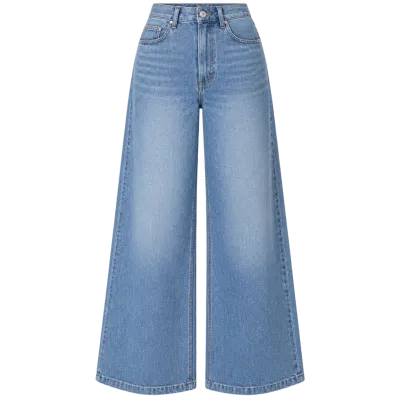 Matching productWomen's wide-leg jeansAmazon →
02
Fits often marketed by silhouette or era
Mom jeans combine a higher rise with a looser, slightly tapered leg and a fit that sits away from the body through the hip and thigh. The name refers to a silhouette popularised in earlier decades and revived in later fashion cycles, not to any particular brand.
Boyfriend jeans are a relaxed, loose fitting style modelled on a men's cut worn by women, usually with a straight or slightly tapered leg and a looser seat and thigh than fits designed specifically for a fitted silhouette.
Carrot fit narrows gradually from a fuller thigh down to a noticeably tapered ankle, giving the leg a rounded, carrot like outline when seen from the side. It is closely related to tapered fit but usually starts from a roomier thigh measurement.
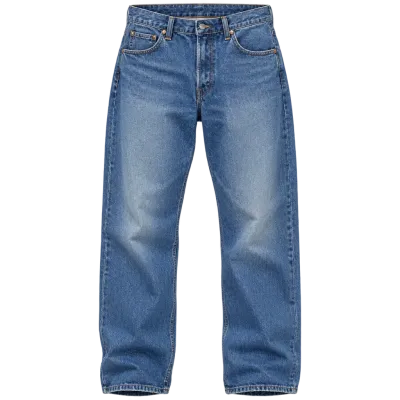 Matching productMen's relaxed jeansAmazon →
03
Rise: where the waistband sits
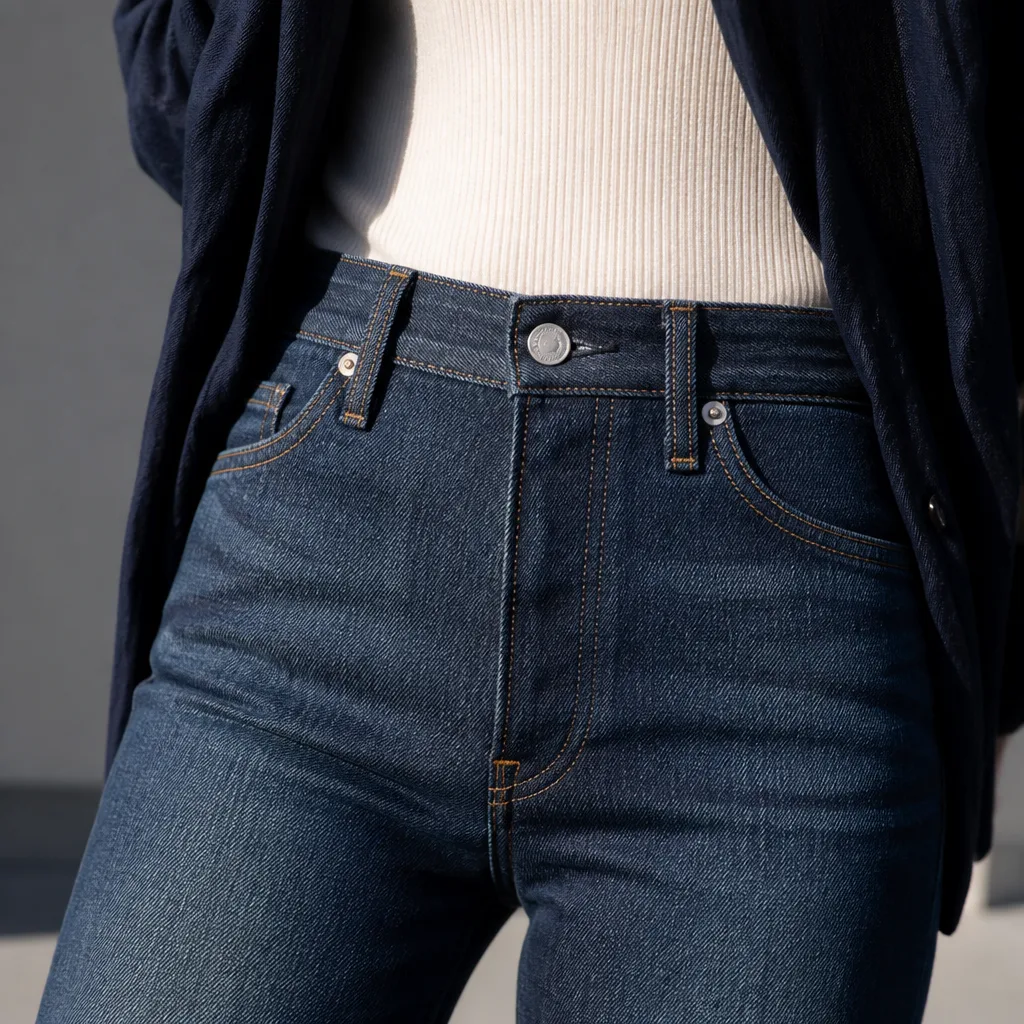
Rise measures the distance from the crotch seam to the top of the waistband, and it determines where the jeans sit on your body. Low rise sits below the natural waist, closer to the hip. Mid rise sits at or just below the natural waist. High rise sits at or above the natural waist. None of these is inherently better than another, and the right choice depends on comfort, the tops you plan to wear with the jeans, and simple personal preference. Our dedicated page on rise explained goes into this in more depth, including how rise interacts with different fits.
04
Length: inseam and hem
Length is usually given as the inseam, the distance from the crotch seam to the bottom of the hem, measured in inches on most size labels. A cropped or ankle length hem sits above the ankle bone, a standard or full length hem reaches the top of the shoe, and some wide leg and flare styles are cut to pool slightly at the floor by design. Because inseam length also depends on where the rise sits and how much the fabric may shrink or stretch with wear and washing, it is worth checking a brand's own measurements rather than assuming your usual number transfers exactly. If a pair needs shortening, our guide to hemming jeans covers the options.
05
Comparison table: fits at a glance
| Fit | Through hip and thigh | Through the leg | Typical rise |
|---|---|---|---|
| Skinny | Close | Close all the way down | Mid to high |
| Slim | Close | Slightly roomier than skinny | Mid |
| Straight | Fitted, not tight | Even width, no taper or flare | Mid |
| Relaxed | Roomy | Loose, straight leg | Mid |
| Tapered | Roomier at thigh | Narrows toward the ankle | Mid to high |
| Bootcut | Fitted | Slight flare from the knee | Low to mid |
| Flare | Fitted to roomy | Wider flare from knee or thigh | Mid to high |
| Wide leg | Roomy | Wide along the full length | Mid to high |
| Mom jeans | Loose | Slightly tapered | High |
| Boyfriend | Loose | Straight to slightly tapered | Mid |
| Carrot | Full | Tapers sharply to the ankle | Mid to high |
 Matching productMen's straight jeansAmazon →
06
How fit differs for men's and women's cuts
Fits with the same name are not always cut the same way for men and women, since the underlying block a pattern is built from differs between the two. Waist to hip proportions, the shaping through the seat, and where the rise is set typically differ between a men's straight fit and a women's straight fit sold under the same name. If you are shopping within one category, our dedicated pages on men's jeans fits and women's jeans fits go into the specific fits most common in each, including how sizing conventions differ between them.
07
Matching a fit to your body and your day
There is no single correct fit, and the same person can reasonably own several. A fitted style such as skinny or slim can pair well with a looser top, while a roomier style such as wide leg or relaxed often balances well with a more fitted top. Comfort during the activities you actually do in your jeans, whether that means sitting at a desk, walking a lot, or cycling, matters as much as silhouette. Our guide to jeans for body types looks at this in more detail, and our how should jeans fit guide explains what to check while trying a pair on, from waist gape to knee position, whatever fit you choose.
Once you have a fit in mind, our size guide and buying guide can help you translate it into an actual size, and our glossary is there if any of the terms above need a closer look.
08
Frequently asked questions
What is the difference between slim and skinny fit?
Skinny sits close to the leg all the way down to the ankle and usually relies on stretch fabric. Slim is close through the hip and thigh but leaves a little more room through the leg, so it needs less stretch to stay comfortable.
Is regular fit the same as straight fit?
Not always. Some brands use regular as a synonym for straight, while others use it for a slightly roomier cut. The names are not standardised across the industry, so trying a pair on is the most reliable way to compare them.
What is the difference between bootcut and flare?
Bootcut has a modest flare that begins around the knee, originally meant to fit over a boot. Flare widens more noticeably, often starting higher on the thigh, giving a more pronounced difference in width between the knee and the hem.
Does rise affect which fit I should choose?
Rise and leg fit are separate choices, and most leg fits are available across a range of rises. That said, some combinations, such as high rise with a tapered or wide leg, are more common than others because of how they tend to balance visually.
How do I know which length to order?
Check the inseam measurement on the size label against your own inseam, measured from the crotch to where you want the hem to fall, and compare it against the brand's own chart, since inseam labelling is not perfectly standardised. Our size guide explains how to measure yourself for this.
Can the same fit feel different between brands?
Yes. Pattern blocks, fabric stretch and finishing all vary between manufacturers, so a straight fit from one brand can sit noticeably differently from a straight fit from another, even at the same labelled size.
 Matching productWomen's skinny jeansAmazon →
Explore
Read next
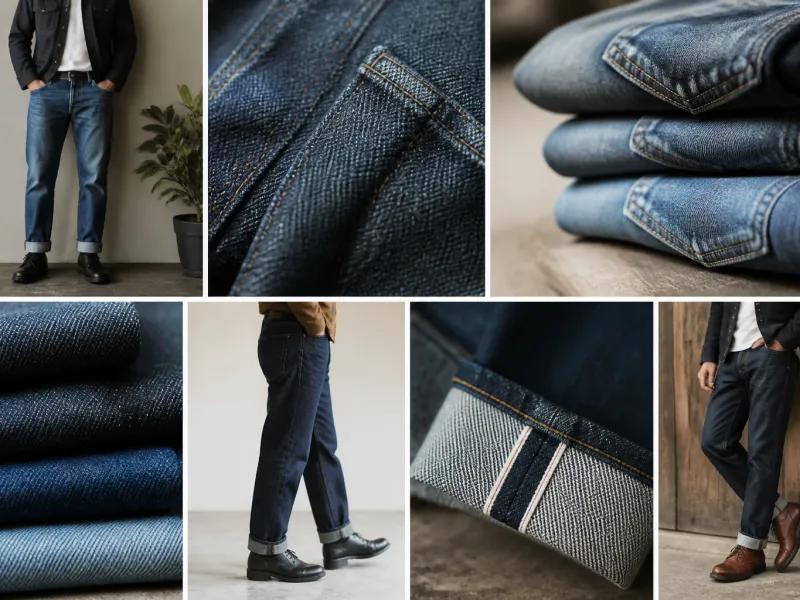 How to Buy Jeans: A Complete Buying GuideA practical, step by step guide to choosing jeans that actually fit, from measuring yourself to checking construction and buying online.
 The Denim Guide: How Jeans Fabric Is MadeA clear explanation of denim fabric itself: weave, weight, yarn, dyeing and the regional traditions behind it.
 Denim Glossary: Jeans Terms Explained from A to ZA quick reference glossary of denim and jeans terms from A to Z, from fabric and fit to washes and construction.