
5 min read
Women's jeans fits explained: rise, sizing and body considerations
From skinny to wide leg, here is a clear guide to women's jeans fits, including rise, how sizing works, and fit tips for different proportions.
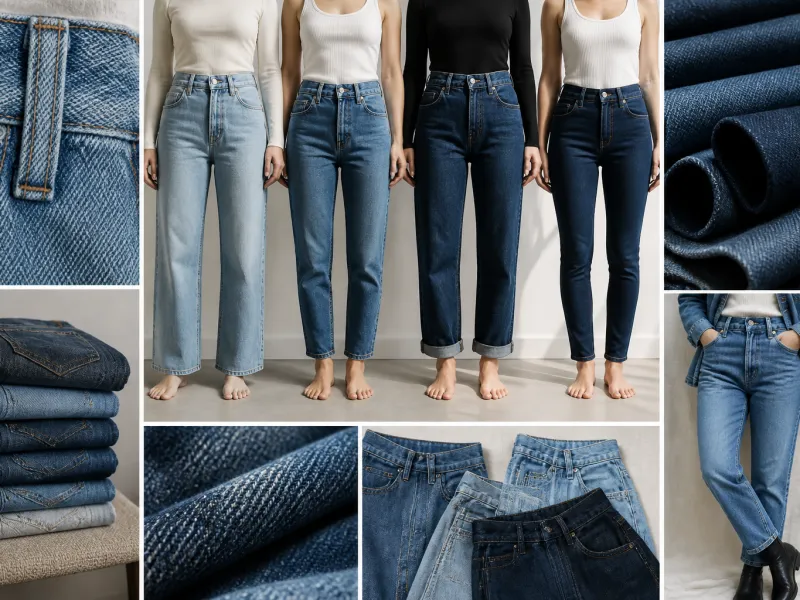
Women's jeans are sold in a wide range of fits and, often confusingly, in more than one sizing system at the same time. This guide explains the main fits available, how rise changes the way jeans sit, how EU and inch sizing relate to each other, and what tends to matter most for curvy, petite and tall proportions. The aim is to help you narrow down what to look for before you start trying jeans on.
01
The main fit categories
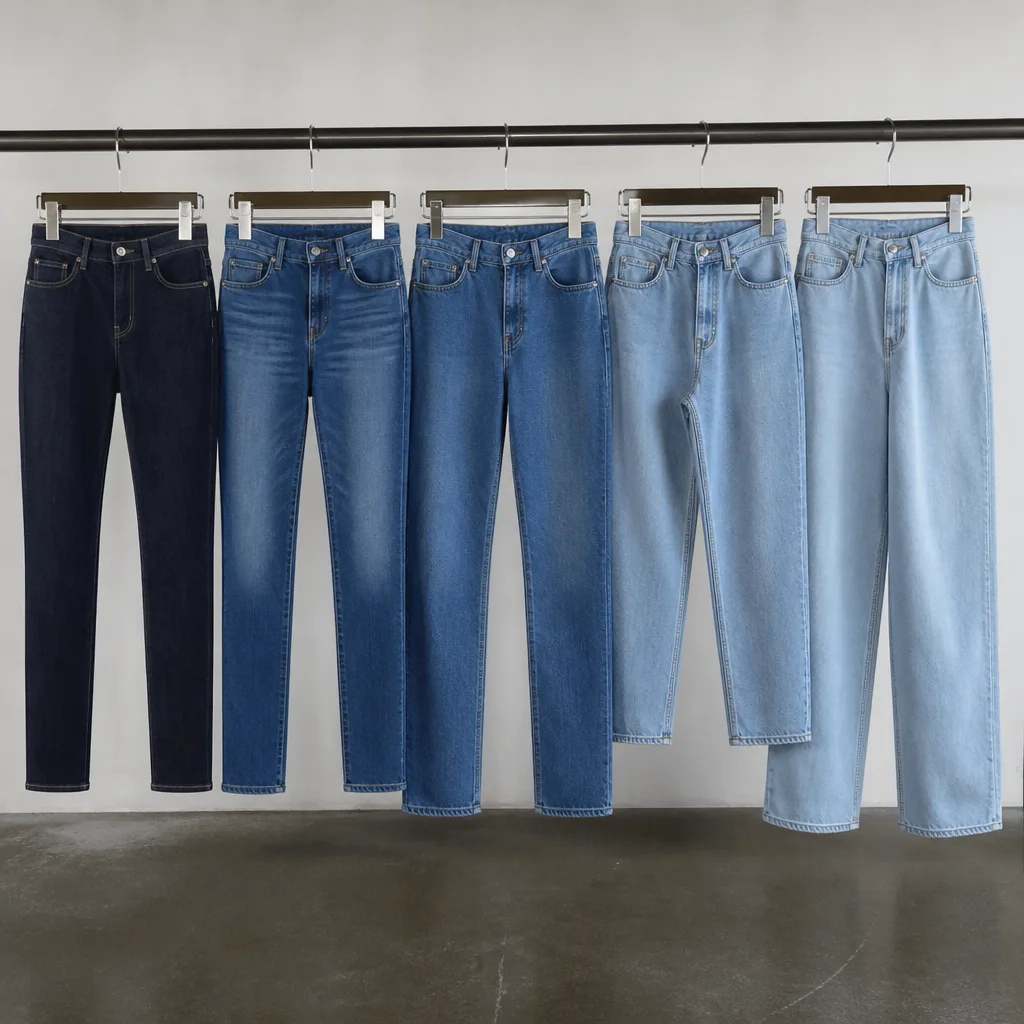
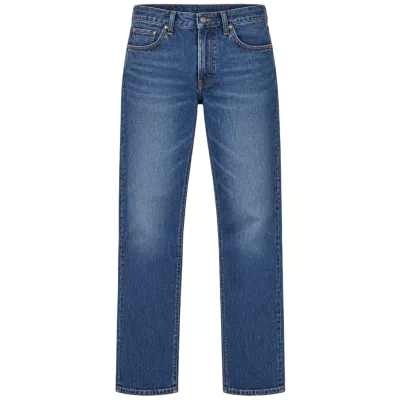
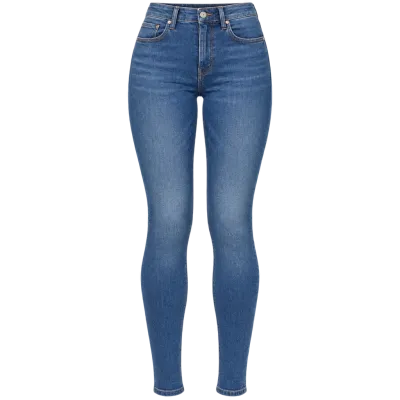
Skinny fits sit close to the leg from hip to ankle. Slim fits are similar but slightly looser, especially through the thigh. Straight fits keep a consistent width down the leg. Mom jeans combine a higher rise with a relaxed leg and a slightly tapered ankle, often with a more vintage inspired shape. Boyfriend jeans are looser throughout, deliberately styled to reference a more masculine, oversized cut. Wide leg and flare styles widen below the hip or knee to varying degrees, while bootcut widens only slightly at the ankle.
As with any fit naming system, these terms are not applied with perfect consistency across different jeans, so use them as a general guide rather than an exact promise of how a specific pair will fit. Fit names can also shift meaning between seasons and between brands as trends change, so the safest approach is always to check the actual leg opening, thigh and rise measurements rather than relying on the name printed on the label.
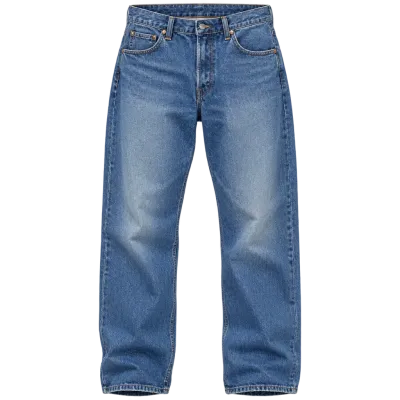 Matching productMen's relaxed jeansAmazon →
02
Rise and how it changes the fit
Rise has a particularly noticeable effect in women's jeans because it interacts closely with waist to hip proportions. A high rise sits above the natural waist and is common in mom, straight and wide leg styles, often chosen for a smoother line through the midsection and less gaping at the back waistband. A mid rise sits close to the natural waist and works well across a broad range of proportions, making it a common default for many fits. A low rise sits below the natural waist and is more commonly found in skinny and slim styles, particularly in fashion led collections.
For a full explanation of how to measure and choose rise, see our dedicated guide to rise.
Rise is also worth revisiting whenever your body or your habits change, since jeans that were comfortable at a particular rise a few years ago do not always remain the best choice, and there is no need to stay loyal to a single rise if a different one now suits you better.
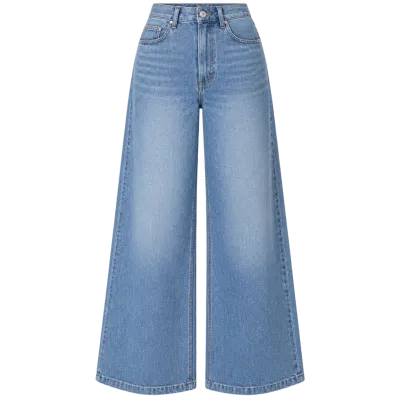 Matching productWomen's wide-leg jeansAmazon →
03
EU and inch sizing
Women's jeans are commonly labelled with EU sizing, typically ranging from around 34 to 46, or with inch based waist and length measurements written as W and L, such as W28 L32. Inch sizing describes the waist and inseam measurement directly, while EU sizing is a numbered scale that does not correspond to a fixed waist measurement across all brands.
Because EU sizing conversion tables vary between manufacturers, the same EU size can correspond to a noticeably different actual waist measurement depending on the brand. Whenever possible, check the actual waist and inseam measurements in centimetres, rather than relying on the size label alone, especially when buying a brand or style for the first time. Our jeans size guide explains how to measure yourself and read these numbers accurately.
| EU size | Approximate inch waist | Approximate waist (cm) |
|---|---|---|
| 34 | W25 | 64 |
| 36 | W27 | 68 |
| 38 | W28 to W29 | 72 |
| 40 | W30 | 76 |
| 42 | W31 to W32 | 80 |
| 44 | W33 to W34 | 85 |
| 46 | W35 to W36 | 90 |
These figures are approximate and intended as a starting reference only, since actual conversions vary by manufacturer and by cut within the same brand.
04
Fit considerations for curvy proportions
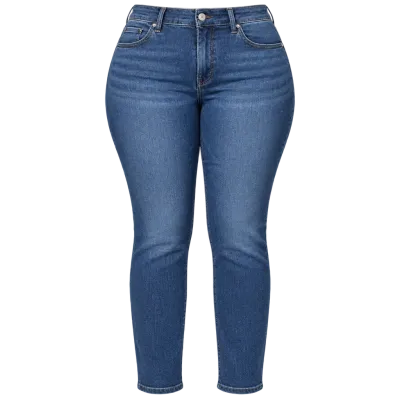
For a larger difference between waist and hip measurements, a higher rise and a waistband with built in curve tends to reduce gaping at the back and create a more secure, comfortable fit through the hips. Stretch fabric, covered in more detail in our stretch versus rigid denim guide, can also help the waistband move with the body rather than sitting rigidly, which some people find more comfortable across a full range of movement.
Straight and slightly wide leg cuts often balance proportions well for curvier hips and thighs, since they avoid pulling tightly against the widest part of the leg while still keeping a clean line.
 Matching productPlus size jeansAmazon →
05
Fit considerations for petite proportions
For shorter heights, length is often the first detail to check, since standard lengths can pool excessively at the ankle. Many jeans are available in petite length options with a shorter inseam built in, rather than only relying on hemming afterwards. A higher rise can also help visually lengthen the leg line for shorter statures, since it shifts more of the visible leg below the waistband.
06
Fit considerations for tall proportions
For taller heights, the opposite issue is common: standard inseams may end too far above the ankle. Extended or tall length options, where available, add extra inseam length without changing the rise or leg shape of the fit itself. Where a longer length option is not available, a straight or wide leg style generally has more fabric to work with when altering length, compared with a fit that is already narrow through the ankle.
Leg opening is also worth checking for taller proportions, since a narrower ankle on an already long leg can visually shorten the overall line if there is not enough length to reach a clean break over the shoe. A straight or slightly wider leg opening at a fuller length often reads as more balanced than a narrow leg cut noticeably short to compensate.
 Matching productMen's straight jeansAmazon →
07
Choosing between fits for different occasions
The fit you choose can also depend on where you plan to wear the jeans. A slim or straight fit at a mid rise tends to work well across the widest range of everyday situations, from casual outings to more put together looks paired with a fitted top. Wider leg and flare styles often suit occasions where a more relaxed or fashion forward look is wanted, while skinny fits remain a practical choice under boots or for layering beneath a longer coat or jacket. None of these are fixed rules, and comfort with a particular rise and leg shape usually matters more day to day than following a strict occasion based guide.
 Matching productWomen's skinny jeansAmazon →
08
Frequently asked questions
Why do EU sizes vary so much between brands?
EU sizing is a numbered scale rather than a direct measurement, and each manufacturer sets its own conversion, so the same EU size can correspond to different actual waist measurements between brands.
What rise suits a larger waist to hip difference?
A higher rise, often paired with curved waistband shaping, tends to reduce gaping and sit more securely for a larger difference between waist and hip measurements.
Are petite and tall jeans just hemmed differently?
Not always. Many petite and tall options are cut with a different inseam from the start, rather than being a standard length simply shortened or lengthened afterwards.
Should I trust the size label or the actual measurements?
Actual waist and inseam measurements in centimetres are more reliable than the size label alone, since sizing labels and their conversions vary between brands and styles.
Explore
Read next
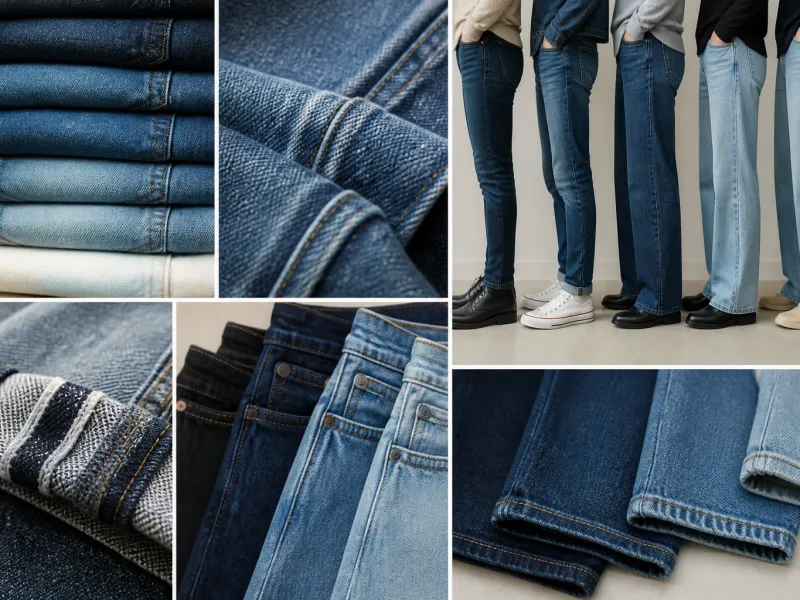 Jeans Fits and Cuts Explained: Skinny to Wide LegA complete overview of jeans fits and cuts, from skinny to wide leg, plus rise and length, with a comparison table and answers to common qu…
 How to Buy Jeans: A Complete Buying GuideA practical, step by step guide to choosing jeans that actually fit, from measuring yourself to checking construction and buying online.
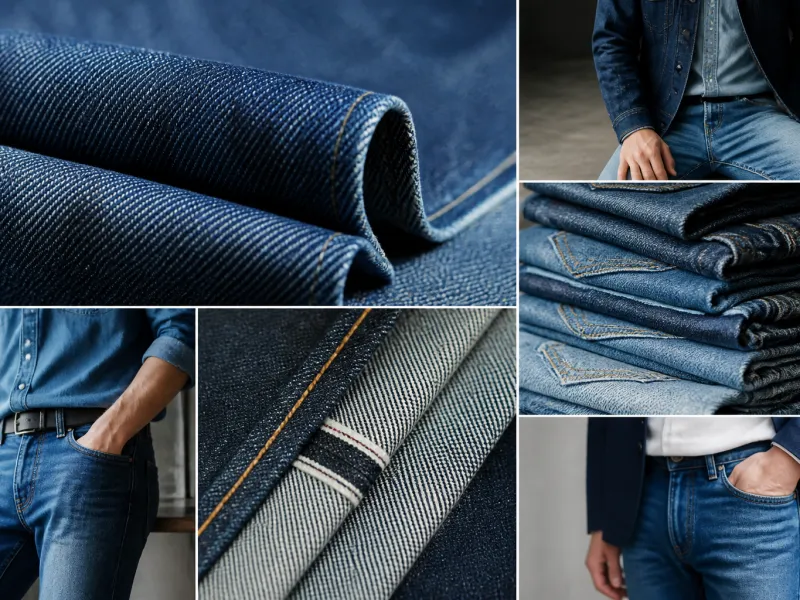 The Denim Guide: How Jeans Fabric Is MadeA clear explanation of denim fabric itself: weave, weight, yarn, dyeing and the regional traditions behind it.