
6 min read
The Denim Guide: How Jeans Fabric Is Made
A clear explanation of denim fabric itself: weave, weight, yarn, dyeing and the regional traditions behind it.
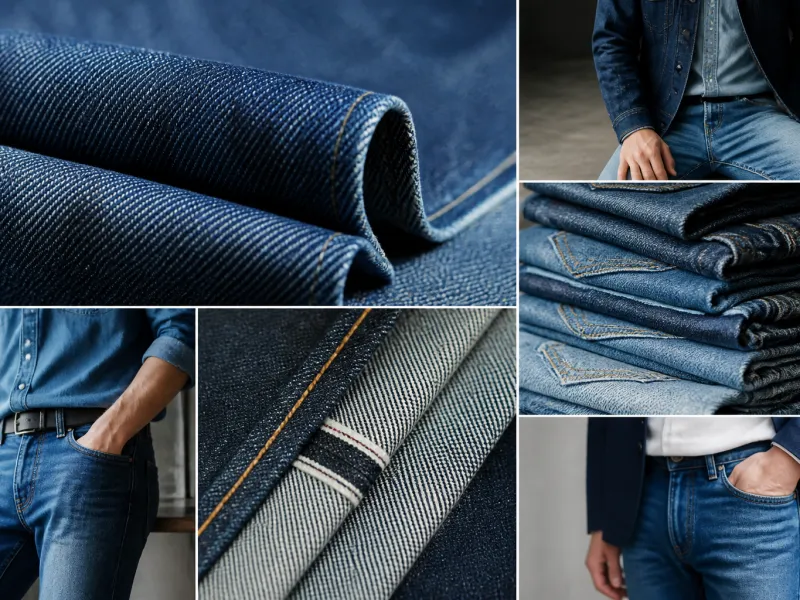
Denim looks simple from the outside, a sturdy cotton fabric in shades of blue, but the way it is spun, woven and dyed changes how it feels, fades and lasts. Understanding the basics of denim helps you choose fabric that suits how you actually plan to wear and care for your jeans, rather than guessing from a label.
This guide explains the fabric itself: fibre, weave, weight, dyeing methods and the regional traditions that shaped how denim is made today.
01
Cotton and the twill weave
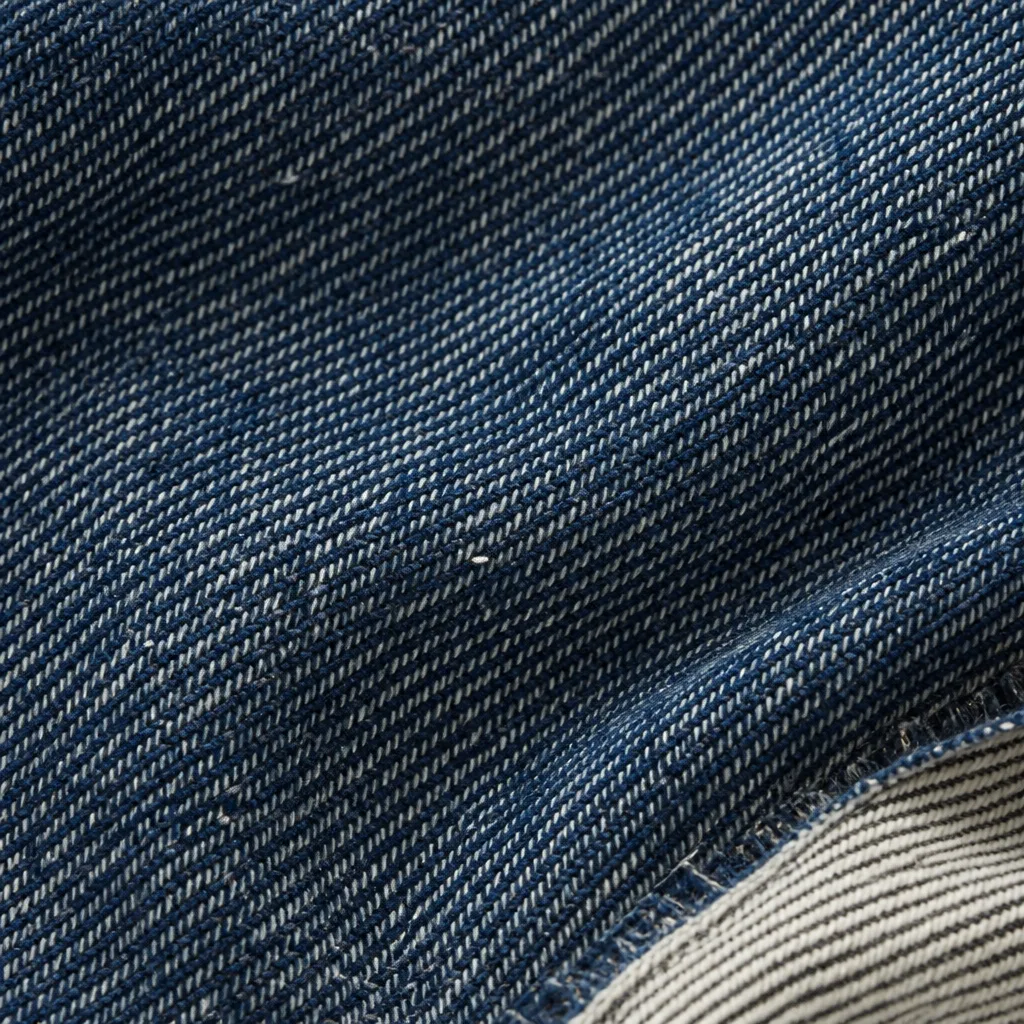
Denim is a cotton fabric, sometimes blended with a small share of other fibres, woven in a twill pattern. Twill is recognisable by its diagonal ribbing, created because the weft thread passes over one or more warp threads and then under two or more, offsetting each row slightly. This structure makes the fabric more durable and better at hiding soil than a simple over under weave, which is part of why denim became a practical choice for workwear.
The direction of the diagonal line matters too. Right hand twill, woven so the diagonal runs from bottom left to top right, is the most common in denim and produces a smoother, cleaner diagonal, while left hand twill runs the other way and gives a softer hand feel and a slightly different sheen as it wears. Broken twill reverses the direction at intervals across the fabric, which reduces the tendency of finished jeans to twist after washing, a useful property in stretch denim in particular, where the added elastane fibre can otherwise exaggerate this twisting.
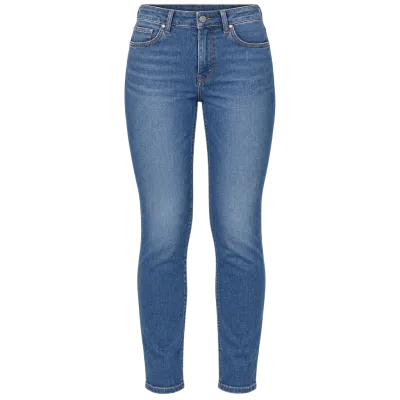 Matching productComfort stretch jeansAmazon →
02
Denim weight explained
Weight is measured in ounces per square yard (oz) and is one of the clearest indicators of how a fabric will feel and perform.
| Weight range | Category | Typical feel |
|---|---|---|
| Under 10 oz | Lightweight | Soft, flexible, breathable |
| 10 to 13 oz | Medium weight | Balanced, all purpose |
| 14 to 16 oz | Heavy | Stiff at first, very durable |
| Over 16 oz | Heavyweight | Rigid, slow to soften and fade |
A medium weight around 12 oz remains the most common choice for everyday jeans because it balances comfort, structure and durability. Heavier fabrics take longer to break in and feel stiffer against the skin at first, but many wearers find that this stiffness relaxes within the first few weeks of regular wear as the fibres soften. Our dedicated denim weight guide explains how weight interacts with weave and finish in more depth.
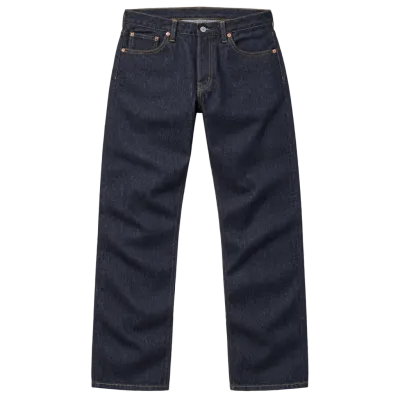 Matching productHeavyweight denim jeansAmazon →
03
Ring spun and open end yarn
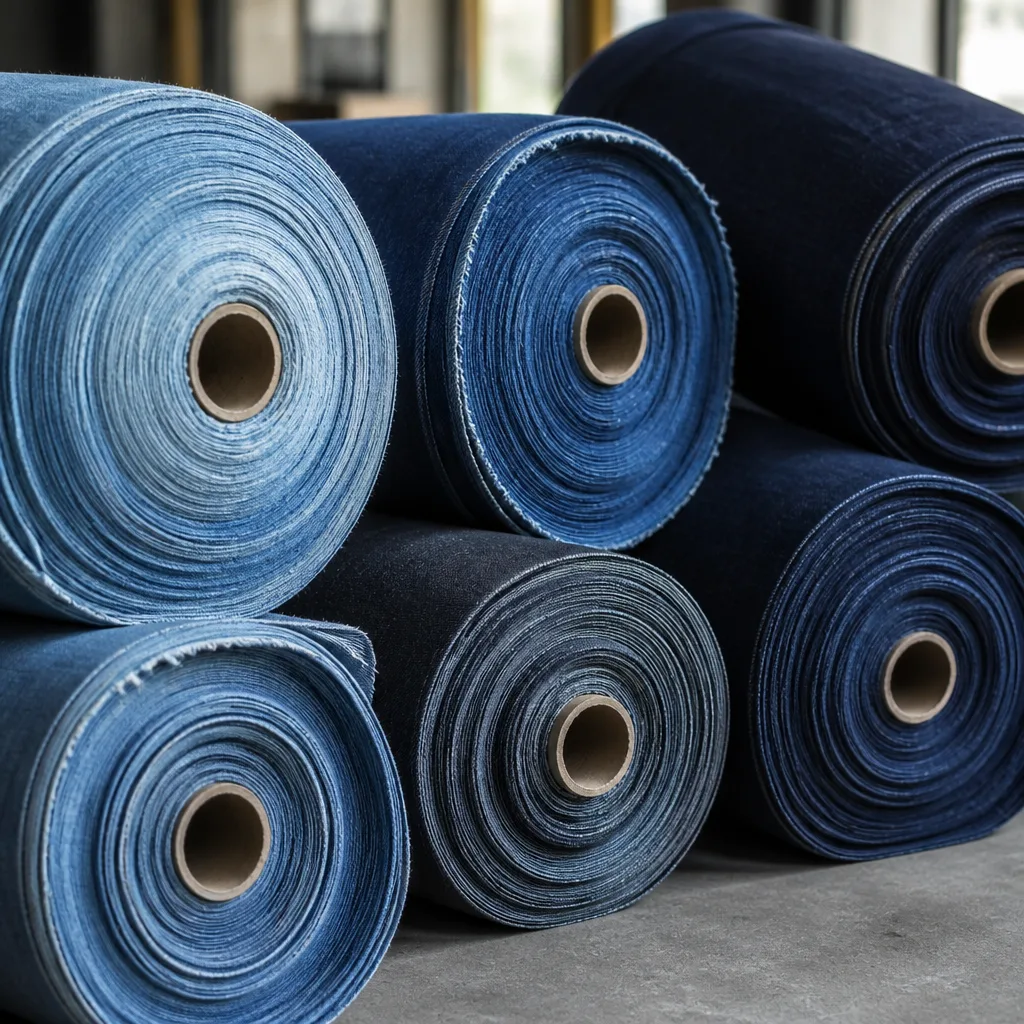
Ring spun yarn is produced by twisting cotton fibres tightly and continuously on a ring spinning frame, which creates a strong yarn with slight irregularities along its length. These small variations catch dye unevenly and are part of what gives quality denim its characteristic texture and the way it fades with visible variation rather than a flat, uniform colour change. Open end yarn is spun differently, using a rotor based method that is faster and generally less costly, producing a more uniform, smoother yarn with fewer of these natural irregularities.
Both methods produce genuine denim, and the difference lies mainly in texture, strength and how the fabric ages, not in one being universally superior to the other. Ring spun yarn is more commonly associated with premium and raw denim because of how it fades, while open end yarn is widely used across everyday, mass produced jeans where a very even finish is preferred.
 Matching productRaw selvedge jeansAmazon →
04
Indigo and rope dyeing
Indigo is the dye traditionally used to colour denim blue. It is a surface dye, meaning it coats the outside of the yarn fibres rather than penetrating all the way through, which is exactly why denim fades: repeated abrasion from wear and washing gradually removes the outer layer of dye and reveals the lighter, undyed core of the yarn underneath. This is a natural property of the dye, not a flaw, and it is what makes each worn pair of jeans develop its own individual pattern.
Traditional rope dyeing twists cotton yarns into a thick rope and passes them through indigo baths multiple times, building up colour in layers on the outer surface of each thread before the rope is untwisted and woven. Some denim instead uses sulphur dyeing, often to achieve black, grey or other non indigo tones, or to add depth and complexity alongside indigo in the same fabric.
05
Selvedge, raw and sanforized denim
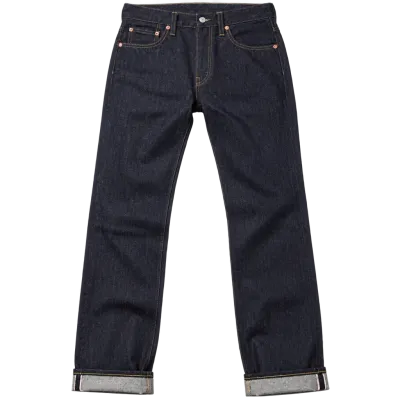
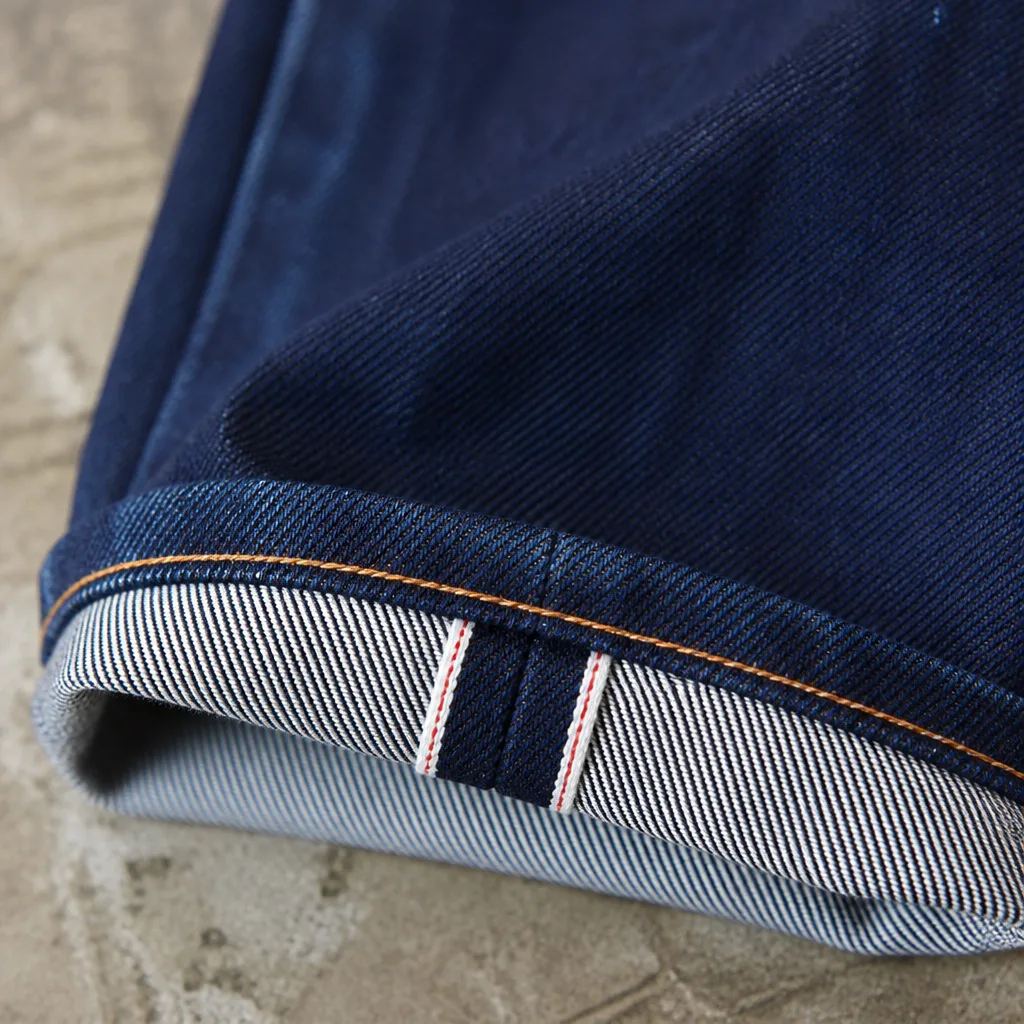
Selvedge denim is woven on narrow, traditional shuttle looms that produce a tightly finished, self edged strip along the fabric edge, often visible as a coloured line inside the leg opening when the hem is turned up or the cuff is rolled. It is a marker of a particular weaving method rather than a guarantee of any specific quality level, though the narrower looms used to make it are slower and generally more costly to run than wide modern looms.
Raw denim refers to fabric that has not been washed or treated after dyeing and weaving, so it starts stiff and deep in colour and develops fades unique to the wearer's body and habits over time. Most denim sold today, however, is sanforized, a mechanical pre shrinking process applied before the garment is cut and sewn that reduces further shrinkage in the wash to roughly 1 to 3 percent. Unsanforized denim skips this step and can shrink by roughly 5 to 10 percent in its first wash, which some wearers use deliberately to shape the fit to their body. See our raw denim guide and selvedge denim explained for more on both.
 Matching productDenim wash detergentAmazon →
06
Stretch blends
Adding elastane, typically around 1 to 3 percent of the fabric by weight, creates stretch denim, which flexes with movement and tends to feel more comfortable through the seat and thigh over a full day of wear. Some fabrics use a technique sometimes described as comfort stretch, blending stretch fibres with a construction designed to recover its shape well after wearing rather than sagging. Rigid denim, with no stretch fibre at all, holds its shape more firmly over the course of a day and is often preferred for how it fades and drapes, since the absence of elastane means the fabric relies entirely on cotton's own structure. Compare the two in our stretch versus rigid denim guide.
07
Regional denim traditions
Denim making has developed distinct regional traditions over time, shaped by different equipment, dyeing methods and finishing techniques rather than by any single origin.
- American denim traditions favour classic shuttle loom weaving, straightforward indigo dyeing and construction rooted in workwear, often prized for its rugged, utilitarian character and simple, functional detailing.
- Japanese denim traditions are known for meticulous shuttle loom weaving, slow rope dyeing processes and close attention to yarn texture, producing fabric valued for depth of fade and overall craftsmanship.
- Italian denim traditions often emphasise softer hand feel, refined finishing and innovation in stretch and comfort fabrics, reflecting a broader European tailoring sensibility applied to a workwear fabric.
These are traditions of technique and reputation, built up over decades, not guarantees tied to any particular label, and denim of high quality is produced in many countries beyond these three.
08
Frequently asked questions
Is heavier denim always better quality?
No. Weight affects feel, warmth and how slowly a fabric fades, but does not by itself determine durability or craftsmanship. A well constructed medium weight fabric can outlast a poorly made heavy one.
What makes raw denim fade in a personal pattern?
Because indigo sits on the surface of the yarn, fading follows wherever fabric flexes and rubs most, such as behind the knees or at the pockets, which differs from person to person based on posture, build and habits.
Does selvedge denim always mean raw denim?
No, the two are independent properties. Selvedge describes how the fabric is woven, while raw describes whether it has been washed or treated after dyeing. A fabric can be selvedge and pre washed, or non selvedge and raw.
Why do some jeans twist after washing?
Twisting, where the side seams spiral around the leg, happens more often in twill weaves and can be more pronounced in some stretch fabrics. Broken twill weaves are one way manufacturers reduce this tendency.
Explore
Read next
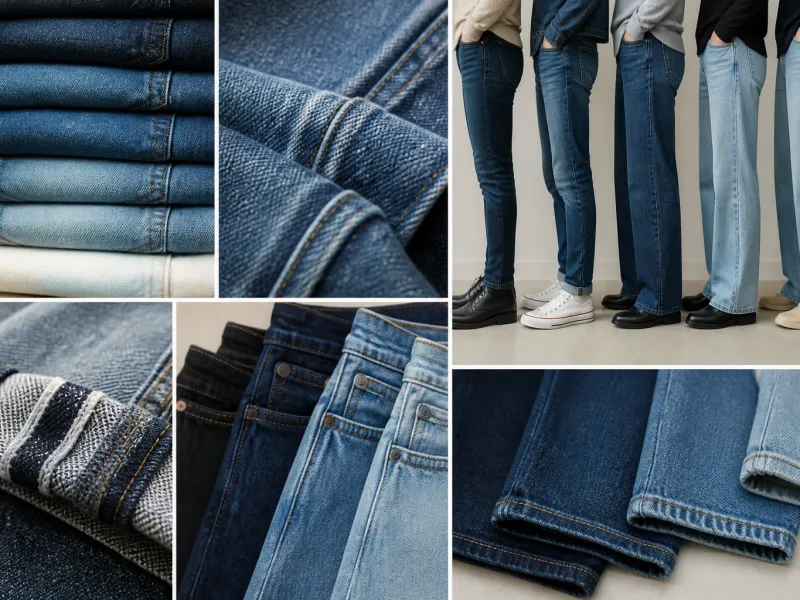 Jeans Fits and Cuts Explained: Skinny to Wide LegA complete overview of jeans fits and cuts, from skinny to wide leg, plus rise and length, with a comparison table and answers to common qu…
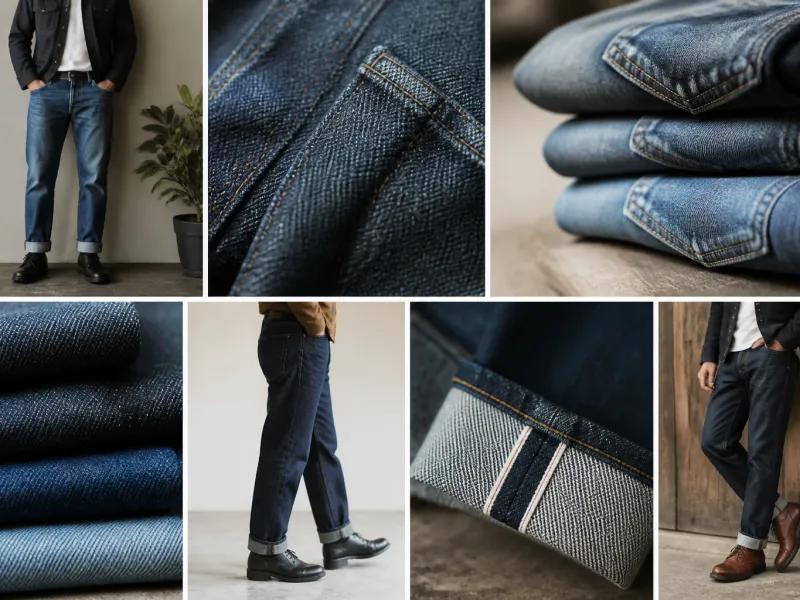 How to Buy Jeans: A Complete Buying GuideA practical, step by step guide to choosing jeans that actually fit, from measuring yourself to checking construction and buying online.
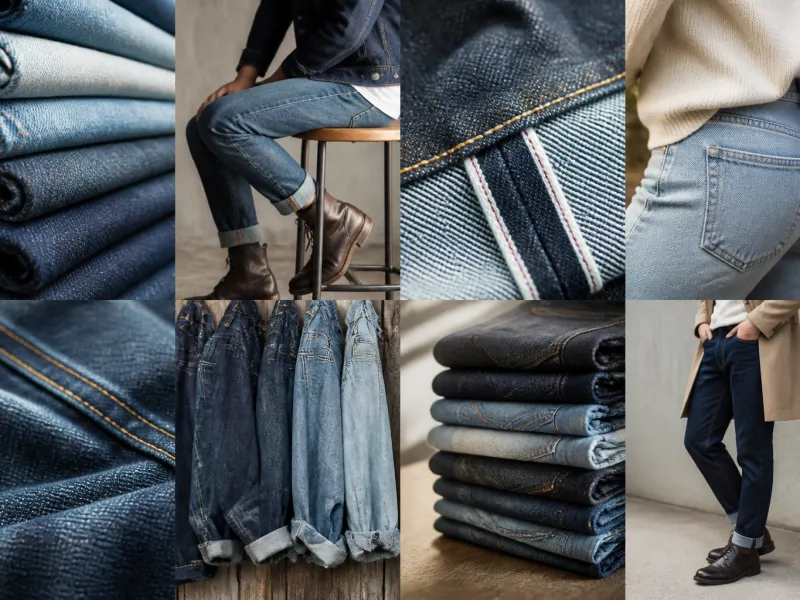 Denim Glossary: Jeans Terms Explained from A to ZA quick reference glossary of denim and jeans terms from A to Z, from fabric and fit to washes and construction.