
6 min read
Selvedge Denim Explained: Shuttle Looms, the Edge and the Cost
Learn what selvedge denim actually is, how shuttle looms produce the self finished edge, why it costs more, and how to spot it.
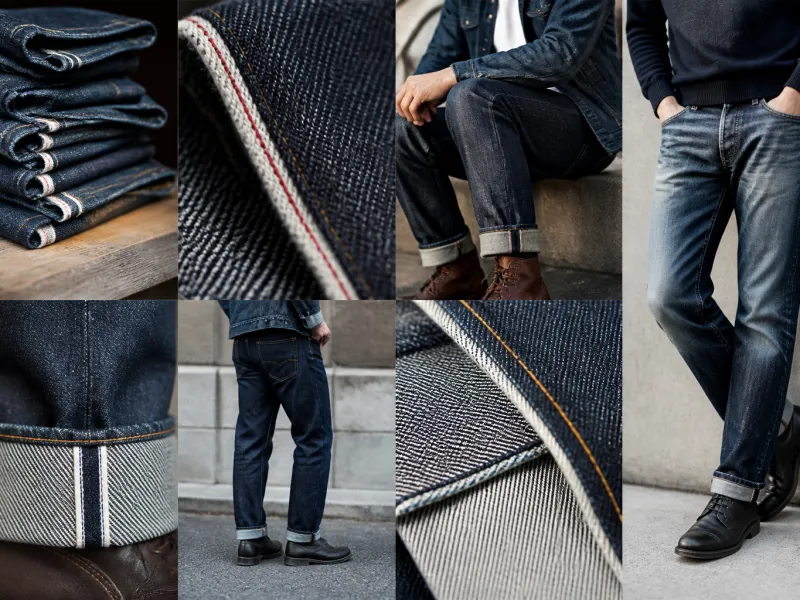
Selvedge denim is woven on older, narrower looms that produce a fabric edge which is finished in itself and does not fray, unlike the raw cut edge of fabric woven on modern wide looms. This self finished edge is called the selvedge, and it has become closely associated with higher quality and more traditional denim production.
This guide explains how selvedge denim is made, why it costs more to produce, some common myths about it, and how to identify it on a finished pair of jeans.
01
What selvedge means
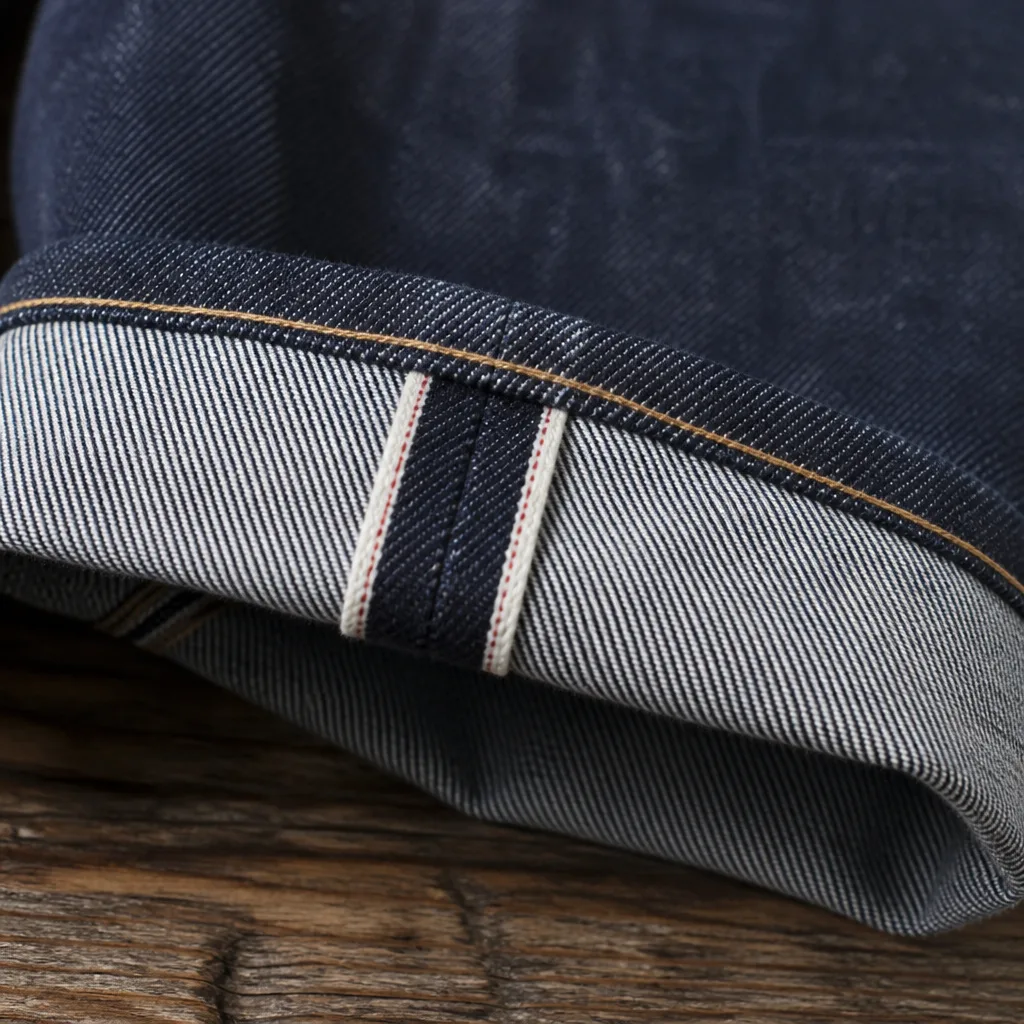
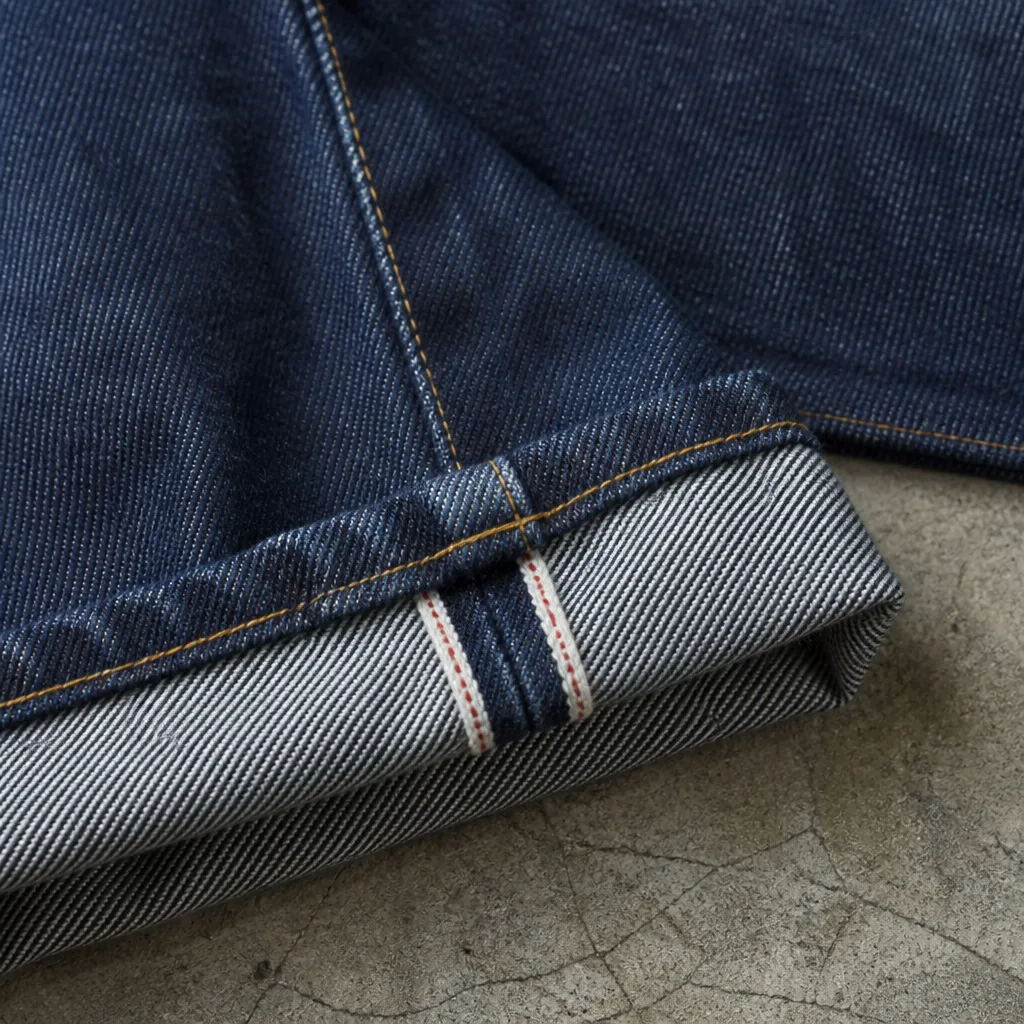
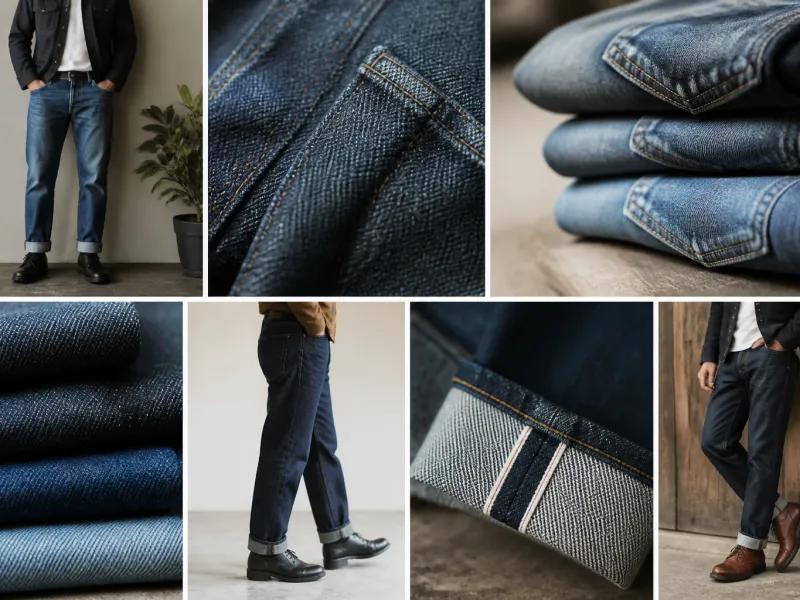
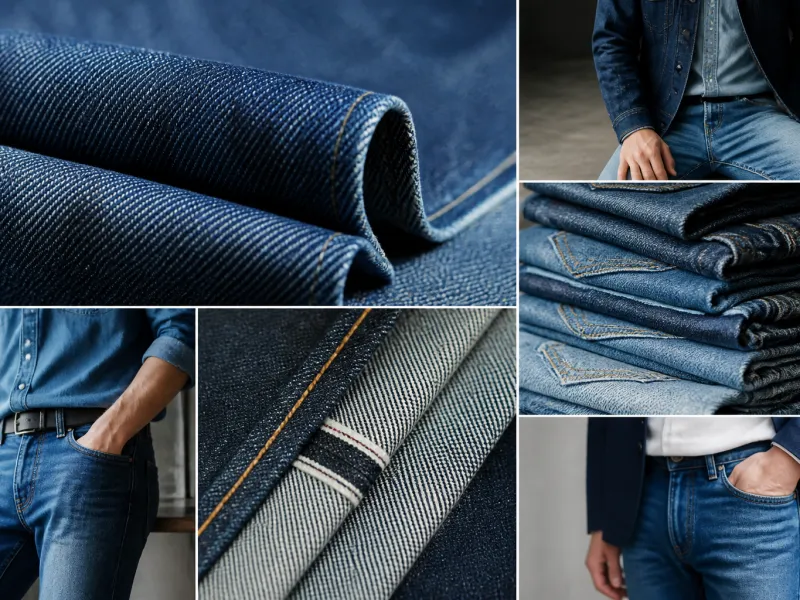
Selvedge, sometimes written as selfedge, refers to the tightly woven edge that forms naturally along both sides of a length of fabric as it comes off certain looms. Because this edge is woven closed rather than cut, it does not unravel, which is why it was historically left visible on work trousers rather than sewn under. On jeans, the selvedge is often visible as a thin coloured line, sometimes called an ID or a stripe, running along the outer leg seam, most noticeable when the cuff is rolled or turned up.
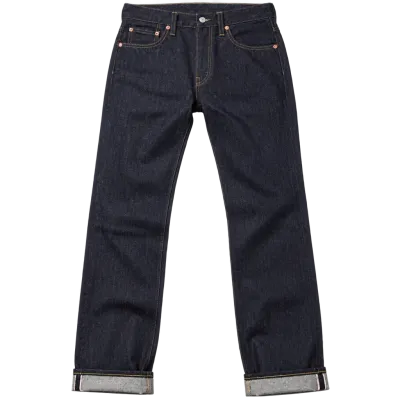 Matching productRaw selvedge jeansAmazon →
02
Shuttle looms and how selvedge fabric is woven
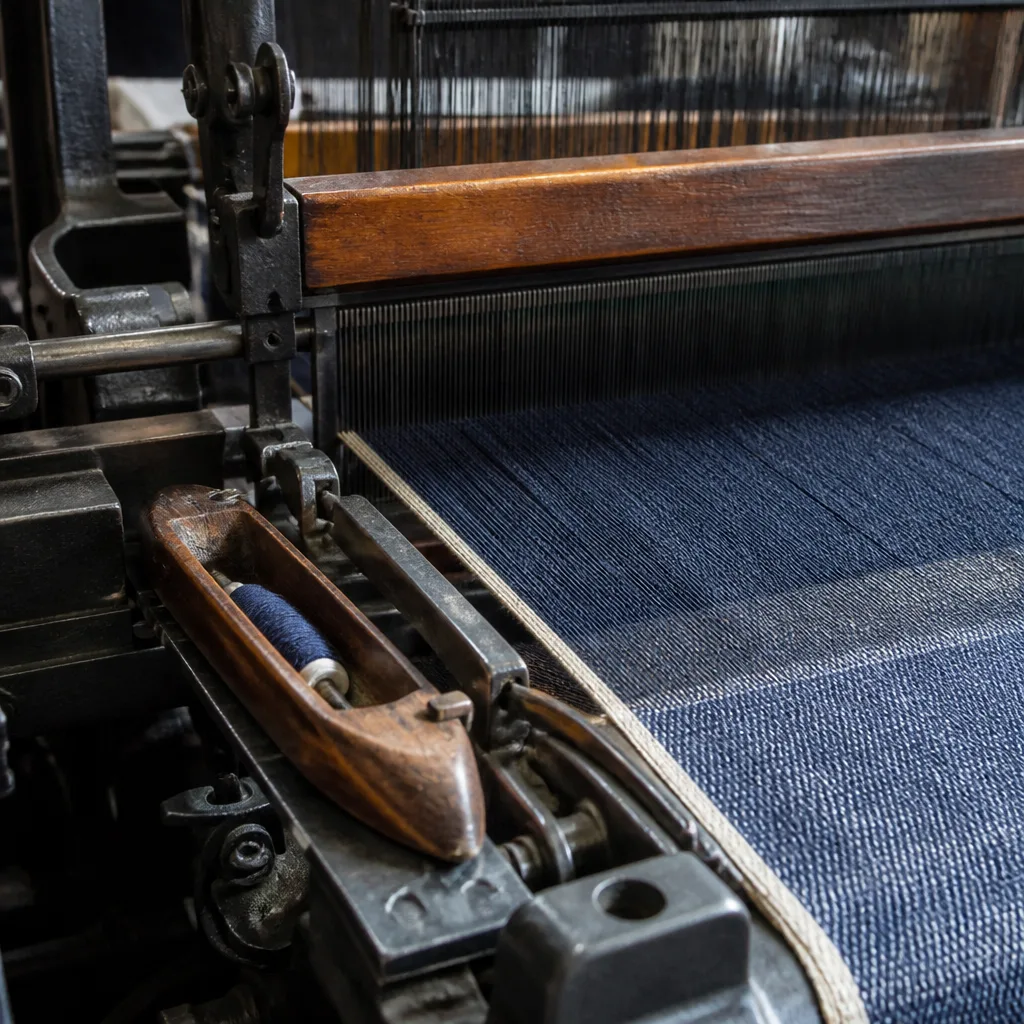
Selvedge denim is traditionally woven on shuttle looms, an older style of loom that passes a single continuous weft thread back and forth across the width of the fabric using a shuttle. Because the weft thread never breaks at the fabric edge, it naturally forms a tightly bound, self finished edge on both sides. Shuttle looms produce a relatively narrow width of fabric, typically enough for a single leg panel, and run at a much slower speed than modern looms.
Modern denim is mostly woven on projectile or air jet looms, which are wider and considerably faster, since they carry separate weft threads across each pass rather than a single continuous one. This produces a cut edge on each side of the fabric roll, which then needs to be overlocked or sewn to prevent fraying once the fabric is cut into pattern pieces. Neither method affects the twill weave structure of the denim itself, only how the fabric edge is finished.
03
Why selvedge denim tends to cost more
Shuttle looms are slower and produce a narrower fabric than modern wide looms, which means more loom time and more fabric passes are needed to produce the same quantity of finished jeans. Many working shuttle looms are also older machines that require specialist maintenance, and production runs on them are typically smaller and more specialised than mass produced wide loom denim. These factors combine to make selvedge denim more labour and time intensive to produce, which is generally reflected in the cost of finished garments made from it.
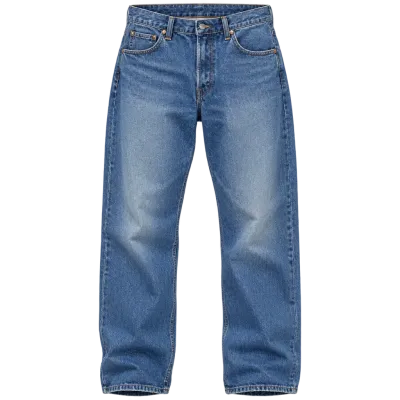 Matching productMen's relaxed jeansAmazon →
04
Common myths about selvedge denim
Selvedge is sometimes assumed to guarantee higher quality overall, but selvedge only describes how the fabric edge is finished, not the weight, weave tightness, dye quality or construction of the rest of the garment. It is possible to find well made non-selvedge denim and poorly made selvedge denim. Another common myth is that selvedge denim is always raw or unwashed. In fact selvedge fabric can be pre-washed, dyed with any process, and finished in many different ways, just like non-selvedge fabric. Selvedge and raw denim are related but separate features, and our raw denim guide explains the raw side of that distinction.
05
How to spot selvedge denim
| Where to look | What you will see |
|---|---|
| Outer leg seam at the cuff | A thin coloured line or stripe visible when the hem is turned up or rolled |
| Inside the cuff, unrolled | A tightly woven fabric edge rather than an overlocked or serged edge |
| Coin pocket or product tag | Some brands print or label selvedge fabric explicitly |
| Fly and pocket bag edges | Occasionally the same selvedge edge is used decoratively inside pockets |
The clearest way to check is to fold up the hem and look at the outer leg seam. If you see a tightly bound edge with a coloured line running along it, rather than an overlocked or zigzag stitched raw edge, the jeans are very likely cut from selvedge fabric. Not all selvedge jeans display the coloured line prominently, since some brands position the seam so the selvedge edge is hidden or trimmed away during construction, so its absence does not always rule out selvedge fabric entirely.
06
Selvedge and construction details
Selvedge jeans are frequently finished with construction details associated with traditional denim making, such as a chain stitched hem, which produces a slightly rippled seam over time, and felled seams, which enclose the raw fabric edges inside a double layer of stitching for durability. These details are not exclusive to selvedge denim and can appear on non-selvedge garments too, but they are commonly paired together by brands aiming for a traditional construction throughout.
07
Selvedge denim and sustainability
Because selvedge production typically runs in smaller batches on older machinery, it is sometimes associated with more traditional, slower manufacturing rather than high volume, fast turnover production. This does not automatically make it more sustainable overall, since sustainability depends on many factors beyond loom type, including how the cotton is farmed, how the fabric is dyed and finished, and how long the finished garment is actually worn and cared for. A well made pair of jeans of any weave, selvedge or not, that is worn for years is generally a better outcome than a pair of any type that is discarded quickly. Our sustainable denim guide looks at this topic in more depth.
08
Caring for selvedge denim
Selvedge denim is cared for in much the same way as any other denim of similar weight and finish. If the fabric is also raw or unsanforized, expect shrinkage after the first wash and follow the cold water, inside out washing approach covered in our raw denim guide. If it has already been pre-washed, ordinary gentle washing is sufficient, and our general guide to washing jeans covers that process step by step.
 Matching productDenim wash detergentAmazon →
09
Buying selvedge denim with confidence
When comparing pairs online, look for the fabric edge described explicitly in the product details, since photographs of the rolled cuff are the clearest way a listing can show the selvedge line. If the weight, weave and construction details such as chain stitching and felled seams are also described, you can form a fuller picture of what you are buying than the selvedge feature alone would give. Our buying guide covers what else is worth checking on a pair of jeans before you commit to one.
10
Frequently asked questions
What does selvedge mean on jeans?
Selvedge refers to the self finished fabric edge produced by certain looms, which does not fray and is often visible as a coloured line along the outer leg seam.
Is selvedge denim always raw denim?
No. Selvedge describes the fabric edge, while raw describes whether the denim has been washed or treated after dyeing. The two features are often found together but are independent of each other.
Why is selvedge denim more expensive?
It is typically woven on older, slower shuttle looms that produce narrower fabric at a slower rate, and often involves smaller, more specialised production runs, all of which add to production cost.
How can I tell if my jeans are selvedge without a label?
Fold up the hem and look at the outer leg seam. A tightly woven edge with a visible coloured line, rather than an overlocked seam, indicates selvedge fabric.
Does selvedge denim mean better quality overall?
Not necessarily. Selvedge only describes the edge finishing of the fabric, not the weight, dye process or construction quality of the finished garment, so it is not a guarantee of overall quality on its own.
Explore
Read next
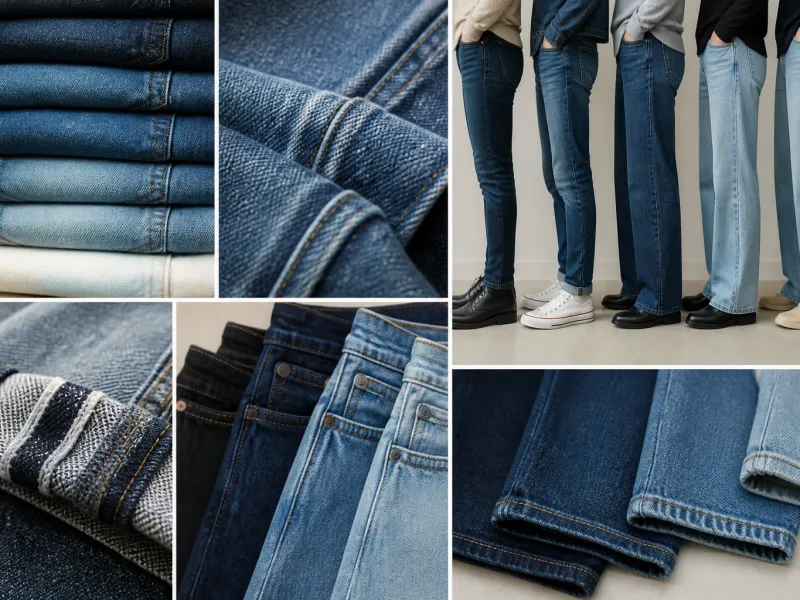 Jeans Fits and Cuts Explained: Skinny to Wide LegA complete overview of jeans fits and cuts, from skinny to wide leg, plus rise and length, with a comparison table and answers to common qu…
 How to Buy Jeans: A Complete Buying GuideA practical, step by step guide to choosing jeans that actually fit, from measuring yourself to checking construction and buying online.
 The Denim Guide: How Jeans Fabric Is MadeA clear explanation of denim fabric itself: weave, weight, yarn, dyeing and the regional traditions behind it.