
7 min read
How to Buy Jeans: A Complete Buying Guide
A practical, step by step guide to choosing jeans that actually fit, from measuring yourself to checking construction and buying online.
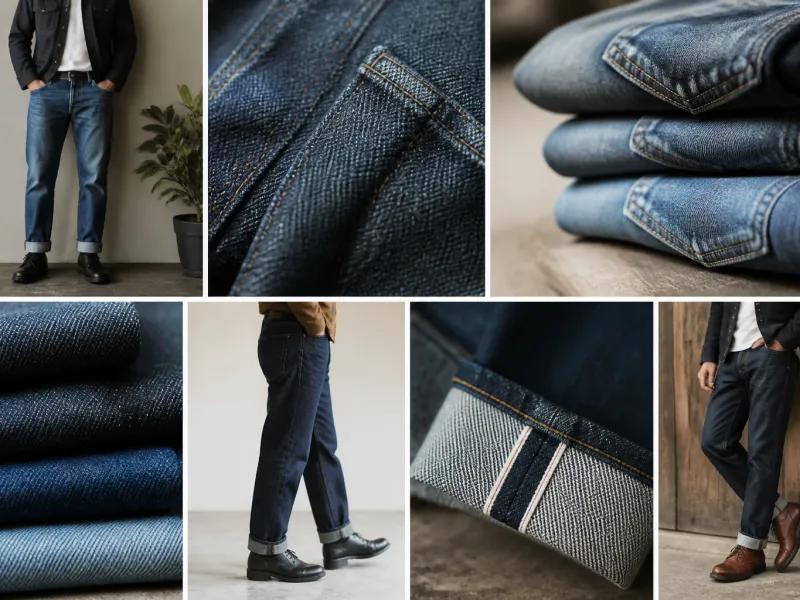
Buying jeans should be simple, but between waist and length numbers, rise styles, fabric weights and a dozen fit names, it is easy to end up with a pair that never feels quite right. This guide walks you through the whole process step by step, from measuring yourself to checking construction details, so that you can choose with confidence whether you are shopping in a store or online.
None of the steps below require special tools or expert knowledge. A flexible tape measure, a mirror and a few minutes are enough to get sizes that actually work for your body, and once you know your own numbers, shopping across different brands becomes much faster.
01
How to measure yourself
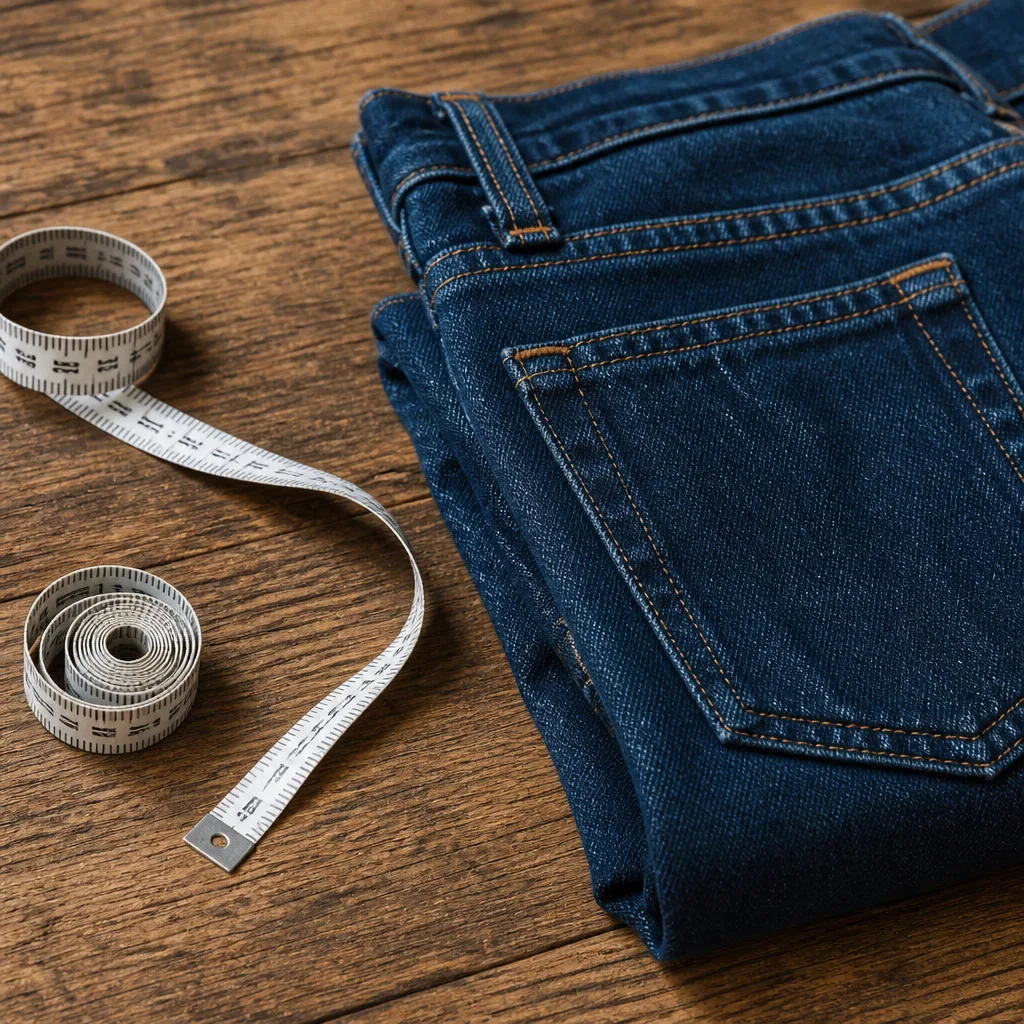
Before you look at any size chart, take three measurements on your body, not on an old pair of jeans, since fabric stretches and shrinks over time and a worn pair will mislead you.
- Waist: measure around your natural waistline, usually just above the navel, with the tape snug but not tight, standing relaxed rather than pulling your stomach in.
- Hips: measure around the fullest part of your hips and seat, which matters most for fitted styles.
- Inseam: measure from the crotch to the bottom of the ankle along the inside of the leg, or measure a well fitting pair of trousers laid flat instead.
Write these three numbers down in centimetres, and convert to inches if the brand you are buying from uses inch sizing, which is common for jeans. One inch equals about 2.5 cm. It helps to measure at the same time of day and after the same amount of food and drink, since these numbers can shift slightly through the day.
02
Understanding W and L sizes
Jeans are traditionally sized in inches, written as W for waist and L for length, for example W32 L34. The W number is the waist measurement of the garment, not your body, and the L number is the inseam length. Because cut and stretch vary between styles, the same W and L can fit differently from one style to the next, so treat the number as a starting point rather than a guarantee.
| Waist in cm | Approx. W size |
|---|---|
| 71 to 74 | W28 |
| 76 to 79 | W30 |
| 81 to 84 | W32 |
| 86 to 89 | W34 |
| 91 to 94 | W36 |
Some collections, especially in women's ranges, use numeric sizes such as EU 34 to 46 or letter sizes such as S, M and L instead of W and L. These conversions vary between manufacturers, so always check the specific size chart of the item you are buying rather than relying on a general table. Our jeans size guide covers this in more depth, including how to convert between inch, EU and letter sizing.
03
Choosing the right rise
Rise is the distance from the crotch seam to the top of the waistband, and it has a bigger effect on comfort and silhouette than most people expect. Low rise sits below the natural waist, mid rise sits close to it, and high rise sits above it, near or at the narrowest part of the torso. A rise that matches how and where you like to wear your waistband will feel more comfortable when sitting, bending and walking than one chosen on looks alone.
Rise also interacts with the top you plan to wear. A high rise pairs naturally with cropped or tucked in tops, since it keeps the waistband covered and avoids gaps at the lower back, while a low or mid rise suits longer tops that fall past the hip. Read rise explained for a full breakdown with body diagrams.
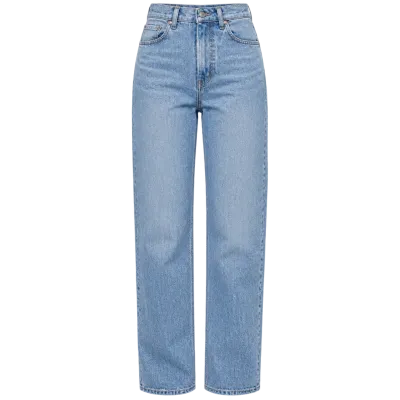 Matching productWomen's high-rise straight jeansAmazon →
04
Fit and cut
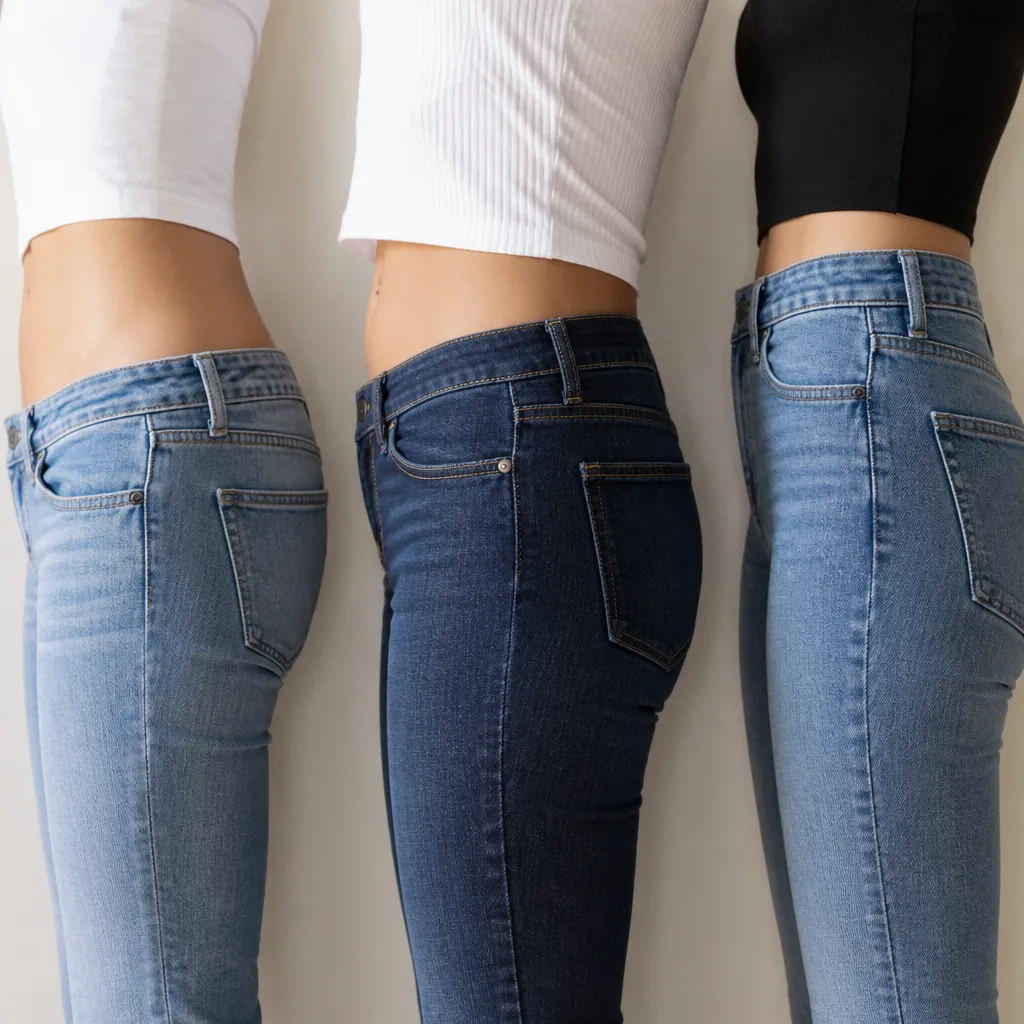
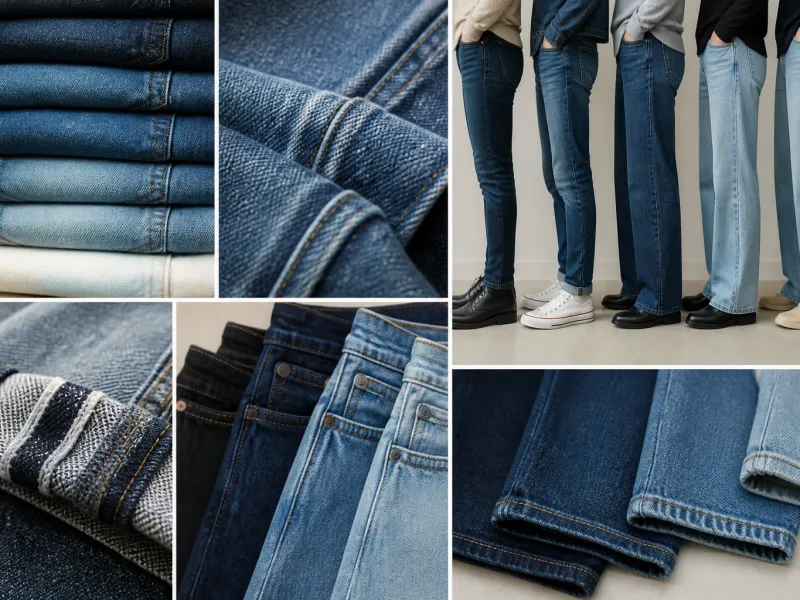
Fit describes how closely the fabric follows your leg from hip to ankle. Common options range from skinny and slim, which sit close to the leg throughout, through straight, which keeps a consistent width, to relaxed, bootcut, flare and wide leg, which add room in different places. Tapered styles are fuller at the thigh and narrower at the ankle, which suits wearers who want room through the seat without a wide leg opening. There is no universally correct fit, only one that suits your body shape, the activities you do in your jeans and your personal style. See jeans fits for an overview of every cut with guidance by body type.
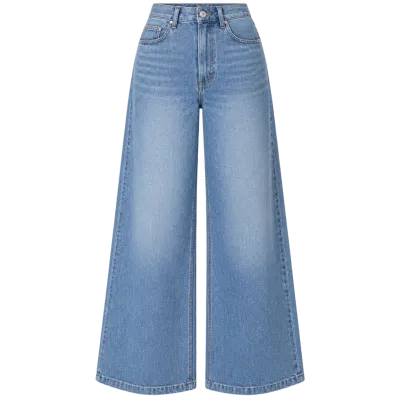 Matching productWomen's wide-leg jeansAmazon →
05
Fabric weight, stretch and wash
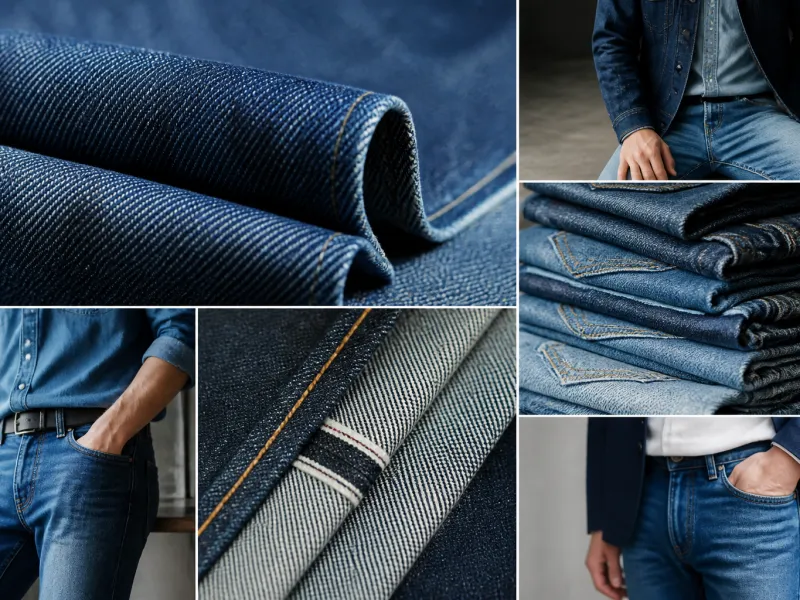
Denim weight is measured in ounces per square yard. Lighter fabrics, around 9 to 11 oz, feel soft and flexible and suit warm climates or everyday comfort. Medium weights around 12 oz are the most common all purpose choice, balancing structure with comfort. Heavy denim, 14 oz and above, is stiffer at first, more durable over years of wear, and develops fading more slowly than lighter fabric.
Stretch denim contains a small share of elastane, typically 1 to 3 percent, blended with cotton for extra comfort and movement, and it tends to relax slightly through the day. Rigid denim has no stretch fibre and holds its shape more firmly, which some wearers prefer for a cleaner silhouette and for how fades develop over time. The wash, meaning the colour and finish applied to the fabric, ranges from dark indigo to faded, distressed or stonewashed looks, and it is largely a matter of taste rather than quality. A darker, more uniform wash tends to look smarter, while a lighter or more distressed wash reads as more casual.
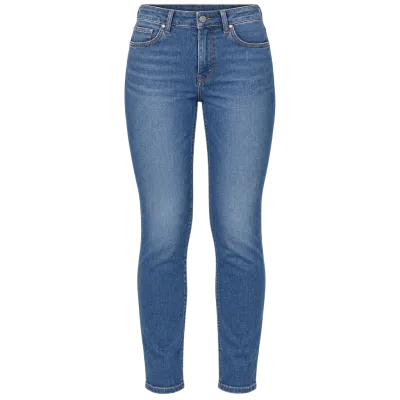 Matching productComfort stretch jeansAmazon →
06
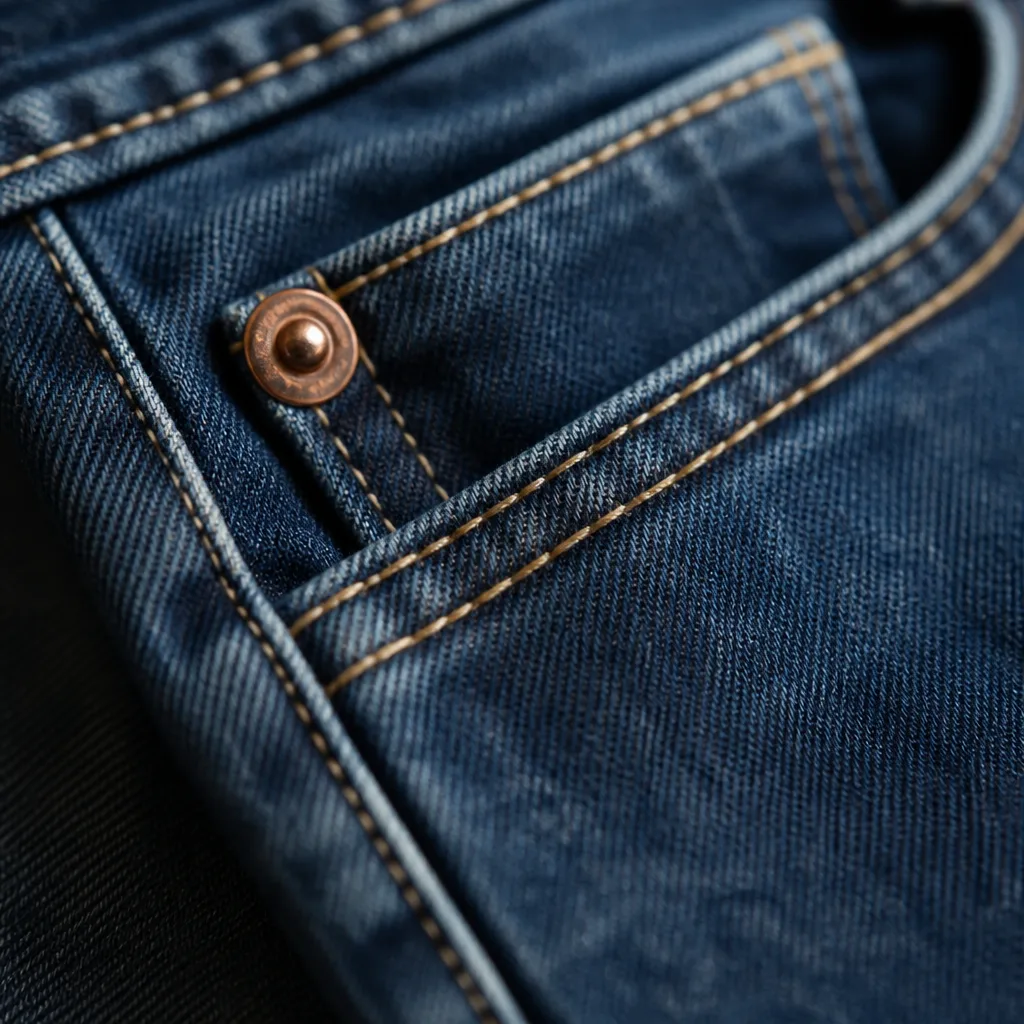
Construction details to check
A few details tell you a lot about how a pair of jeans is built, whatever the price point, and checking them takes less than a minute.
- Seams: look for even, straight stitching and a flat felled seam on the inside leg, which lies flatter and wears better than a simple overlocked edge.
- Rivets and bar tacks: metal rivets and dense bar tack stitching reinforce points of strain such as pocket corners and the base of the fly.
- Fly: button flies and zip flies both work well, this is a matter of preference and speed of dressing rather than durability.
- Pockets: check that pocket bags are made of sturdy fabric and are securely attached, since this is a common early failure point.
- Fabric feel: a denim that feels papery thin or has loose, uneven weave threads is likely to wear out sooner than a densely woven one.
- Waistband: a well finished waistband sits flat without curling and has consistent stitching all the way around.
07
Trying jeans on and buying online
In store checklist
When you try jeans on, do more than look in the mirror for a few seconds.
- Sit down, crouch and take a few steps to check the waistband does not dig in and the crotch has enough room.
- Raise your arms and bend forward to make sure the rise does not gape at the back.
- Check the leg opening sits the way you want over the shoe you plan to wear with them.
- Pinch an inch of fabric at the waistband and thigh, if you can comfortably pinch more than that the size may be too loose.
- Remember that stretch denim will relax slightly during the day, so it should feel snug, not loose, when new.
- Walk around the fitting area rather than standing still, since comfort in motion matters more than comfort standing at a mirror.
Buying online and returns
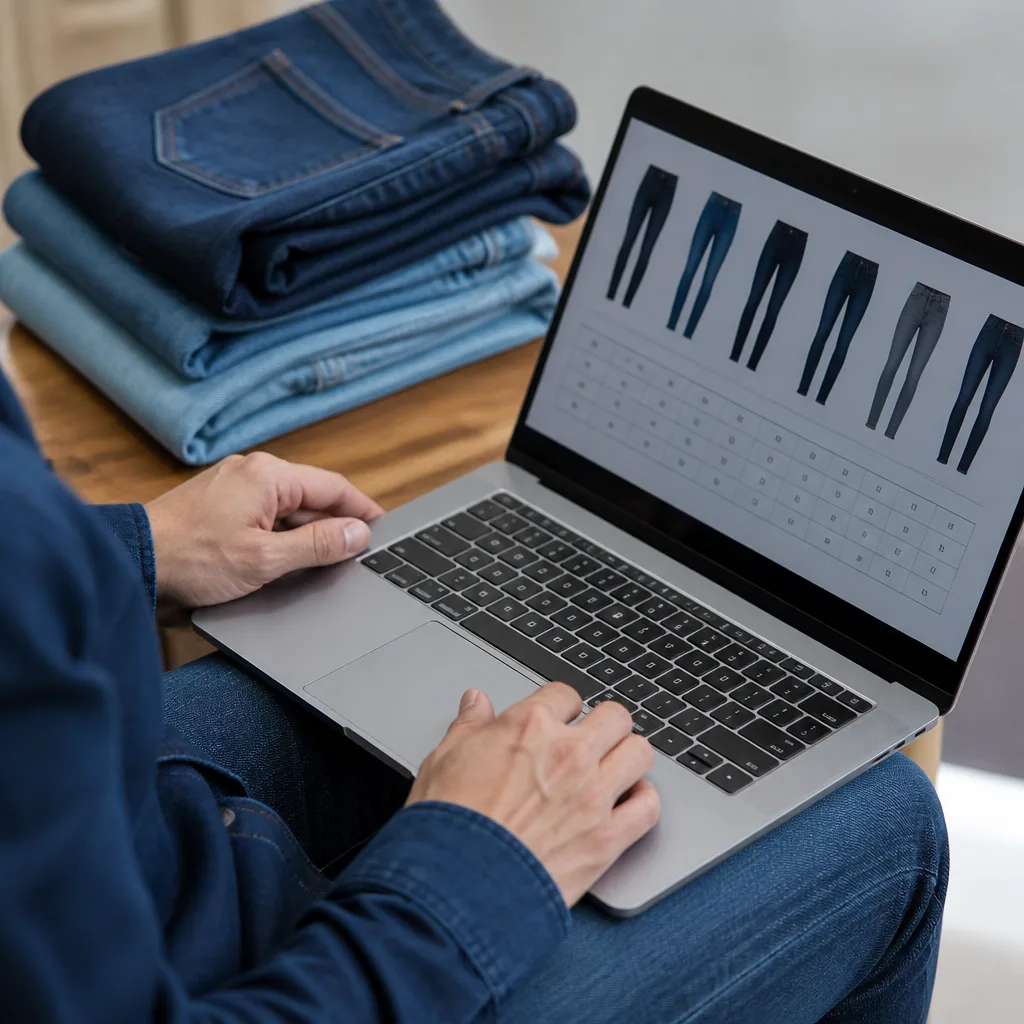
When shopping online, compare the brand's own measurements, not just the labelled size, against your body measurements, since sizing varies between brands and even between collections from the same brand. Check the return policy before you order: look for the return window, whether original tags must remain attached, and whether returns are free or charged. Ordering two sizes to compare at home and returning the one that does not fit is common practice and usually cheaper than repeated shipping of single items. Keep the receipt and original packaging until you are certain you will keep the item, since some retailers require both for a refund.
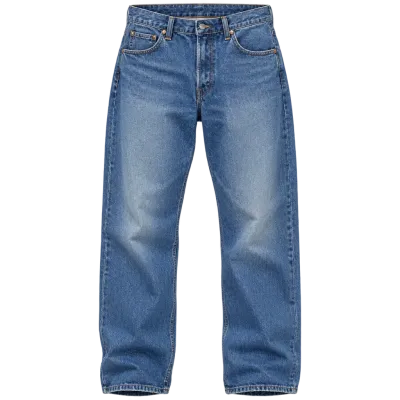 Matching productMen's relaxed jeansAmazon →
08
Frequently asked questions
Do jeans stretch out after wearing them?
Most denim, especially blends with elastane, relaxes slightly with body heat and movement during the day. This is normal and should be factored in when choosing a size, so jeans should feel snug rather than loose when you first try them on.
Should I size up or down between two W sizes?
If you are between sizes, consider the fabric. A rigid or heavy denim keeps its shape and may warrant sizing up slightly for comfort, while a stretch blend can often be sized down since it will give a little with wear.
How much does the inseam length matter?
A great deal. Jeans that are too long pool at the ankle and wear out at the hem from dragging on the ground, while jeans that are too short can look unfinished. Many retailers offer hemming, and our hemming guide explains how the process works.
Is a higher price always a sign of better quality?
Not necessarily. Price can reflect design, positioning or finishing techniques as much as raw material quality. The construction checklist above is a more reliable guide to durability than price alone.
Explore
Read next
 Jeans Fits and Cuts Explained: Skinny to Wide LegA complete overview of jeans fits and cuts, from skinny to wide leg, plus rise and length, with a comparison table and answers to common qu…
 The Denim Guide: How Jeans Fabric Is MadeA clear explanation of denim fabric itself: weave, weight, yarn, dyeing and the regional traditions behind it.
 Denim Glossary: Jeans Terms Explained from A to ZA quick reference glossary of denim and jeans terms from A to Z, from fabric and fit to washes and construction.