
5 min read
A short history of jeans, from work trousers to global wardrobe staple
Jeans began as durable work trousers and became one of the most widely worn garments in the world. Here is a brief, careful look at how that happened.
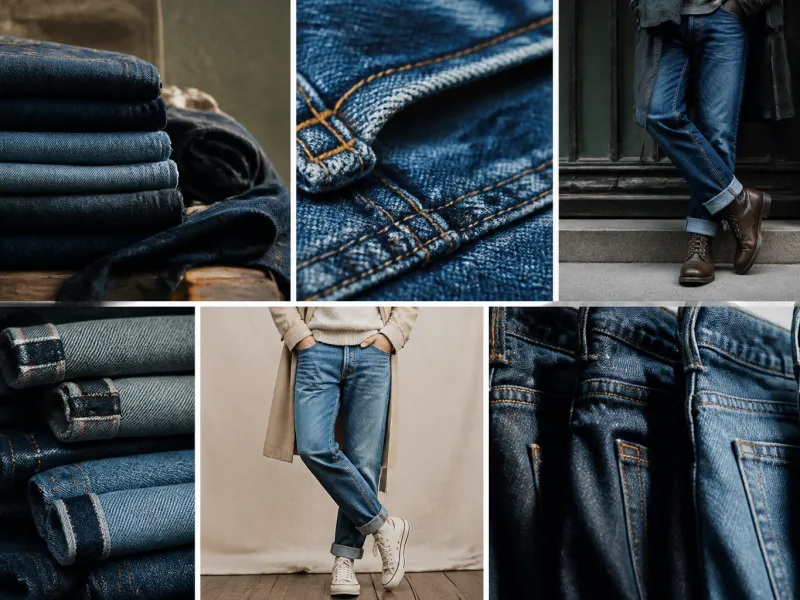
Few garments have travelled as far from their original purpose as jeans. What began as reinforced work trousers for manual labourers is now worn across almost every context, from offices to formal events, in countries around the world. This article traces the broad outline of that history, focusing on developments that are well documented rather than on disputed details or minor variations between sources.
01
Riveted work trousers and the 1873 patent
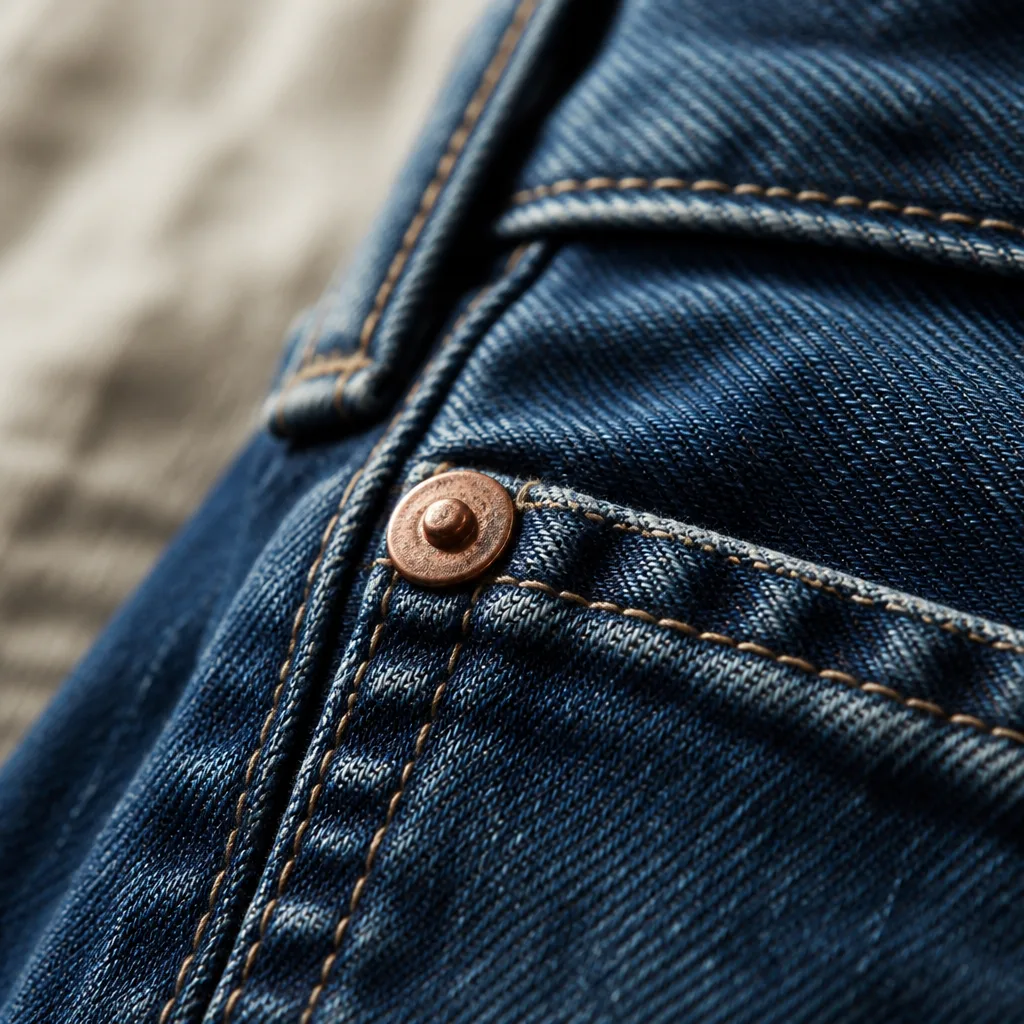
The most well established starting point in the history of jeans is the 1873 United States patent for using metal rivets to reinforce the pockets and stress points of work trousers. The patent was granted to Jacob Davis, a tailor, and Levi Strauss, a dry goods merchant who supplied the fabric, after Davis approached Strauss to help fund and file the patent together. This partnership is widely regarded as the formal beginning of jeans as a distinct, purpose built garment, rather than simply one style of trouser among many.
Before this patent, sturdy cotton trousers made from denim like fabrics already existed and were used by workers, but the addition of rivets at points of strain, such as pocket corners, was the specific innovation that set these garments apart and made them significantly more durable under hard use.
The company built around this patent grew steadily in the decades that followed, and many construction details from that early period, such as the double line of stitching on the back pockets and the leather patch at the waistband, became recognisable features that are still referenced in denim design discussions today, even as specific brand details fall outside the scope of a general history like this one.
02
Workwear for miners, farmers and labourers
In the decades that followed the patent, riveted denim trousers became closely associated with manual labour in the United States, including mining, farming and railroad work. Their appeal in these settings was straightforward: the fabric resisted tearing, the rivets held under repeated strain, and the trousers could withstand rough conditions far better than lighter alternatives. During this period, jeans were understood primarily as functional workwear rather than as fashion, worn because they lasted, not because of how they looked.
This early period also established the sturdy twill weave and heavy denim fabrics that remain closely associated with durability today. Workers needed trousers that could survive daily abrasion against tools, machinery and rough surfaces, and the weaving and dyeing methods developed to meet that need continued to influence denim production long after the original working context had changed.
03
1950s youth culture
By the middle of the twentieth century, jeans had begun to shift from a purely practical garment into a symbol of a particular attitude, particularly among young people in the United States. Films and public figures of the era that portrayed rebellious or independent characters in denim helped associate jeans with youth culture and a rejection of more formal, traditional dress. This period is widely credited with moving jeans out of the workplace and into everyday casual wear for a much broader, younger audience, a shift that would continue over the following decades.
Some schools in the United States restricted jeans during this period precisely because of this association with rebellion, which only reinforced their appeal among young wearers looking for a way to stand apart from more formal, traditional dress codes at the time.
04
1970s: flares and self expression
The 1970s brought a notable change in silhouette, with flared and wide leg jeans becoming closely associated with the decade's fashion. Denim during this period was also increasingly used as a canvas for personal expression, including embroidery, patches and hand decoration, reflecting broader cultural trends towards individuality in clothing. Jeans by this point were firmly established across genders and age groups, no longer limited to their earlier association with manual labour.
Denim also spread well beyond its country of origin during this decade, becoming a familiar garment across much of the world rather than a style associated mainly with a single country. This international spread laid the groundwork for the global denim industry that exists today, with production and demand distributed across many regions rather than concentrated in one place.
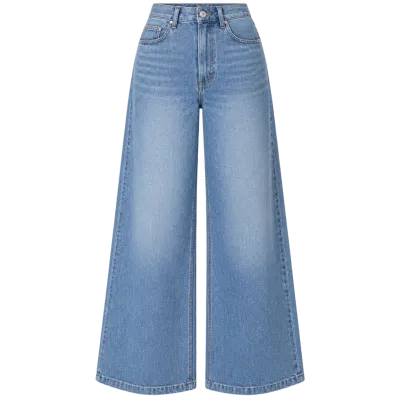 Matching productWomen's wide-leg jeansAmazon →
05
1980s: designer jeans
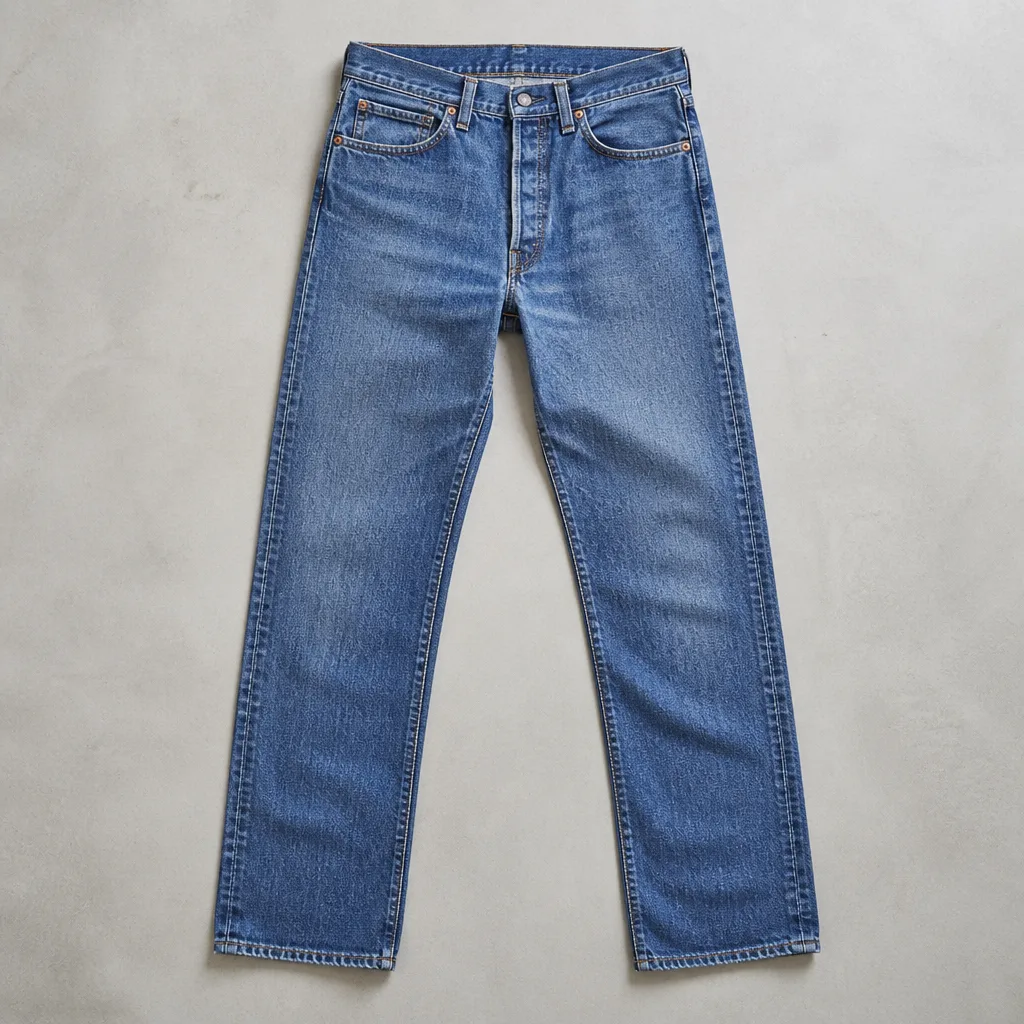
The 1980s saw the rise of designer jeans, as fashion labels began producing their own denim lines with an emphasis on fit, styling and branding rather than only durability. This period marked a significant shift in how jeans were marketed and perceived, positioning them as a fashion item in their own right, sold partly on label and cut rather than purely on function. Slimmer, more tailored silhouettes became more common during this decade compared with the looser cuts of the 1970s.
06
Stretch and the skinny era
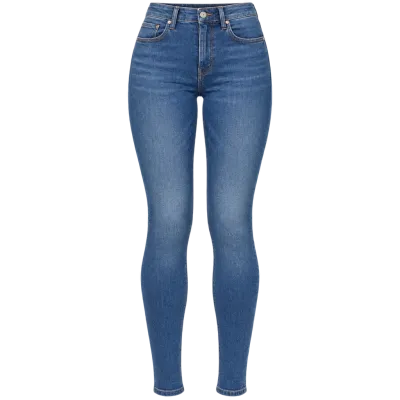
From the 1990s onward, the introduction of elastane blended into denim allowed for closer, more body hugging fits without sacrificing the ability to move comfortably. This development made increasingly slim and skinny silhouettes practical to wear day to day, and by the 2000s and into the 2010s, skinny fits had become one of the dominant styles across much of the world. Stretch fabric, explained in more detail in our guide to stretch versus rigid denim, remains a defining technical development of this later period in denim's history.
 Matching productWomen's skinny jeansAmazon →
07
A wide variety of fits today
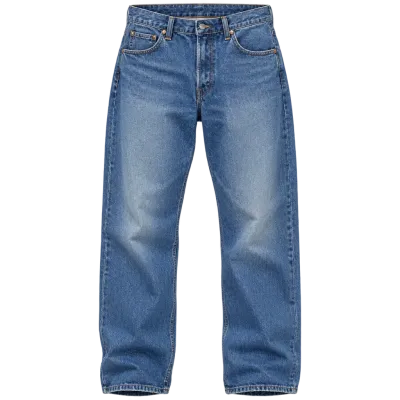
Today, jeans exist in an unusually wide range of fits, rises and washes at the same time, from skinny and tapered cuts to wide leg and relaxed silhouettes, often available concurrently rather than in strict succession. Raw and selvedge denim have also seen renewed interest among people drawn to the more traditional construction methods used before mass finishing became standard, connecting current denim culture back to its workwear origins even as styling has changed dramatically. For a practical look at how these fits differ today, see our guides on men's jeans fits and women's jeans fits.
 Matching productMen's relaxed jeansAmazon →
08
Why this history still shapes jeans today
Many features still found in jeans today trace directly back to their functional origins. The rivets that started it all, reinforced seams, sturdy twill weaves and the classic five pocket layout all descend from a garment built for durability under hard physical work. Understanding this background helps explain why certain details persist even in jeans designed mainly for fashion rather than labour, and why terms like rivet and bar tack remain part of how jeans are described more than a century later.
09
Frequently asked questions
Who invented jeans?
The riveted work trouser that became the basis of modern jeans was patented in 1873 by Jacob Davis and Levi Strauss, though sturdy cotton work trousers existed in some form before this specific innovation.
Why were rivets added to jeans?
Rivets were added at points of strain, such as pocket corners, to stop the fabric from tearing under the repeated stress of manual labour, which was the main practical problem the 1873 patent addressed.
When did jeans stop being only workwear?
The shift began in the mid twentieth century, particularly through the 1950s, when jeans became associated with youth culture and casual dress rather than only manual labour.
When did stretch denim become common?
Stretch denim, made with a small percentage of elastane, became widely used from the 1990s onward and enabled the closer fitting and skinny styles that became dominant in the 2000s and 2010s.
 Matching productComfort stretch jeansAmazon →
Explore
Read next
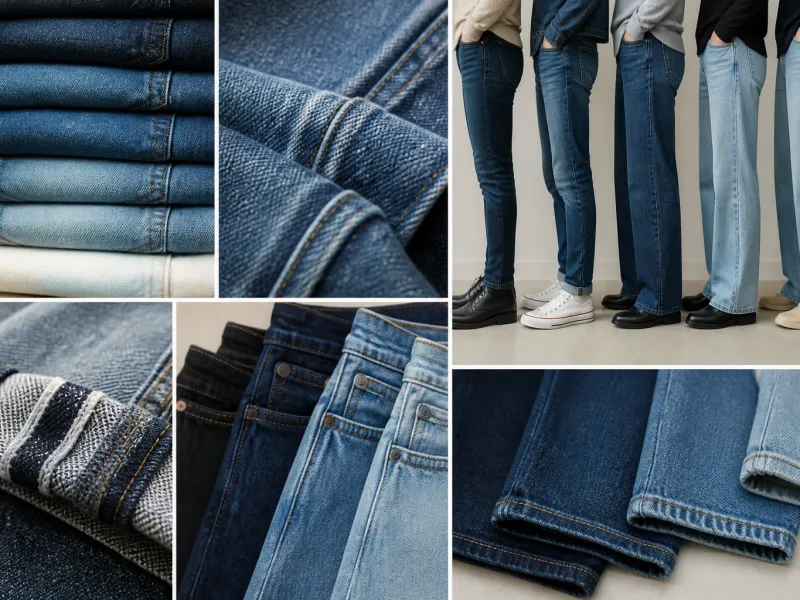 Jeans Fits and Cuts Explained: Skinny to Wide LegA complete overview of jeans fits and cuts, from skinny to wide leg, plus rise and length, with a comparison table and answers to common qu…
 How to Buy Jeans: A Complete Buying GuideA practical, step by step guide to choosing jeans that actually fit, from measuring yourself to checking construction and buying online.
 The Denim Guide: How Jeans Fabric Is MadeA clear explanation of denim fabric itself: weave, weight, yarn, dyeing and the regional traditions behind it.