
6 min read
How to Care for Jeans: Washing, Drying and Storage
A practical guide to washing, drying, storing and repairing jeans, including how and when to wash raw denim.
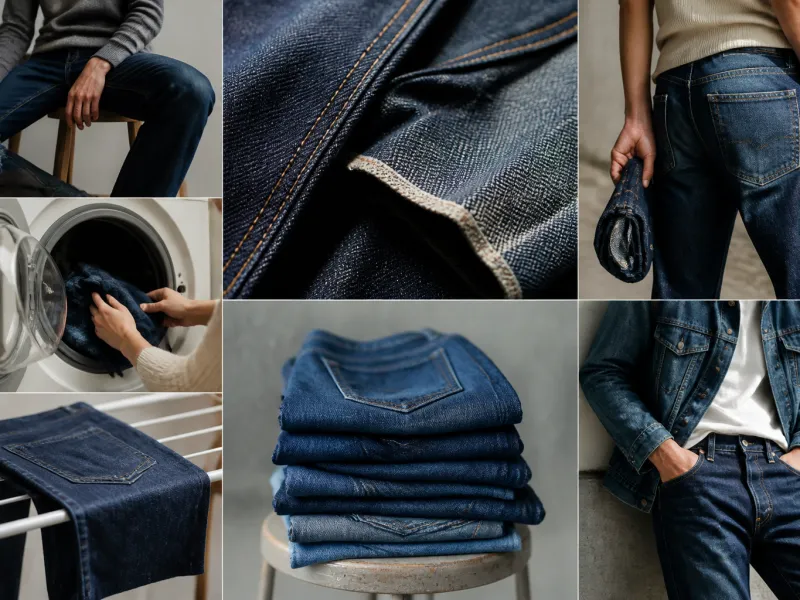
Jeans are hard wearing, but how you wash, dry and store them has a big effect on how long they last, how they fade and how comfortable they stay. This guide covers the practical routine of jeans care, from the wash cycle to storage, repairs and the special case of raw denim.
None of these steps take much time, and small habits, such as washing less often and drying flat, add years to a pair of jeans and keep colour and shape closer to how they started.
01
Washing jeans
Turn jeans inside out before washing to reduce abrasion on the outer surface and slow the loss of colour from friction against the drum and other garments. Use a cool or cold cycle, since heat accelerates dye loss and can weaken elastane fibres in stretch denim over time. Choose a gentle cycle where possible and close any zips to prevent them from catching on other fabric in the load. A mild detergent is enough, and washing jeans separately from rougher fabrics, such as towels, reduces pilling and abrasion on the denim surface. Avoid fabric softener on denim, since it can coat the cotton fibres and make the fabric feel less crisp over time, and skip bleach entirely unless a garment is specifically designed for it.
Washing less often, rather than after every wear, is one of the simplest ways to preserve colour and reduce wear on the fibres. Many wearers air jeans out between wears and only wash when there is visible soil or a noticeable odour, which can mean going weeks between washes for a single pair worn in rotation with others.
 Matching productDenim wash detergentAmazon →
02
Drying and ironing
Air drying, laid flat or hung by the waistband, is gentler than a tumble dryer and helps stretch denim keep its recovery, since heat can permanently relax elastane fibres and reduce how well the fabric snaps back into shape. If a tumble dryer is used, a low heat setting and a shorter cycle reduce shrinkage and stress on seams, though some shrinkage is still likely, particularly the first few times a new pair is washed. Ironing is rarely necessary for casual jeans, but if a crisper look is wanted, iron on the reverse side, inside out, using a moderate setting to protect the surface colour and any printed or coated details on the outside.
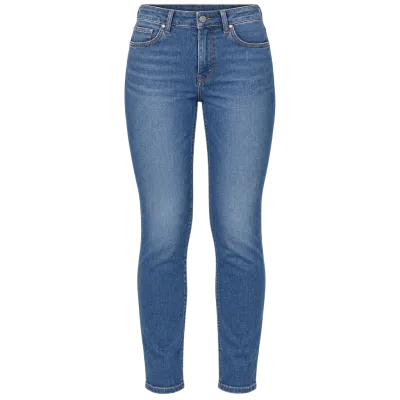 Matching productComfort stretch jeansAmazon →
03
Storing jeans
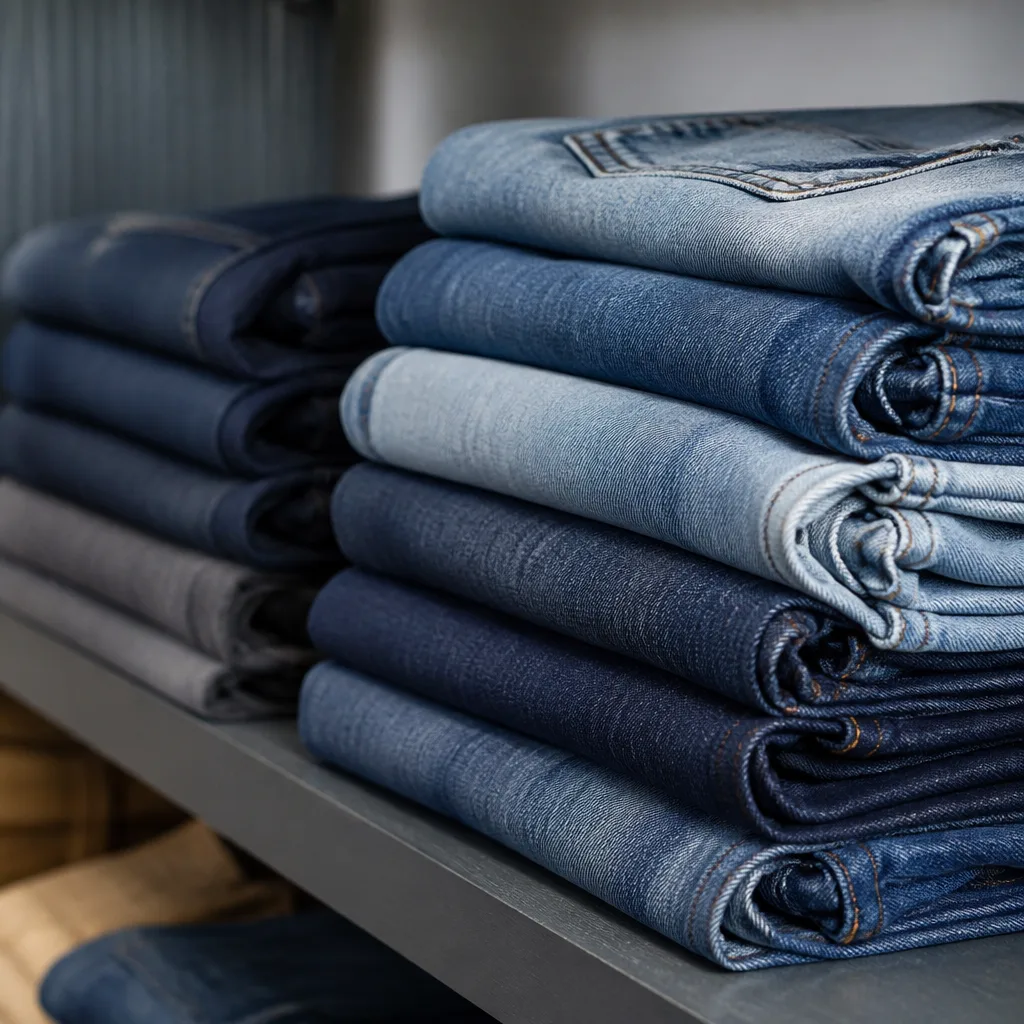
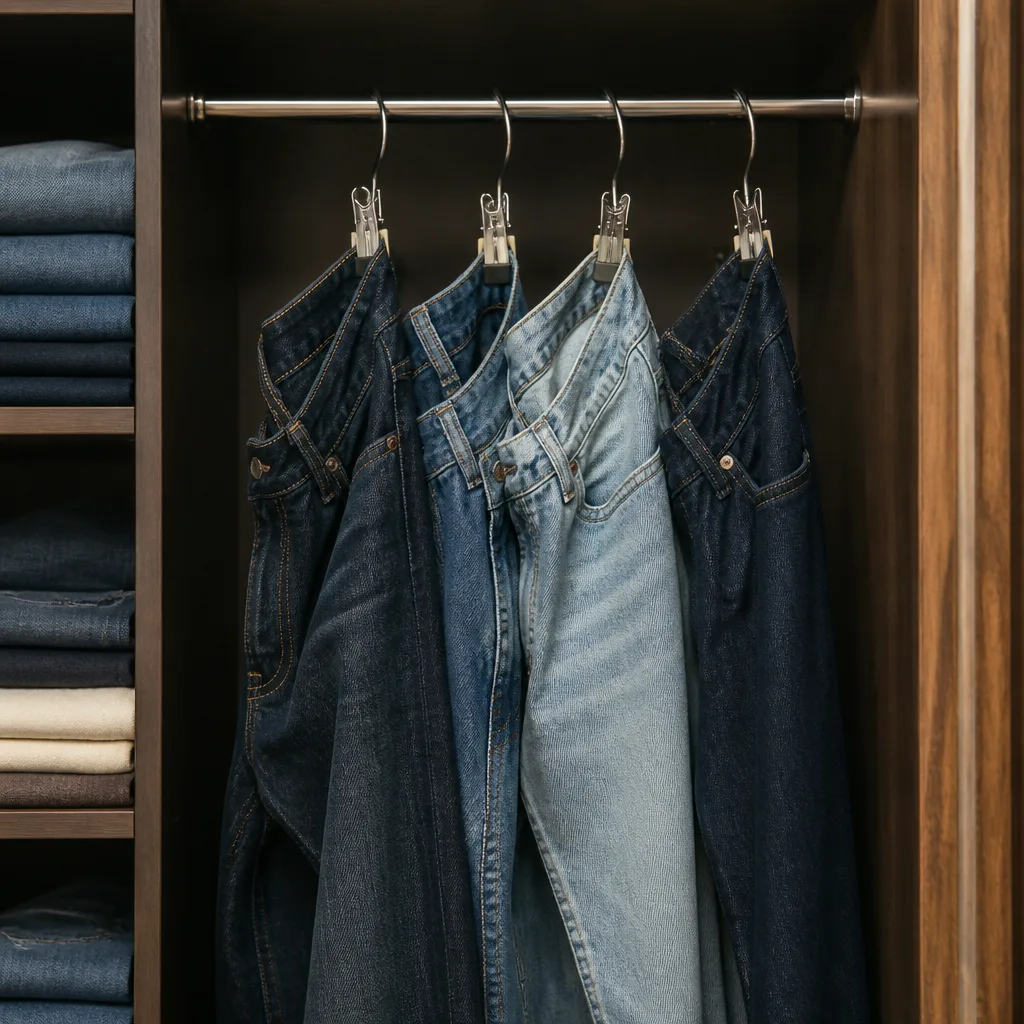
Folding jeans and stacking them by colour or wash keeps them easy to find and reduces creasing along the leg compared with cramming them into a drawer. Hanging by the waistband, using clips or a trouser hanger, works well for jeans worn often and helps prevent deep fold lines from forming at the knee. Keep jeans away from direct sunlight for long term storage, since ultraviolet light fades indigo just as friction does, only more evenly across the whole garment. A dry, ventilated space prevents musty odours from developing, particularly for raw or rarely washed denim that spends long periods between washes.
04
How fading works, and how to manage it
Indigo dye sits on the surface of the yarn, so fades develop wherever fabric flexes and rubs the most, such as behind the knees, at the front thighs and around the pockets, a process closely related to what textile professionals call crocking, the transfer of loose surface dye through friction. This is a natural part of how denim ages rather than a defect in the fabric. Washing less often, turning jeans inside out and avoiding harsh detergents all slow the process and let fading develop gradually and evenly rather than all at once in a single aggressive wash. See our jeans washes and finishes guide for how different factory finishes affect the starting colour before any of this natural fading begins.
05
When and how to wash raw denim
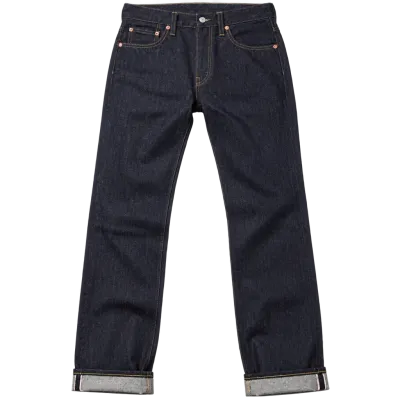
Raw denim is often worn for an extended period before its first wash, sometimes weeks or months, specifically to let fades set into the fabric along the wearer's own body creases before the surface indigo is disturbed by washing. There is no fixed rule for how long to wait, it depends entirely on personal preference and how quickly odour or soil builds up for that individual. When the time comes, a cold hand wash or a cold gentle machine cycle, turned inside out, is the usual approach, sometimes with the jeans placed in a mesh bag for extra protection. If the denim is unsanforized, expect noticeable shrinkage, commonly in the range of 5 to 10 percent, on this first wash, while sanforized denim shrinks only slightly, typically 1 to 3 percent. Full guidance is in our raw denim guide and how to wash jeans.
 Matching productRaw selvedge jeansAmazon →
06
Dealing with odour and stretching back
Airing jeans out, ideally inside out in a ventilated space away from direct sun, is often enough to refresh them between washes without a full wash cycle and the wear that comes with it. For stretch denim that has loosened through the day from body heat and movement, most of that give recovers naturally after a rest period off the body, since elastane fibres relax under wear and return closer to their original shape once tension is removed, though repeated washing and drying on high heat can permanently reduce this recovery over the life of the garment.
07
Repairs and alterations
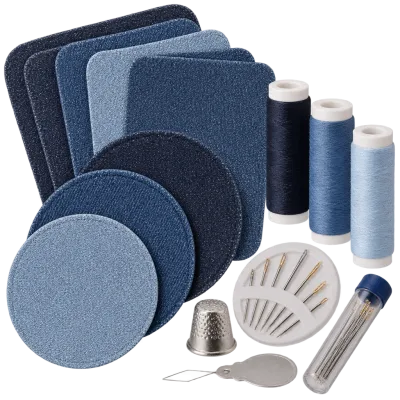
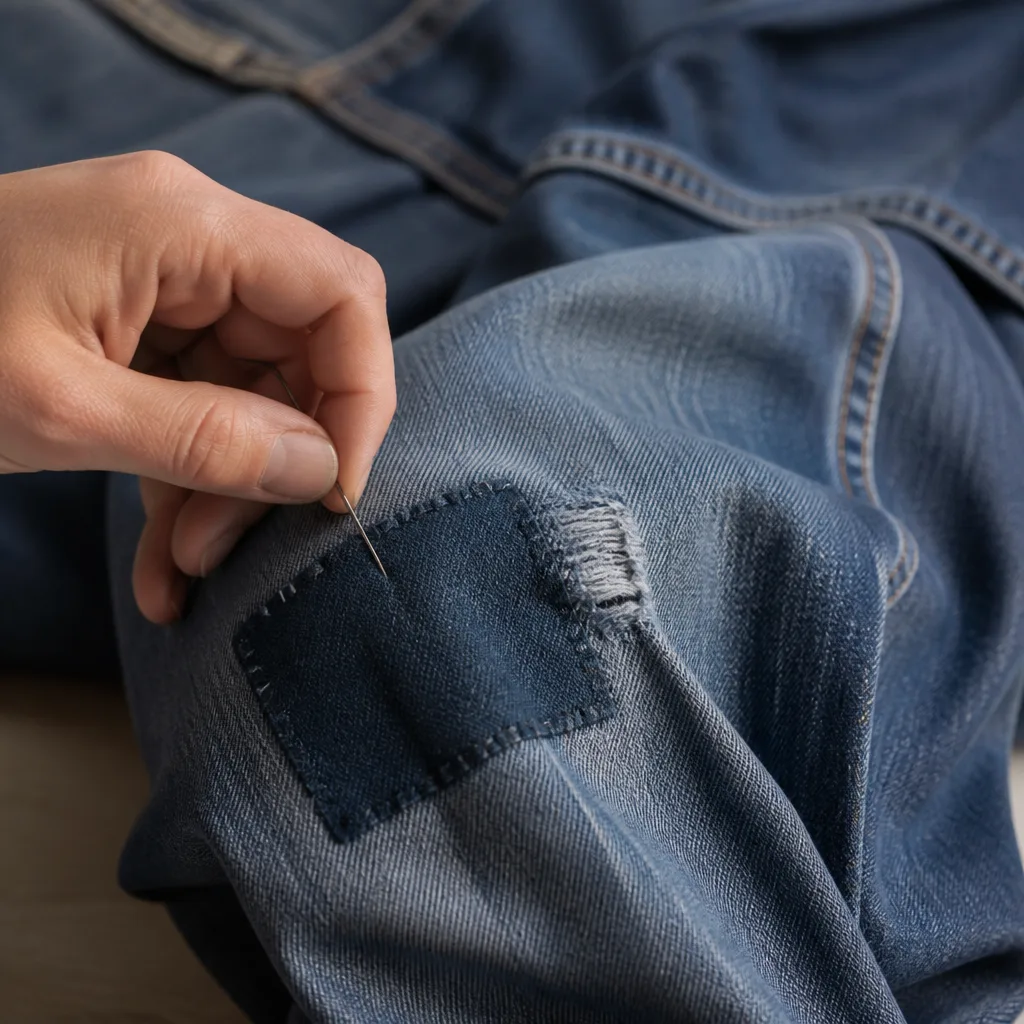
Small holes and thinning areas at the knees or inner thighs can often be patched or rewoven rather than replaced, extending the life of a pair considerably beyond its first signs of wear. Reinforcing a wearing area with a patch before it becomes a hole is more effective, and usually neater, than repairing after a full tear has already formed. Watch for thinning fabric that has gone pale and feels soft against the light, since this is the stage at which a small internal patch, sewn behind the weak spot, will hold best and stay least visible from the outside. Once a hole has already opened, a visible patch or careful darning is usually the only remaining option, and both can be done neatly with a little practice or by a tailor.
Hemming shortens the inseam length, while tapering narrows the leg width, both common alterations that let an otherwise good pair fit properly rather than being retired early because of a length or width mismatch. A loose button or a broken fly is often a quick fix too: buttons can usually be replaced individually, and a jammed zip can sometimes be freed with a little care rather than replaced outright. See our jeans repair and patching guide and how to hem jeans for step by step guidance on both.
| Care step | Recommended approach |
|---|---|
| Washing frequency | Only when visibly soiled or after several wears |
| Water temperature | Cold or cool |
| Orientation | Inside out |
| Drying | Air dry flat or hung, avoid high heat |
| Storage | Folded or hung, away from direct sunlight |
 Matching productDenim repair kitAmazon →
08
Frequently asked questions
How often should I wash my jeans?
There is no fixed number that suits everyone. Many wearers wash jeans every few wears rather than after each one, airing them out in between, though this depends on activity level and personal preference.
Can I put jeans in the dryer?
Yes, but a low heat setting is gentler on seams, elastane and colour than a high heat cycle. Air drying remains the gentler option overall, especially for stretch denim.
Why do my jeans smell even though they look clean?
Odour usually comes from body oils and bacteria in the fabric rather than visible dirt. Airing jeans out in a ventilated space often resolves this without a full wash.
Will fading ruin my jeans over time?
Fading is a natural, gradual change in appearance rather than fabric damage. It can be slowed with gentler care, but it is not a sign that the jeans are wearing out unless it is accompanied by thinning fabric or holes.
Explore
Read next
 Jeans Fits and Cuts Explained: Skinny to Wide LegA complete overview of jeans fits and cuts, from skinny to wide leg, plus rise and length, with a comparison table and answers to common qu…
 How to Buy Jeans: A Complete Buying GuideA practical, step by step guide to choosing jeans that actually fit, from measuring yourself to checking construction and buying online.
 The Denim Guide: How Jeans Fabric Is MadeA clear explanation of denim fabric itself: weave, weight, yarn, dyeing and the regional traditions behind it.