
6 min read
Jeans repair and patching
A practical guide to repairing worn or torn jeans, from crotch blowouts to visible mending techniques.
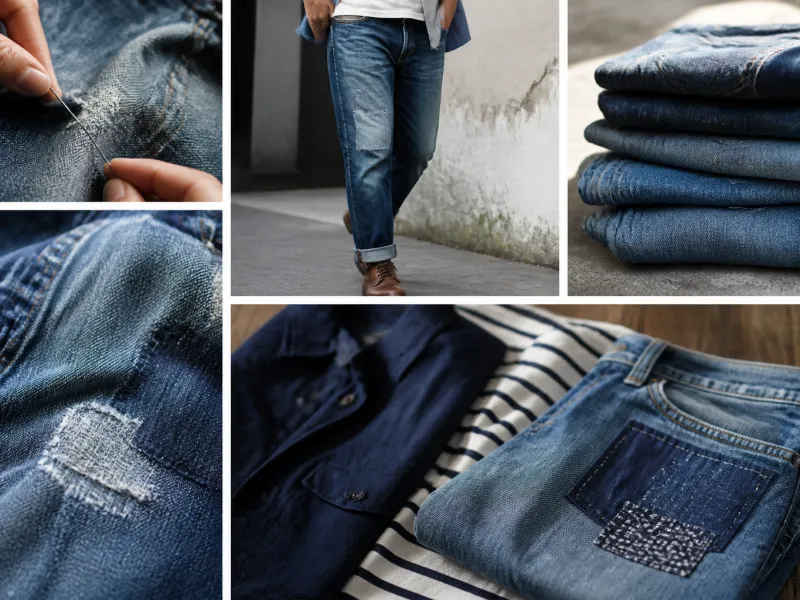
Denim is a durable fabric, but no fabric lasts forever at the points where it flexes and rubs the most: the inner thighs, the knees and the crotch seam. Repairing jeans at the first sign of wear, rather than after a hole opens up, keeps a favourite pair in rotation for years longer and keeps small tears from spreading into large ones.
This guide covers the most common failure points on jeans, several repair techniques from visible mending to hidden patches, and habits that slow down wear in the first place.
01
Why jeans wear out where they do
Indigo dyed denim fades and thins through repeated abrasion and flexing, not through the dye washing out on its own. The inner thighs rub together with every step, the knees bend and stretch thousands of times, and the crotch seam carries constant tension and friction where the leg pieces meet. These are also the areas cut on the bias or under the most stress, so the yarns weaken there before anywhere else.
Watching for thinning, pale patches before they become holes is the easiest way to stay ahead of repairs. A patch of fabric that has gone visibly lighter and feels thinner between your fingers is a sign that reinforcement now will save a much bigger repair later.
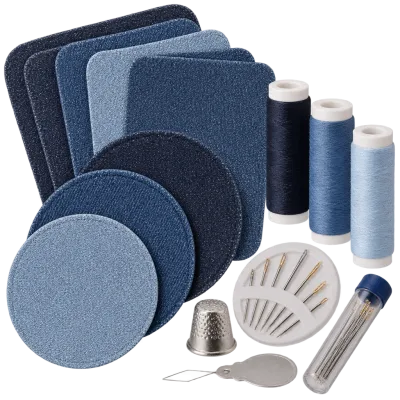 Matching productDenim repair kitAmazon →
02
Crotch blowouts
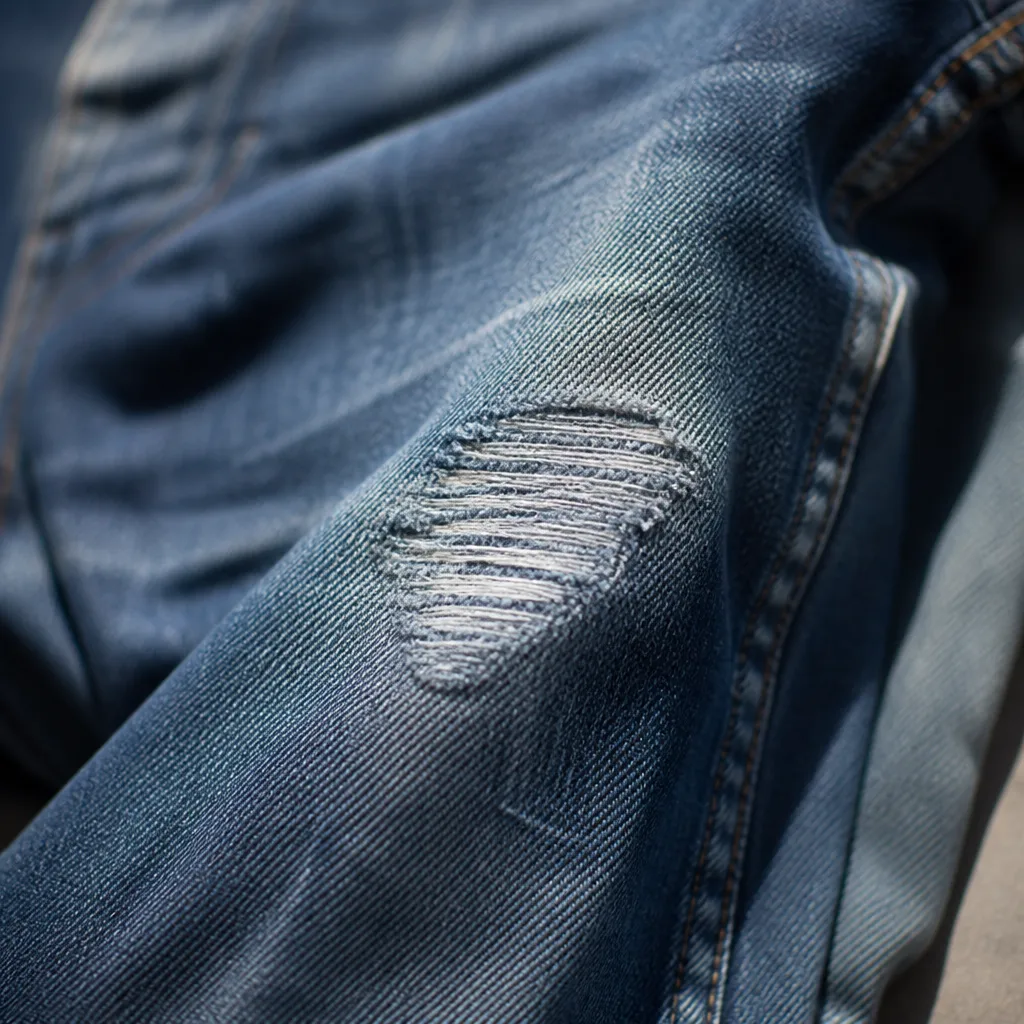
A crotch blowout, a tear along or near the inner leg seam, is one of the most common denim repairs, especially on jeans worn for cycling, walking long distances or daily commuting. Because this area carries so much stress, a patch needs to be sewn securely rather than only glued or ironed on.
- Trim any loose or frayed threads around the tear.
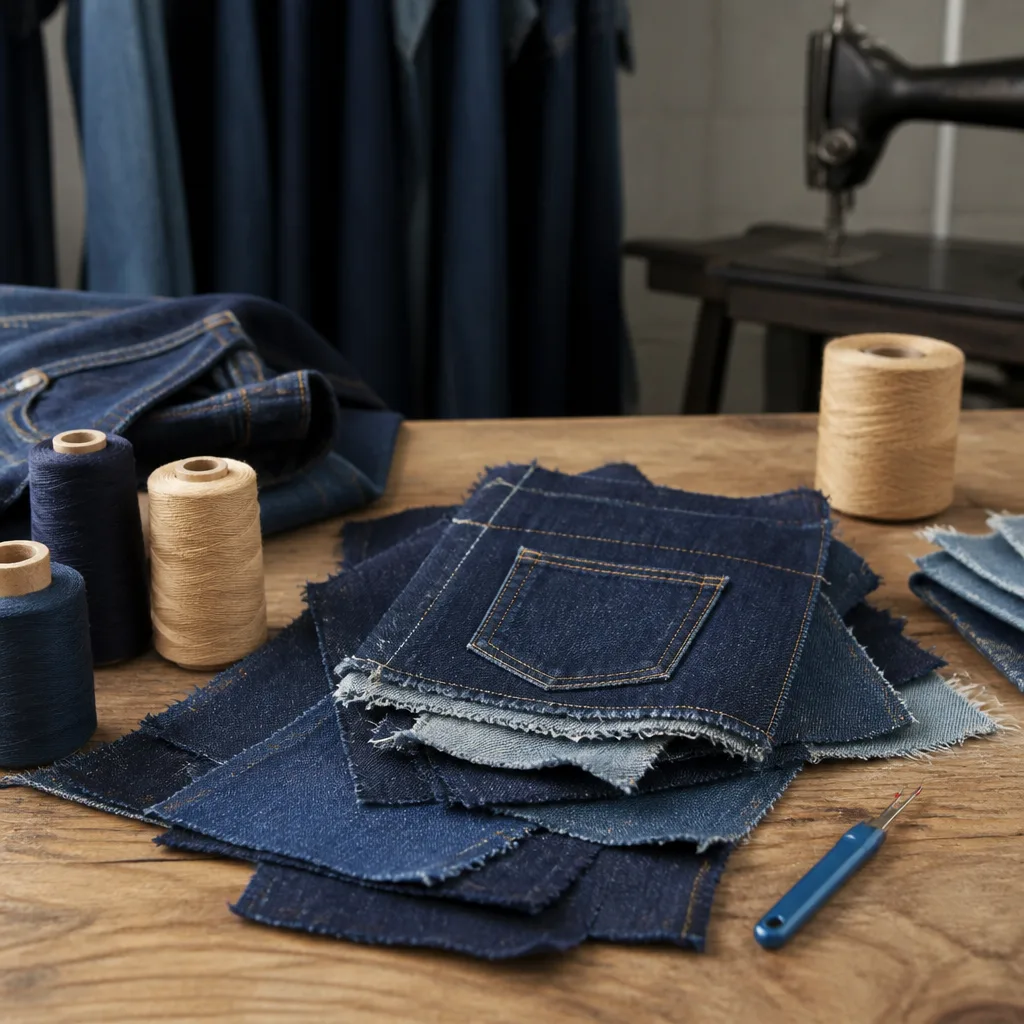
- Cut a patch of sturdy fabric, ideally similar weight denim, a few centimetres larger than the tear on all sides.
- Place the patch behind the tear, on the inside of the jeans, so it is hidden when worn.
- Pin or fuse the patch in place, then sew around the edges and across the tear itself with close, sturdy stitching, going over the seam more than once for strength.
- For a full seam repair, reinforce the whole inseam from the patch to a few centimetres beyond the original tear, since the surrounding fabric is usually weakened too.
Because this repair sits in a high friction area, expect to redo or reinforce it again after further heavy wear. Choosing a slightly stretchier or tighter weave patch fabric can help it hold up longer under movement.
03
Knee holes and visible mending
Knee holes are often repaired visibly rather than hidden, since a patch on the front of the leg is easy to see anyway. Two popular hand techniques for this are sashiko and darning.
Sashiko style patching
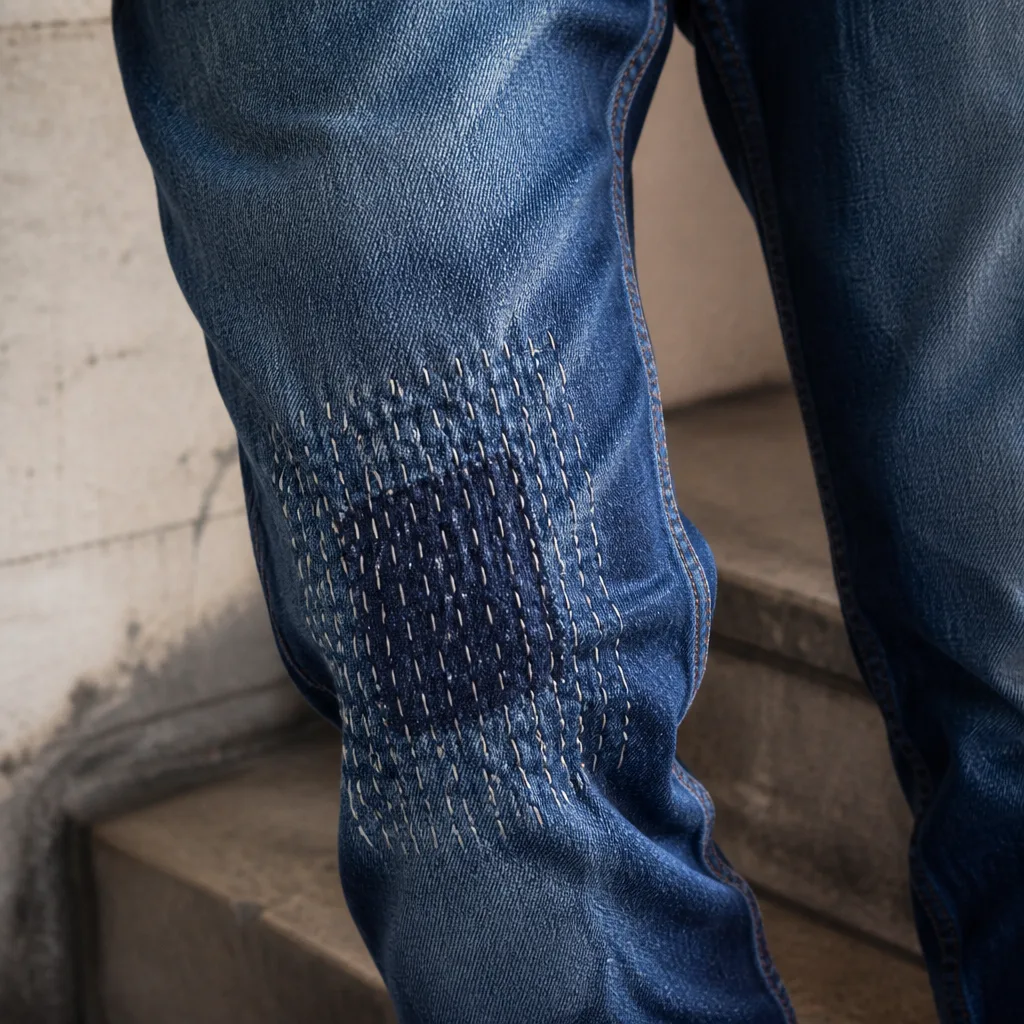
Sashiko is a traditional Japanese hand stitching style using simple running stitches in a contrasting thread, often applied over a patch behind the hole. Rows of small, even stitches are sewn in straight or gently curved lines across the patch and surrounding fabric, both securing the repair and adding a decorative, textured look. It works well on denim because the visible stitching matches the fabric's own hardwearing, workwear character.
Darning
Darning weaves new thread directly across a hole or thin area, effectively rebuilding the fabric rather than only covering it with a patch. A darning needle and strong thread or embroidery floss are worked in a grid, first in one direction then across the other, over a hole or a support patch underneath. Darning suits smaller holes and thin patches better than large tears, where a backing patch is usually needed as well.
04
Iron on and sew in patches
| Patch type | Best for | Durability |
|---|---|---|
| Iron on adhesive patch | Small holes, quick temporary fix, inside of leg | Moderate, benefits from stitching around the edge |
| Sew in fabric patch | Knees, crotch, larger tears | High, especially with reinforced stitching |
| Visible decorative patch | Knees, front of leg, style statement | High when sewn, lower when only fused |
| Darning over a hole | Small to medium thin spots and holes | Moderate to high depending on thread strength |
An iron on patch, applied with a household iron and adhesive backing, is the fastest fix and useful for a hidden repair on the inside of a leg. Because heat bonded adhesive alone tends to loosen with repeated washing and stretching, sewing around the edge of an iron on patch, even with a few simple stitches, meaningfully extends how long it lasts.
05
When to use a tailor for repairs
Some repairs are worth taking to a tailor or a dedicated denim repair service, particularly for expensive or raw denim jeans where matching the original fabric and stitch colour matters, for large or multiple tears, or for repairs on a chain stitched hem or felled seam that need specialised equipment to match. A tailor can also weave in matching yarn for very fine, close to invisible repairs on lighter damage, a technique that is difficult to reproduce by hand at home.
For everyday jeans with a single small tear or thinning knee, a home repair with a sew in patch or darning is usually enough and considerably cheaper than a professional service.
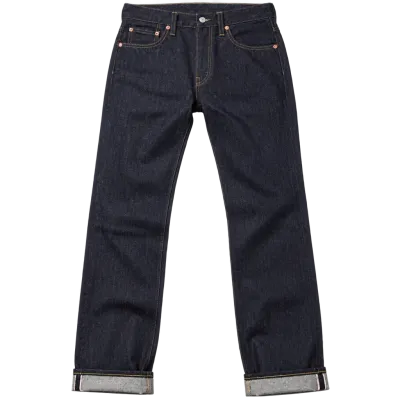 Matching productRaw selvedge jeansAmazon →
06
Preventing wear before it becomes damage
Beyond specific habits, it helps to think about denim durability in terms of friction and moisture together. Wet or damp cotton fibres are noticeably weaker than dry ones, so jeans that stay damp for long periods, from sweat during exercise, from sitting on a wet surface, or from being packed away before fully drying, break down faster under the same amount of rubbing than jeans that are kept dry between wears. Letting a pair fully air out and dry between uses, rather than wearing it again straight away, is a simple habit that adds up over months of regular wear.
- Wash less often and inside out, since turning jeans inside out reduces surface abrasion on the outer, visible face during the wash cycle.
- Avoid tumble drying on high heat, which weakens cotton fibres over time; air drying is gentler on the fabric.
- Rotate between more than one pair if jeans are worn daily, giving fibres time to recover between wears.
- Reinforce thin spots with a patch or darning as soon as you notice fading and thinning, rather than waiting for a hole.
- Choose a slightly heavier weight denim for jeans used for cycling, manual work or other high friction activities, since heavier fabric generally resists abrasion longer.
Our guide on how to wash jeans covers washing frequency and technique in more detail, and the denim weight guide explains how fabric weight affects durability.
 Matching productDenim wash detergentAmazon →
07
Frequently asked questions
Can a crotch blowout be repaired more than once
Yes, though each repair in the same spot tends to have a shorter lifespan than the last, since the surrounding fabric keeps weakening. Reinforcing a wider area than just the original tear helps a repeat repair last longer.
Is it better to patch from the inside or the outside of the jeans
An inside patch is less visible and suits jeans you want to look unrepaired, while an outside or visible patch, including sashiko style mending, is a deliberate style choice that also tends to be more durable since it sits directly over the worn area.
What thread works best for repairing denim
A strong polyester or cotton wrapped polyester thread, sometimes called a core spun thread, holds up well under the stress denim repairs face, particularly at the crotch and knees.
Does repairing jeans affect their fit
A well sewn patch or darn should not noticeably change the fit, though a thick patch layered at the crotch or inner thigh can feel slightly stiffer until it is worn in again.
Explore
Read next
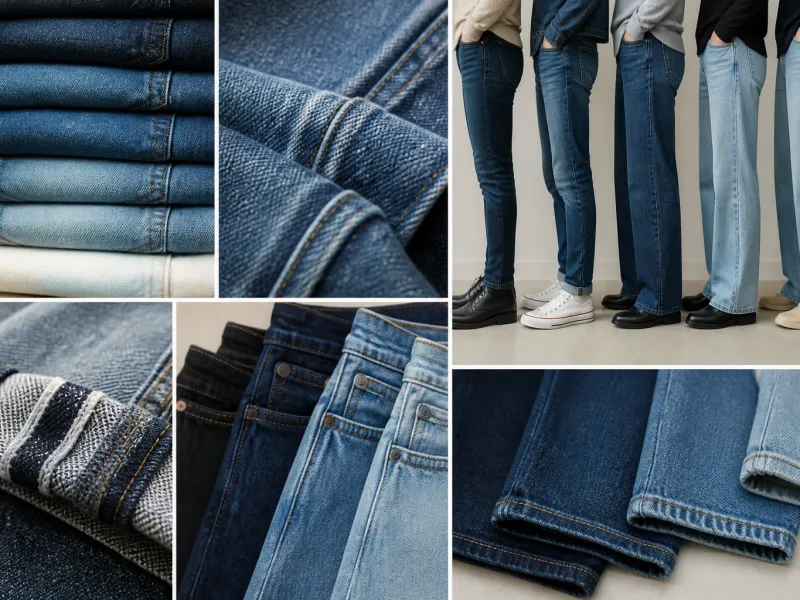 Jeans Fits and Cuts Explained: Skinny to Wide LegA complete overview of jeans fits and cuts, from skinny to wide leg, plus rise and length, with a comparison table and answers to common qu…
 How to Buy Jeans: A Complete Buying GuideA practical, step by step guide to choosing jeans that actually fit, from measuring yourself to checking construction and buying online.
 The Denim Guide: How Jeans Fabric Is MadeA clear explanation of denim fabric itself: weave, weight, yarn, dyeing and the regional traditions behind it.